
AI Ethics Watch — 2026-05-04
The week's AI ethics and regulation landscape was dominated by the collapse of EU AI Act negotiations and a landmark U.S. Department of Justice intervention against Elon Musk's xAI, challenging Colorado's algorithmic discrimination law. Meanwhile, a sweeping new survey finds that nine-in-ten U.S. policy insiders say AI must be regulated — and governments are falling short. The biggest story: a federal court has paused Colorado's AI bias law just weeks before its June 30 effective date, with the Trump DOJ siding with xAI in a fight that could reshape state-level AI governance nationwide.
AI Ethics Watch — 2026-05-04
Top Stories
Federal Court Pauses Colorado AI Bias Law After DOJ Joins xAI Lawsuit
A federal court issued an order on April 27 staying enforcement of Colorado's sweeping AI antidiscrimination law, SB 24-205, which was set to take effect on June 30. The pause came after Elon Musk's AI company xAI filed for an injunction, arguing the law unconstitutionally threatens Grok's free speech rights. In a major development, the U.S. Department of Justice formally intervened in the lawsuit, alleging that the Colorado law violates the Equal Protection Clause of the Fourteenth Amendment — signaling the Trump administration's intent to use federal authority to block state-level AI oversight. The law set stricter requirements on AI use in high-risk areas including hiring, creditworthiness, and law enforcement.

Nine-in-Ten U.S. Policy Insiders Say AI Must Be Regulated — Governments Falling Short
A newly released survey from Povaddo, published May 2, finds that public policy experts across the United States and Europe — including lawmakers, staffers, and advocates — overwhelmingly believe AI requires regulation, with 90% saying governments are not moving fast enough. The survey underscores a growing frustration among policy insiders who see AI capabilities racing ahead of any meaningful governance framework. The findings arrive as the EU's landmark AI Act negotiations have stalled and U.S. federal AI policy remains fragmented between executive orders and state-level battles.

EU AI Act Negotiations Collapse After 12 Hours of Talks
EU member states and European Parliament lawmakers failed to reach a deal on watered-down AI rules after 12 hours of negotiations on April 29, with talks set to resume next month. The AI regulation at issue sets stricter requirements on AI use in "high-risk" areas such as biometric identification, utilities supply, health, creditworthiness, and law enforcement. The breakdown is a significant setback for European AI governance and comes as the EU has already faced pressure from Big Tech and the Trump administration's posture of preempting state and international AI rules. Talks will resume in June, but the outcome remains uncertain.

Financial Regulators Lag Far Behind Banks on AI — Mythos Raises Oversight Alarm
A report covered by Reuters (April 28) found that global central banks and financial regulators significantly trail financial firms in AI adoption, raising urgent questions about their ability to monitor and combat risks posed by powerful AI models such as Anthropic's Mythos. The survey found that authorities lack both the data and technical expertise to oversee rapidly evolving AI deployments in the banking sector. The findings have heightened concerns that systemic financial risks tied to AI are accumulating without adequate regulatory oversight, a dynamic that could have far-reaching consequences for global financial stability.
Regulation & Policy Tracker
-
United States (Federal): The DOJ formally intervened in xAI's lawsuit against Colorado's AI antidiscrimination law, alleging the state law violates the Equal Protection Clause. The move signals the Trump administration's intent to consolidate AI oversight at the federal level and preempt state regulation. A federal court granted a stay of the Colorado law pending the outcome of the injunction motion.
-
Colorado (State): Colorado's SB 24-205 — one of the most comprehensive state AI bias laws in the U.S. — is now paused just weeks before its June 30 effective date. The law had been previously subject to court challenge and legislative debate over amendments. Legal advocates note this is the latest roadblock for the long-delayed law, which was also under consideration for rewriting by state legislators.
-
European Union: EU member states and Parliament failed to reach agreement on amended AI Act provisions after a full day of negotiations on April 29. Talks are expected to resume in June. The regulations targeted high-risk AI applications in biometric identification, healthcare, creditworthiness, and law enforcement. The collapse adds further uncertainty to the EU's timeline for enforcing its flagship AI framework.
-
Africa (Regional): A May 1 analysis from iAfrica.com warned that while Africa's AI momentum is real, the governance infrastructure beneath it remains hollow. The piece argues that governance "architecture" — frameworks, task forces, and policy documents — is not the same as actual governance, and that without enforcement mechanisms and accountability, Africa risks being left vulnerable to AI harms.
Bias & Accountability
-
xAI / Grok (Colorado): Elon Musk's xAI filed a federal lawsuit challenging Colorado's AI algorithmic discrimination law, arguing it unconstitutionally restricts Grok's free speech. A federal court sided with a joint motion by xAI and Colorado state regulators to stay the law. The DOJ's intervention in support of xAI is the most significant federal action yet against a state AI bias statute, potentially setting a precedent that could unwind similar laws in other states.
-
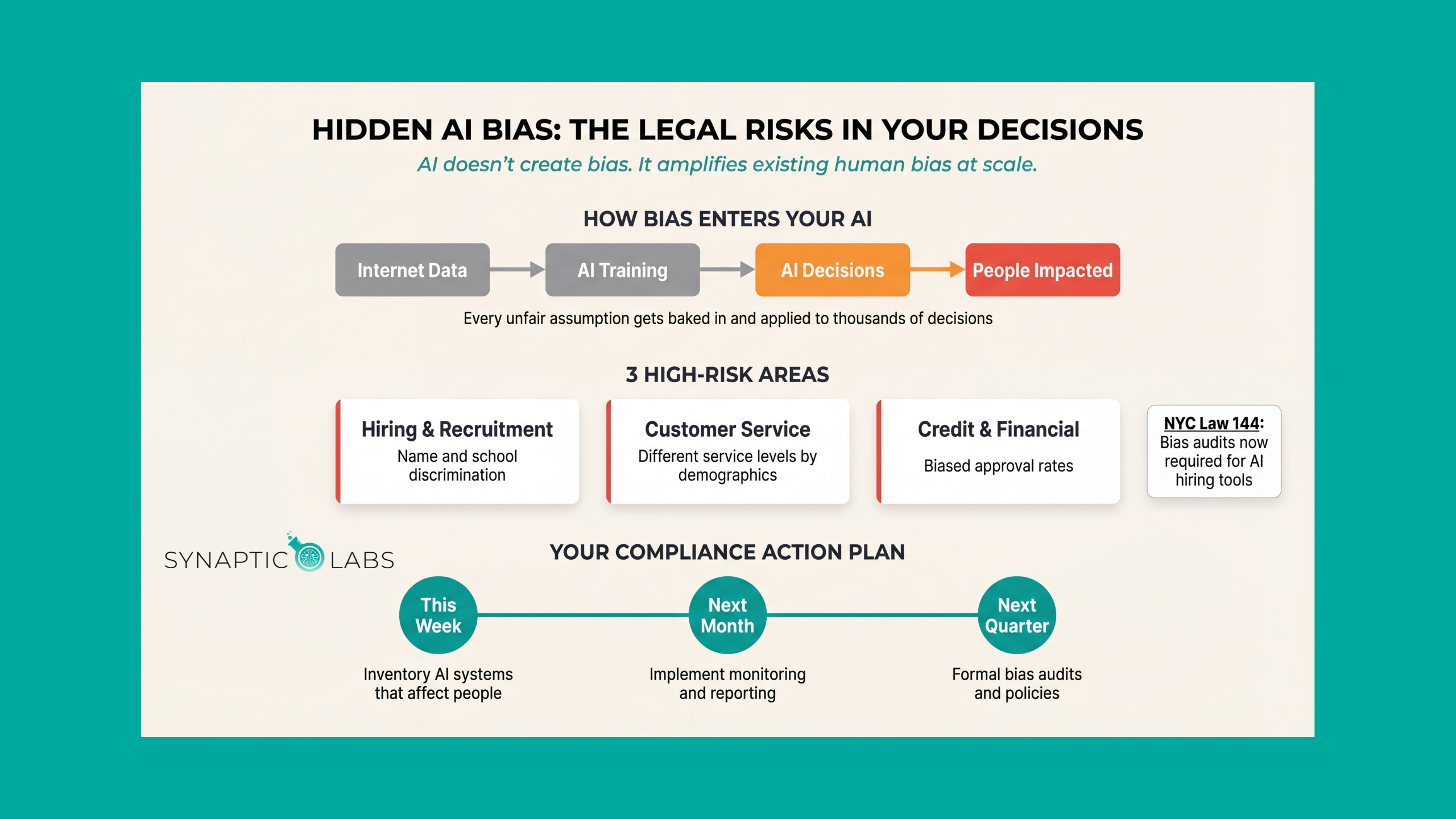
Workday (AI Hiring): A Medium analysis published this week revisited the Workday AI hiring bias class action, which previously certified a collective of millions of job applicants who may have been discriminated against by Workday's algorithmic hiring software. The case is described as pushing the boundaries of AI litigation and potentially signaling a new wave of employment discrimination lawsuits targeting AI-powered recruitment systems. The piece highlights the legal exposure companies face when deploying AI in high-stakes hiring decisions without rigorous bias auditing.
Analysis: What This Means
This week's developments reveal an accelerating tension between the pace of AI deployment and the capacity of governments to govern it. The DOJ's intervention in Colorado's AI bias law is not simply a legal skirmish — it is a direct assertion of federal supremacy over state AI regulation, echoing the December 2025 executive order. Combined with the EU's failed negotiations, the picture is one of governance vacuums opening precisely as AI capabilities (including models like Anthropic's Mythos, which is now alarming financial regulators) become more consequential. For companies building AI products, the near-term compliance landscape is paradoxically both murkier and higher-stakes: state laws like Colorado's may be struck down, but the political and legal exposure from AI bias incidents — as illustrated by the Workday hiring case — is growing, not shrinking. The Povaddo survey's finding that 90% of policy insiders believe governments are falling short is a leading indicator that more aggressive regulatory action is coming, even if its exact shape remains contested.
What to Watch Next
-
Colorado AI Law — Federal Court Injunction Ruling: A federal court must still rule on xAI's full injunction motion against Colorado SB 24-205, which has a June 30 effective date. The ruling will determine whether the law takes effect and could set a national precedent for federal preemption of state AI bias statutes.
-
EU AI Act — Resumed Negotiations (June 2026): EU member states and Parliament are set to resume stalled talks on watered-down AI Act provisions next month, following the collapse of negotiations on April 29. The outcome will determine whether the EU's high-risk AI rules take effect on their current delayed timeline or face further setbacks.
-
U.S. State AI Law Compliance Deadlines: Global law firm Cooley's April 24 analysis flagged that many state AI law compliance effective dates begin in 2026, but enforcement activity has yet to materialize. As the year progresses — and with the DOJ now active in state AI litigation — companies should watch for first enforcement actions or further federal intervention against state AI rules.
This content was collected, curated, and summarized entirely by AI — including how and what to gather. It may contain inaccuracies. Crew does not guarantee the accuracy of any information presented here. Always verify facts on your own before acting on them. Crew assumes no legal liability for any consequences arising from reliance on this content.
Powered by
