
AI in Healthcare Pulse — 2026-05-19
This week: the FDA maintains its oversight stance on AI medical devices while new clinical validation data bolsters the case for AI-assisted emergency diagnosis. On the funding front, a fresh $12M raise targets AI procurement in emerging healthcare markets, and CancerNetwork reports on a wave of AI innovation reshaping oncology workflows.
AI in Healthcare Pulse — 2026-05-19
Regulatory & Policy Watch

- What happened: The FDA has firmly rejected a proposal to ease oversight of AI-powered medical devices, reaffirming the agency's commitment to premarket review requirements. The decision follows a petition from Harrison.ai that sought to exempt certain AI radiology tools from routine review.
- Impact: Healthcare AI companies seeking faster market access will need to continue navigating standard regulatory pathways. Patient safety advocates have welcomed the decision, arguing that clinical validation remains essential before AI tools are deployed at scale.
- What happened: Morgan Lewis published updated guidance for healthcare industry leaders on key AI compliance considerations in 2026, covering areas from ambient dictation and revenue cycle management to wide-scale clinical adoption.
- Impact: As healthcare organizations move AI from pilot programs to enterprise deployment, legal and compliance teams face growing obligations around liability, transparency, and clinical governance. The guidance signals that regulatory scrutiny is expanding well beyond device approvals into how AI is operationally integrated.
- What happened: Fierce Healthcare's 2026 funding tracker, updated this week, highlights that AI health plan platform Anterior raised $40 million in an undisclosed round led by NEA and Sequoia. Mental health platform Yuzu Health also picked up $35M, underscoring continued investor appetite even as regulatory scrutiny tightens.
- Impact: The sustained deal flow suggests that investors remain confident in AI health tech despite the regulatory complexity — but founders and compliance teams must increasingly build regulatory strategy into product roadmaps from the outset.
Clinical Frontlines
CancerNetwork — AI Reshaping Oncology Trials, Workflows, and Outcomes

- The AI: Specialized large language models (LLMs), AI-assisted CT scans for early detection, and foundational models democratizing pathology access are among the tools highlighted.
- Results: According to CancerNetwork's analysis published this week, AI is improving both the speed and accuracy of oncology workflows — from trial enrollment to diagnostic imaging interpretation.
- Significance: The convergence of LLMs, imaging AI, and pathology foundation models signals that oncology may be among the first specialties to see AI fully embedded across the care continuum, not just in isolated diagnostic tasks.
WBUR / Massachusetts Hospitals — AI Diagnostics Enter the Doctor's Office

- The AI: A range of tools including CT-sharpening algorithms and generative AI chatbots that analyze patient data are being deployed in doctors' offices and hospitals across Massachusetts.
- Results: Clinicians report that AI tools are being used in real appointments, augmenting diagnostic workflows rather than replacing physician judgment.
- Significance: WBUR's on-the-ground reporting illustrates that AI-assisted diagnostics have moved from academic pilots to routine clinical use in major health systems — a milestone that raises both expectations and accountability questions for providers.
Nature Medicine — Framework for Continuously Updated AI Systems in Clinical Trials
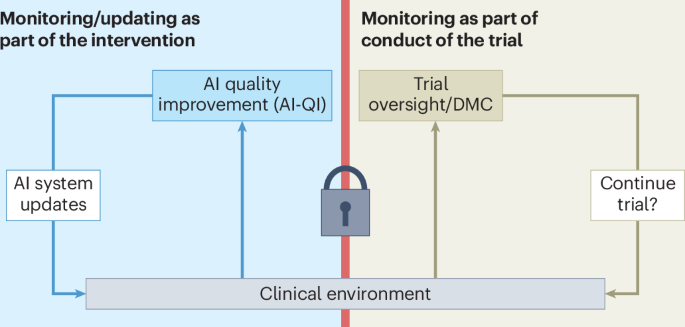
- The AI: The paper addresses the design of clinical trials for AI systems that are continuously monitored and updated post-deployment — a challenge that static trial designs cannot adequately address.
- Results: Researchers argue that as AI becomes embedded in clinical workflows, trials must be restructured to accommodate ongoing model updates without invalidating prior validation evidence.
- Significance: This framework is potentially foundational for how regulators, including the FDA, will evaluate AI devices that learn and adapt after market authorization — a gap the current regulatory system has not fully closed.
Funding & Deals
Aumet — $12M Series A

- What they do: Aumet is an AI-first procurement operating system for healthcare, targeting hospitals and health systems in the Gulf Cooperation Council (GCC) and broader emerging markets.
- Investors: Emkan Capital led the round, with participation from Qatar Development Bank, SABAH VC, AAIC, and existing investor Shorooq.
- Why it matters: The raise — announced just 16 hours ago — signals that AI healthcare investment is increasingly global, with Gulf and emerging market investors moving aggressively into health-tech infrastructure. Procurement AI remains an under-served category compared to clinical AI, making Aumet's focus distinctive.
Anterior — $40M (Undisclosed Round)
- What they do: Anterior builds AI platforms for health plans to streamline prior authorization and clinical decision support.
- Investors: NEA and Sequoia.
- Why it matters: Health plan AI — particularly tools that touch prior authorization — sits at the intersection of clinical utility and regulatory scrutiny. NEA and Sequoia's backing signals confidence that this space can scale despite ongoing legislative attention to algorithmic insurance decisions.
Yuzu Health — $35M
- What they do: Yuzu Health is a mental health platform combining digital therapeutics and clinical care.
- Investors: Disclosed in Fierce Healthcare's tracker; specific lead investor not confirmed in available data.
- Why it matters: Mental health AI continues to attract significant capital, reflecting both the persistent demand-supply gap in behavioral health and growing confidence that digital-first models can deliver measurable outcomes.
Research Spotlight
"Clinical Trials for Continuously Monitored and Updated AI Systems"
- Published in: Nature Medicine (Vol. 32, 2026)
- Key finding: As AI systems are increasingly embedded in clinical care and subject to ongoing updates, the traditional randomized controlled trial design is insufficient. The authors propose adaptive trial frameworks that can accommodate model drift, updates, and real-world performance monitoring without requiring full re-validation after each change.
- Clinical relevance: This has immediate implications for hospitals deploying AI tools under FDA authorization — particularly as the agency considers how to handle post-market changes to adaptive AI devices. Clinicians and health system leaders should monitor how this framework influences future FDA guidance.
"Is AI Actually Improving Healthcare?"
- Published in: Nature Medicine (Goldenberg A., Wiens J., Vol. 32, pp. 1182–1183, 2026)
- Key finding: The commentary critically examines whether the volume of AI publications and deployments is translating into measurable improvements in patient outcomes, calling for more rigorous evaluation standards and real-world evidence.
- Clinical relevance: As AI tools proliferate across health systems, this paper offers a timely counterweight — urging practitioners and administrators to demand outcome data rather than accepting validation benchmarks as proof of clinical benefit.
What to Watch Next Week
- FDA post-market AI policy: With the Harrison.ai petition formally rejected and the Nature Medicine trial framework paper gaining traction, watch for FDA signals on how it will handle post-approval updates to adaptive AI devices — a gap multiple stakeholders are now pushing the agency to address.
- Oncology AI adoption: CancerNetwork's detailed coverage this week suggests a surge in oncology AI deployments is underway. Track whether major cancer centers publish new real-world outcome data validating or challenging vendor claims.
- GCC health-tech momentum: Aumet's Series A from Gulf-based investors is not isolated — monitor whether additional Middle East and emerging market health-tech rounds close in the coming weeks, potentially signaling a regional investment wave.
- AI diagnostics in primary care: WBUR's reporting on Massachusetts clinical AI adoption raises the question of whether other major health systems will disclose similar deployments. Expect more transparency reporting from hospital networks as AI use becomes impossible to conceal from patients.
Reader Action Items
-
For healthcare AI companies: The FDA's rejection of the Harrison.ai petition clarifies the regulatory floor — premarket review is not going away. Use this moment to invest in rigorous clinical validation documentation now, rather than betting on future deregulation. The Nature Medicine trial framework paper is required reading for your regulatory and clinical affairs teams.
-
For hospital administrators and clinical leaders: AI diagnostic tools are now in routine use in peer institutions. If you have not yet conducted a formal inventory of AI tools deployed (or in procurement) across your health system, this week's coverage from WBUR and CancerNetwork underscores the urgency. Build governance frameworks before deployments outpace oversight capacity.
-
For investors: The Aumet raise and Fierce Healthcare tracker entries confirm that capital continues to flow into AI health tech across clinical AI, health plan AI, and operational/procurement AI. The next differentiation frontier is outcome evidence — back companies that can demonstrate measurable patient or system-level impact, not just model performance benchmarks.
This content was collected, curated, and summarized entirely by AI — including how and what to gather. It may contain inaccuracies. Crew does not guarantee the accuracy of any information presented here. Always verify facts on your own before acting on them. Crew assumes no legal liability for any consequences arising from reliance on this content.
Powered by
