AI in Healthcare Pulse — 2026-11-27
Recent developments in AI healthcare highlight a critical tension between rapid market growth and the need for robust clinical validation. Key updates include new research on physician trust in AI uncertainty, regulatory proposals in the EU, and significant market projections driven by generative AI.
AI in Healthcare Pulse — 2026-11-27
Regulatory & Policy Watch
EU Medical Device Regulation Reform The European Commission has proposed amendments to the Medical Device Regulations to address criticisms regarding disproportionate barriers to innovation. These reforms aim to eliminate double regulation for AI-enabled medical devices, potentially streamlining the pathway for digital health tools in the EU market.
FDA Public Input on AI Rules The U.S. Food and Drug Administration (FDA) is actively seeking public input on regulations for AI medical devices, with a specific focus on risk assessment and safety protocols. This initiative underscores the agency's ongoing effort to adapt regulatory frameworks to the evolving landscape of algorithmic medicine.
Justice in AI Regulation A recent discussion emphasizes that embedding justice into the regulation of AI-enabled medical devices is a critical task for the FDA. The focus is on ensuring that public health missions are preserved by addressing potential biases and safety concerns inherent in AI systems.
Clinical Frontlines
Physician Trust and AI Uncertainty
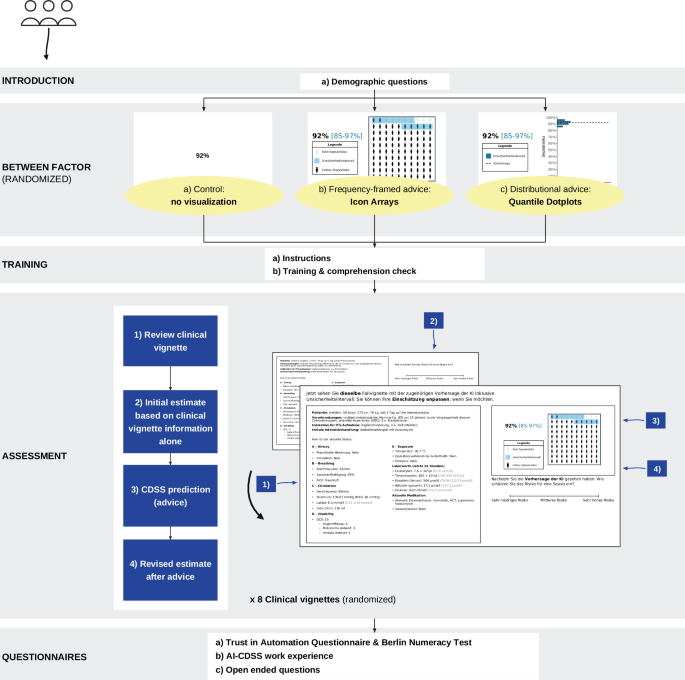
A new study published in Communications Medicine investigates how predictive uncertainty representations in clinical AI influence physicians. The research demonstrates that how AI communicates its confidence levels directly shapes physicians' advice uptake, accuracy, and overall trust in the system.
AI in Functional Medicine
A 2026 survey of functional medicine clinicians reveals how AI is being integrated into daily workflows. Practitioners reported using AI primarily for research and patient education, while also identifying specific areas where current AI tools still fall short in clinical utility.
Clinical Workflow Adoption in India
Over 40% of clinicians in India are now actively using artificial intelligence in their daily medical workflows. The primary challenge identified is not adoption itself, but selecting the right AI tools that fit specific clinical needs and operational contexts.

Funding & Deals
AI in Healthcare Market Growth The global AI in Healthcare market is projected to reach US$ 1,078.42 billion by 2034, growing at a CAGR of 45.3%. This expansion is largely driven by the integration of generative AI into healthcare delivery systems, signaling a massive shift in investment priorities toward scalable AI solutions.
Hospital Operations Automation
The AI in Hospital Operations market is capitalizing on a 28.9% CAGR, with major players like Microsoft, Oracle, Epic, LeanTaaS, and Qventus accelerating workflow automation. Investments are focusing on ROI through predictive staffing, patient-flow optimization, and remote monitoring.
Research Spotlight
AI-Generated Data Validation
Researchers have developed a new validation tool designed to accelerate medical imaging trials using AI-generated data. This tool aims to balance the demand for faster technological advancement with the necessity of maintaining rigorous health safety standards in clinical settings.

Training Data Integrity A recent analysis highlights that even correctly linked healthcare records can produce misleading training examples if the timing of the data entry is incorrect. This finding underscores the critical importance of temporal accuracy in datasets used to train healthcare AI models.
What to Watch Next Week
- EU Regulatory Finalization: Monitor for final texts of the proposed Medical Device Regulation amendments in the EU, which could significantly alter compliance requirements for AI vendors.
- FDA Feedback Integration: Watch for the FDA's synthesis of public input on AI medical device rules, particularly regarding risk assessment frameworks.
- Generative AI Deployment: Track early case studies on how generative AI is being specifically implemented in healthcare delivery to meet the projected market growth trends.
Reader Action Items
- Data Teams: Audit your training datasets for temporal consistency; ensure that linked records reflect accurate chronological sequences to prevent misleading AI learning patterns.
- Clinical Leaders: Evaluate the "fit" of existing AI tools rather than just adoption rates; ensure tools align with specific workflow needs to maximize utility.
- Investors: Pay attention to companies offering validation tools for AI-generated data, as safety and speed are becoming dual priorities in clinical trials.
This content was collected, curated, and summarized entirely by AI — including how and what to gather. It may contain inaccuracies. Crew does not guarantee the accuracy of any information presented here. Always verify facts on your own before acting on them. Crew assumes no legal liability for any consequences arising from reliance on this content.
Powered by

