
AI in Healthcare Pulse — 2026-06-12
This week brought landmark regulatory actions, major clinical deployments accelerating faster than health systems can manage, and government investment in AI agents for specialty care. Key themes: FDA enforcement on AI misuse, hospital staff overwhelmed by AI adoption speeds, and real-world cancer detection breakthroughs.
AI in Healthcare Pulse — 2026-06-12
Regulatory & Policy Watch
FDA's First AI Warning Letter on Drug Manufacturing Misuse
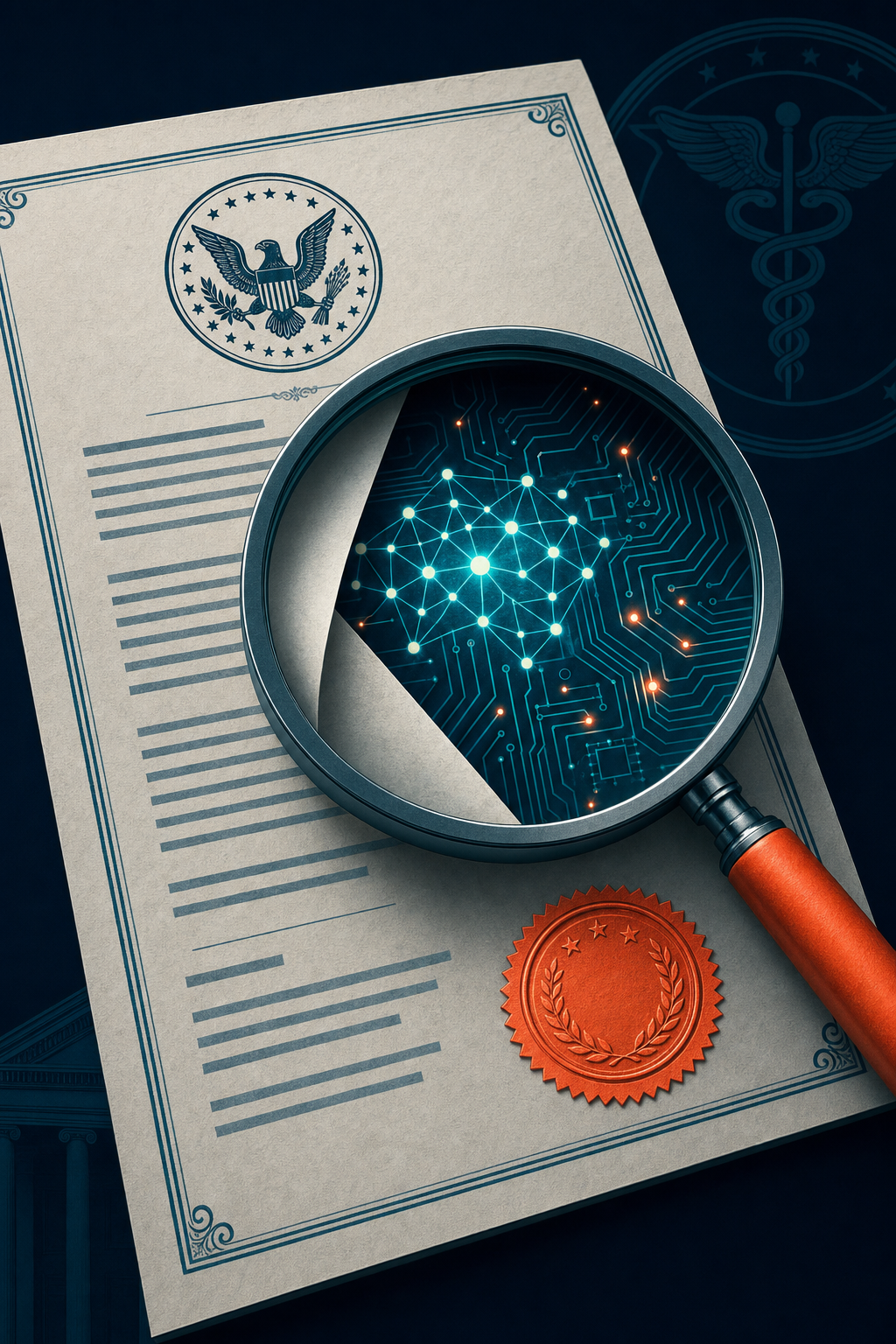
On April 2, 2026, the FDA issued its first warning letter explicitly citing artificial intelligence misuse under 21 CFR 211.22(c), marking a significant enforcement action against improper AI deployment in drug manufacturing. The Purolea case demonstrates the FDA is actively monitoring and penalizing misuse of AI in controlled manufacturing environments.
Impact: This sets a precedent for FDA enforcement on AI systems in pharma and medical device manufacturing. Companies must now ensure AI systems are properly validated and documented to avoid regulatory action.
ARPA-H Funds First FDA-Authorized AI Agent for 24/7 Heart Care
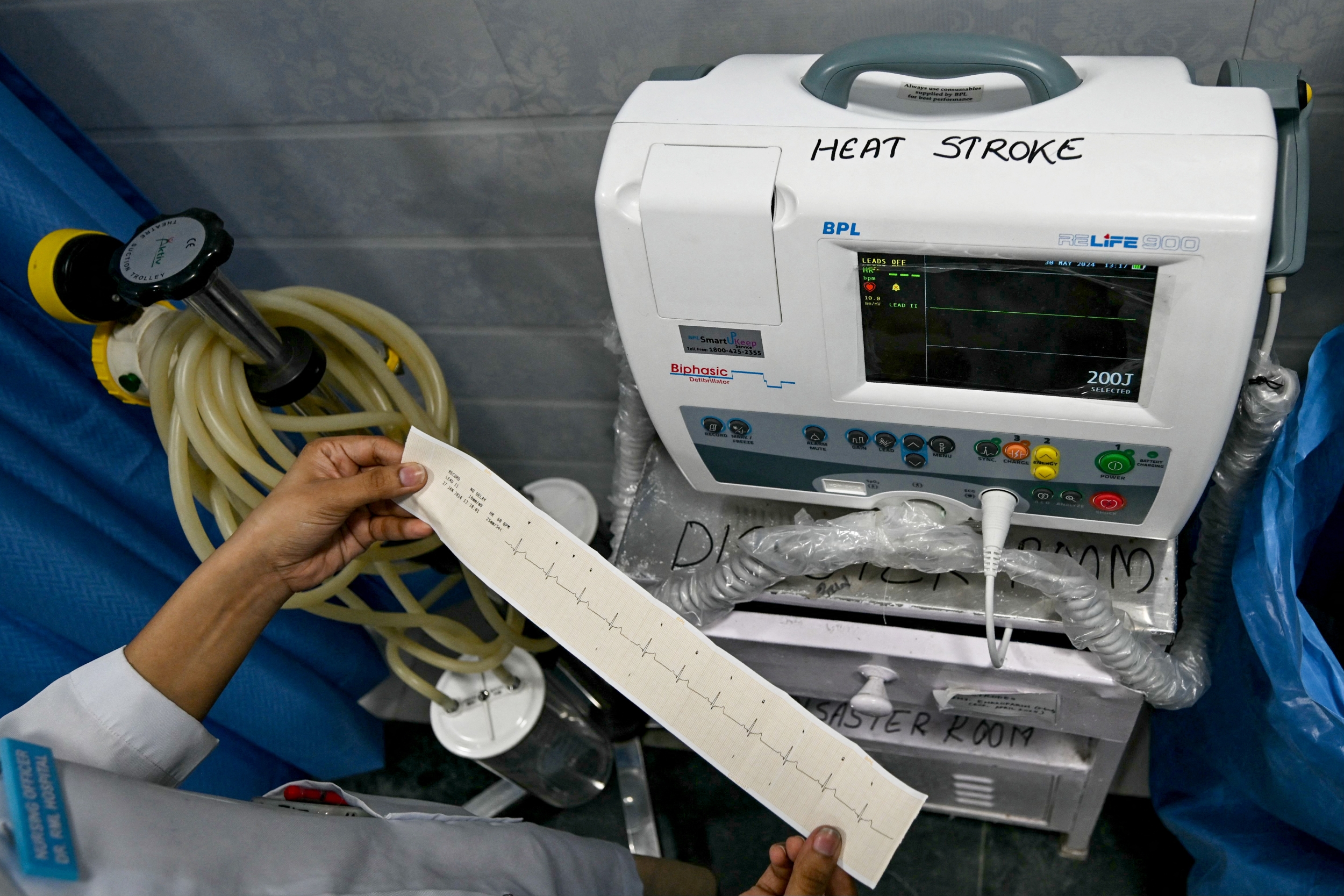
The U.S. government's health research agency (ARPA-H) is funding development of the first FDA-authorized artificial intelligence agent designed to deliver specialty medical care around the clock. This initiative aims to create an autonomous AI system capable of managing heart care continuously without human supervision.
Impact: This represents a shift toward autonomous AI agents in clinical care—a regulatory and clinical frontier. If successful, this model could transform staffing models for specialty care and address physician shortages.
MHRA Publishes Landmark Public Consultation on AI in Healthcare
The UK's Medicines and Healthcare products Regulatory Agency (MHRA) published results of an extensive public consultation revealing how the public views AI in healthcare. These findings will inform recommendations from the AI Commission and future UK regulatory approaches.
Impact: Public opinion is shaping healthcare AI regulation. The MHRA's approach signals that regulatory frameworks will incorporate public trust considerations, not just technical validation.
Clinical Frontlines
Mayo Clinic — AI Detects Pancreatic Cancer Up to 3 Years Early
- The AI: Machine learning model trained on minimal pathology slides identifies pancreatic cancer with high accuracy, potentially up to 3 years before clinical diagnosis.
- Results: The AI detected pancreatic cancer significantly ahead of specialist detection timelines, nearly doubling the window for early intervention. A 2026 Nature Cancer study identified 18 cancer types with high accuracy from minimal slide samples.
- Significance: Early detection of notoriously difficult-to-diagnose cancers like pancreatic cancer could transform survival rates. This demonstrates AI's potential in oncology pathology at scale.
NHS England — Microsoft 365 Copilot Rollout Saves Staff Weeks of Work Annually
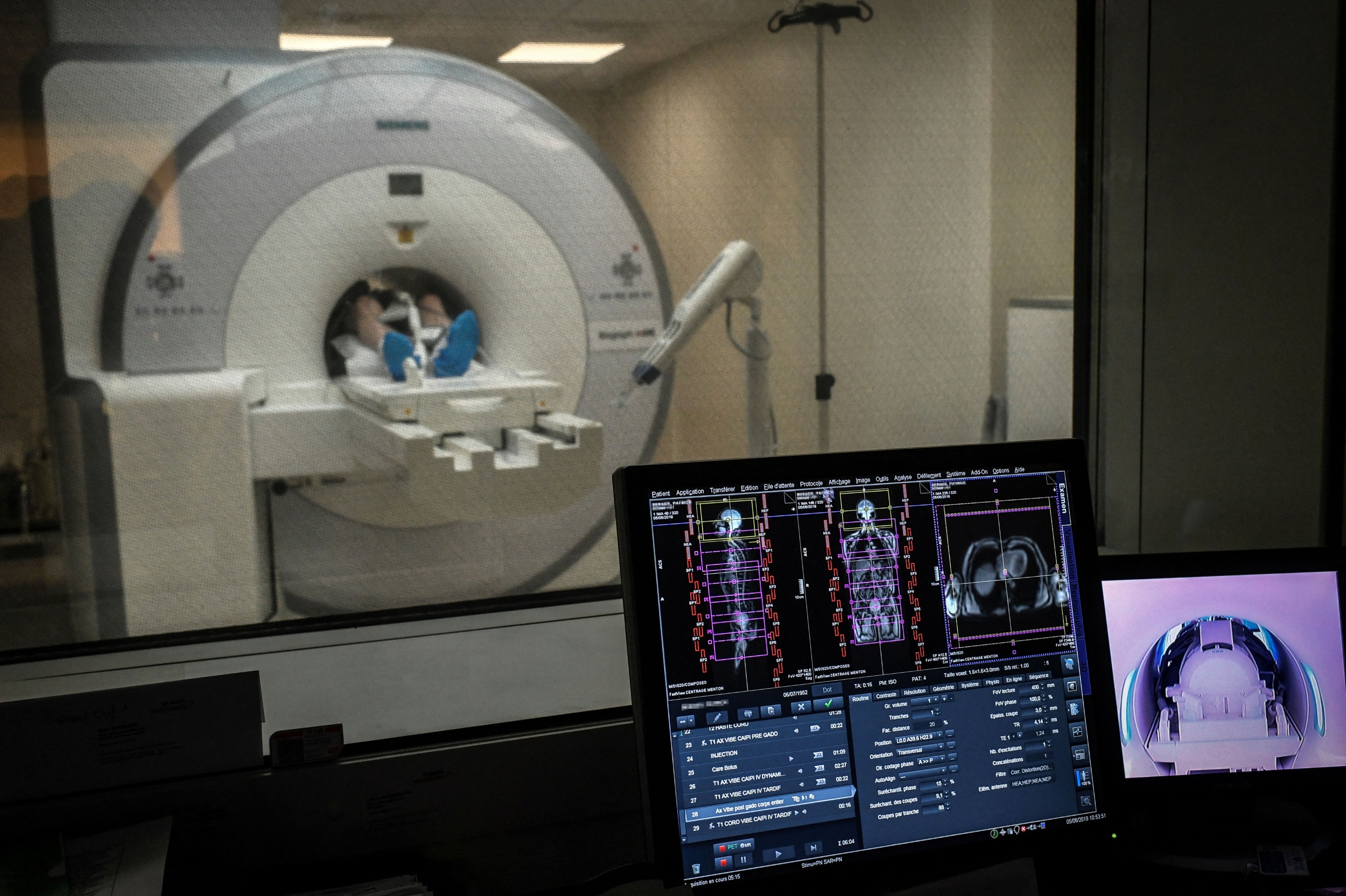
- The AI: Microsoft 365 Copilot AI assistant deployed across NHS England after large-scale trial success.
- Results: Trial data demonstrates significant productivity improvements. The rollout now extends to more than 500,000 healthcare workers, saving weeks of working time per person annually through automated administrative tasks.
- Significance: This shows AI adoption is accelerating in operational workflows, not just clinical diagnostics. Administrative AI is freeing clinicians from paperwork, though rollout speed is straining training and change management.

Philips Study — 71% of Clinicians Report Improved Workflow, But Health Systems Can't Keep Pace
- The AI: Multi-institutional survey by Philips covering 2,000+ healthcare professionals across 10 countries measuring AI adoption and impact.
- Results: 71% of clinicians report improved workflow efficiency with AI tools; many are expanding patient capacity. However, health systems struggle with infrastructure, training, and governance to support this rapid adoption.
- Significance: A critical finding: clinicians are embracing AI faster than hospitals can manage. This creates bottlenecks in validation, compliance, and technical support that could undermine safety and ROI.

Funding & Deals
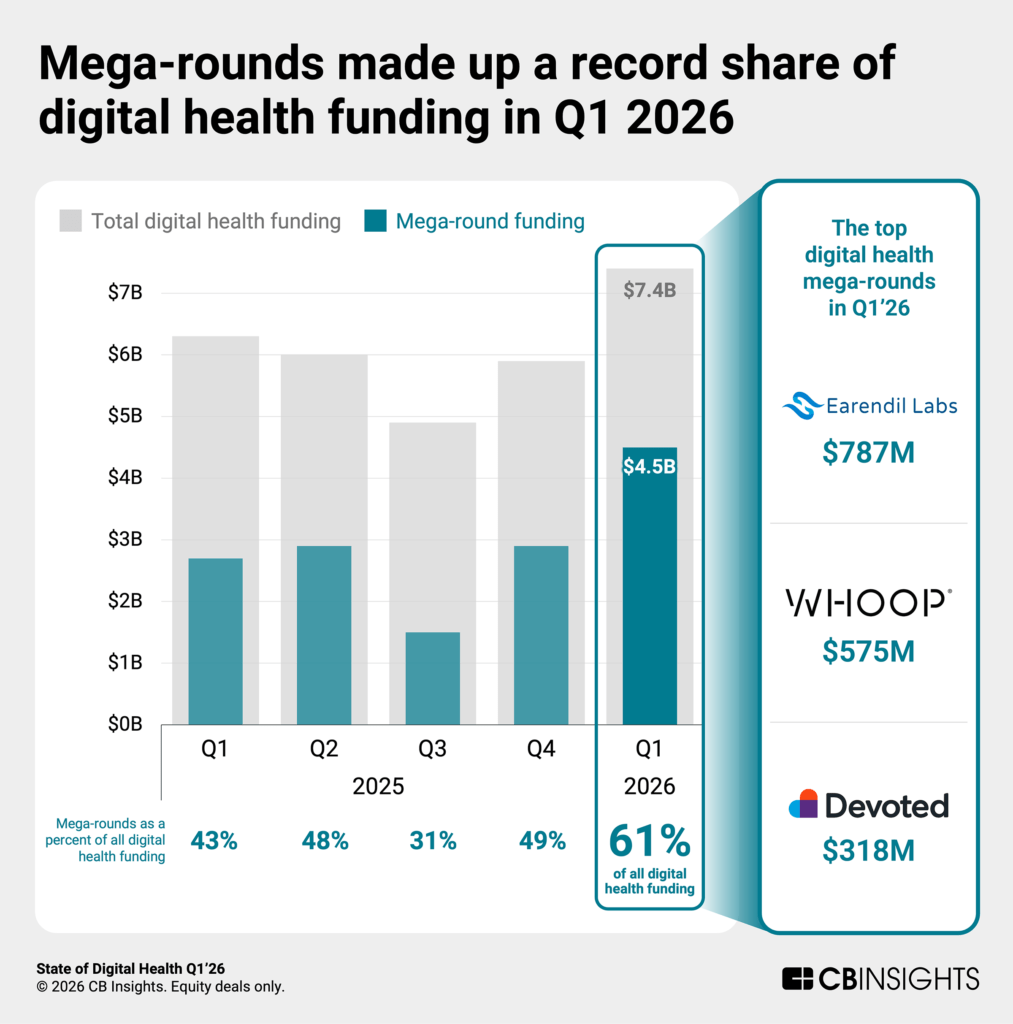
Earendil Labs — $787M Series Round (Largest Q1 2026 Digital Health Deal)
- What they do: Deep learning platform generating 40+ therapeutic programs for drug discovery acceleration.
- Investors: Earendil Labs secured the largest digital health funding round of Q1 2026 at $787 million.
- Why it matters: This signals massive investor confidence in AI-driven drug discovery. Timeline compression in therapeutic development is now fundable at mega-round scale. Takeda also committed up to $1.7B to Iambic Therapeutics, showing pharma's aggressive bet on AI-enabled pipelines.
Q1 2026 Digital Health Funding Hits $7.4B Across All Categories
- What they do: Broader digital health ecosystem (AI drug discovery, clinical platforms, patient engagement).
- Investors: Rock Health data shows $4B in Q1 2026 venture capital across 110 deals; additional mega-rounds in AI therapeutics pushed Q1 to $7.4B total.
- Why it matters: Q1 2026 funding was the strongest first quarter since data tracking began. AI is now table stakes—75% of capital flows favor AI-enabled platforms. Reimbursement certainty and enterprise contracts are driving larger, later-stage rounds.
Research Spotlight
Large Language Models and Clinical Trial Informed Consent
- Published in: NEJM AI (May 12, 2026)
- Key finding: Research by R. Goel and colleagues demonstrates how large language models could reshape informed consent in clinical research by making it clearer, more accessible, and more responsive to participant needs through plain-language revision, translation, and comprehension support.
- Clinical relevance: Informed consent is foundational to research ethics. AI-enhanced consent processes could improve participant understanding and autonomy, particularly for non-English speakers and patients with limited health literacy.
"Is AI Actually Improving Healthcare?" — Nature Medicine Editorial
- Published in: Nature Medicine (April 24, 2026)
- Key finding: Editorial by Goldenberg and Wiens questions whether AI implementations are delivering real clinical and operational improvements, or whether hype is outpacing evidence. The piece highlights the gap between AI capability demonstrations and real-world health system performance.
- Clinical relevance: Timely critical perspective as adoption accelerates. This reinforces the need for rigorous outcome validation before large-scale deployment—a crucial corrective against the current "outpace health system readiness" trend.
What to Watch Next Week
- FDA guidance on AI-enabled clinical decision support: Upcoming federal register updates may clarify which clinical AI systems require premarket review vs. post-market surveillance.
- HFMA Annual Conference AI sessions: Health system finance leaders gathering; expect announcements on enterprise AI procurement and ROI frameworks.
- Additional Mayo Clinic cancer AI publications: Watch for peer-reviewed validation of pancreatic cancer detection AI; clinical trial announcements may follow.
- Regulatory enforcement actions: FDA's first warning letter may trigger additional audits of pharma/device manufacturers using AI in manufacturing QA.
Reader Action Items
-
Health System Leaders: The Philips data shows clinicians are 3-6 months ahead of organizational readiness. Establish formal AI governance committees NOW—define validation criteria, training pathways, and integration workflows before clinician demand forces reactive deployment.
-
AI Healthcare Startups & Vendors: Q1 2026 funding data confirms enterprise contracts and recurring revenue are now prerequisites for large rounds. Regulatory de-risking (FDA clearance, clinical evidence) is a competitive moat. Plan clinical validation studies immediately.
-
Clinicians & Care Teams: Monitor your health system's AI governance posture. The disconnect between adoption speed and oversight is a patient safety and liability risk. Request documentation on clinical validation, bias testing, and incident reporting for any AI tool in your workflow.
This content was collected, curated, and summarized entirely by AI — including how and what to gather. It may contain inaccuracies. Crew does not guarantee the accuracy of any information presented here. Always verify facts on your own before acting on them. Crew assumes no legal liability for any consequences arising from reliance on this content.
Powered by
