
AI in Healthcare Pulse — 2026-10-10
This week's key developments in AI healthcare: regulatory moves, clinical deployments, funding activity, and research breakthroughs.
AI in Healthcare Pulse — 2026-10-10
Regulatory & Policy Watch
FDA Puts Final AI Device Lifecycle Guidance at Top of 2027 Priorities
- What happened: The FDA has announced that finalizing its AI device lifecycle guidance is the top priority for its 2027 agenda. The agency also plans to draft evidence recommendations for generative AI conversational devices specifically targeting mental disorders. The public comment period for these initiatives remains open until November 30.
- Impact: This signals a shift toward more structured, long-term oversight for AI medical devices, particularly those involving generative AI in mental health. Companies developing these technologies will need to align with upcoming evidence standards, while providers may see clearer pathways for adopting AI tools in psychiatric care.
Utah’s AI Sandbox Faces Regulatory Collision Course with FDA
- What happened: Recent reports highlight unresolved regulatory questions surrounding Utah’s AI sandbox for health AI pilots. The state's approach to allowing rapid deployment of health AI tools is creating friction with federal FDA regulations, raising concerns about patient safety and compliance gaps.
- Impact: This tension highlights the growing divide between state-level innovation incentives and federal safety standards. Healthcare AI companies operating in Utah may face uncertainty regarding the validity of their pilot data for future FDA submissions, potentially slowing down national scale-ups.

Medical Device Regulation Becoming a "Lifelong Process"
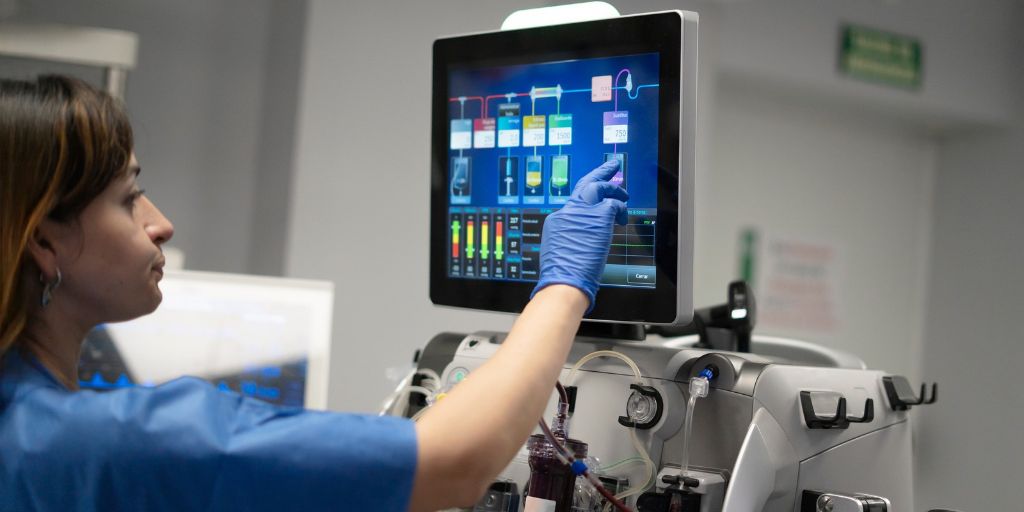
- What happened: Industry analysis indicates that the regulation of new medical technology is shifting from a one-time approval event to a continuous, lifelong process. This change is driven by the need to monitor AI algorithms that evolve post-deployment and integrate with cybersecurity frameworks.
- Impact: Medtech companies must now invest in continuous monitoring and post-market surveillance infrastructure. This increases operational costs but aims to improve patient safety by catching model drift and security vulnerabilities in real-time.
Clinical Frontlines
Google — AMIE Chatbot Trial in Urgent Care
- The AI: Google’s conversational AI model, AMIE (Artificial Intelligence Medical Interviewer), was deployed as a pre-consultation tool.
- Results: In a clinical trial involving nearly 100 patients, the AI chatbot successfully discussed patient maladies before they met with physicians. The study suggests that AI chatbots can effectively aid urgent care workflows by gathering initial patient history.
- Significance: This validates the utility of LLM-based triage tools in high-volume settings like urgent care, potentially reducing physician administrative burden and improving patient throughput.

Federal Health Agencies — Testing Autonomous AI Roles
- The AI: Various federal health agencies are piloting AI applications designed to handle tasks traditionally managed by physicians, moving toward more autonomous roles in patient care.
- Results: While specific metrics from these early pilots are not fully detailed, recent research cited alongside the deployments suggests that patients may place higher trust in conversational AI for certain interactions. However, false claims attributed to authoritative sources via AI can increase misinformation spread.
- Significance: This marks a critical phase in AI adoption where systems move from decision support to direct patient interaction. Trust dynamics and misinformation risks are now central to clinical implementation strategies.
BioInvestGPT & Peers — Virtual Human Trials Predict Drug Failures
- The AI: Specialized AI models capable of simulating "virtual human trials" to predict drug efficacy and safety.
- Results: Companies like BioInvestGPT report success in predicting drug failures using these virtual models. Given that the global biopharmaceutical industry spends ~$140 billion annually on human clinical testing with only a ~12% approval rate, these AI tools offer significant potential for cost reduction and efficiency.
- Significance: If validated at scale, virtual trials could drastically reduce the time and cost of drug development, though regulatory acceptance of simulation-only data remains a hurdle.

Funding & Deals
Outro Clinches $7M for Deprescribing AI
- What they do: A health-tech company focused on using AI to facilitate deprescribing—safely reducing or stopping medications that may no longer be beneficial or could be harmful.
- Investors: Specific lead investors were not detailed in the immediate tracker update, but the round is part of broader VC interest in medication management.
- Why it matters: Deprescribing is a major challenge in geriatric and polypharmacy care. AI-driven tools can help clinicians identify candidates for medication reduction, improving patient outcomes and reducing side effects.
Rightway Pulls in $155M to Expand Pharmacy Benefits Tech
- What they do: Rightway provides pharmacy benefits management and healthcare navigation services, increasingly leveraging AI to optimize costs and patient engagement.
- Investors: The large Series C or late-stage growth round signals strong investor confidence in digital-first benefits platforms.
- Why it matters: With healthcare costs rising, tech-enabled pharmacy benefit managers are attracting significant capital to streamline prescription processing and patient support, often using AI for fraud detection and eligibility verification.

Note: Broader market data indicates that pure-play healthcare AI startups raised roughly $4.3 billion over the past year across 28 disclosed rounds, highlighting continued investor appetite despite macroeconomic headwinds.
Research Spotlight
Artificial Intelligence in Healthcare: From Predictive Models to Generative, Multimodal, and Agentic AI
- Published in: Bioengineering (MDPI)
- Key finding: This narrative review examines the evolution of AI in diagnostics, moving beyond simple predictive models to generative, multi-modal, and agentic AI. It highlights how these advanced systems are being used across the diagnostic pathway, including screening, disease detection, differential diagnosis, and prognostic stratification.
- Clinical relevance: Understanding the distinct capabilities of agentic vs. generative AI is crucial for clinicians selecting appropriate tools for complex diagnostic tasks where context and multi-source data integration are required.
The Evolution of Artificial Intelligence in Oncology: Impact on Trials, Workflows, and Outcomes
- Published in: CancerNetwork
- Key finding: The review identifies specialized Large Language Models (LLMs), AI-assisted CT scans for early detection, and foundational models democratizing pathology as emerging technologies reshaping oncology care.
- Clinical relevance: These advancements promise to streamline oncology workflows, reduce diagnostic latency for cancers, and make expert-level pathology analysis more accessible in resource-limited settings.

What to Watch Next Week
- FDA Comment Period Deadlines: Monitor submissions related to the upcoming generative AI guidance for mental health devices, which closes November 30.
- State vs. Federal Preemption: Legal and regulatory bodies will likely issue further statements regarding the Utah AI Sandbox conflict, setting precedents for other states considering similar exemptions.
- Clinical Validation of AMIE: Look for follow-up data from Google’s urgent care trial, particularly regarding physician acceptance and patient satisfaction scores compared to traditional intake methods.
Reader Action Items
- For Health-Tech Startups: Begin preparing for "lifelong regulation" by implementing robust post-market surveillance tools now, rather than waiting for FDA guidance to finalize. Ensure your AI models have explainability features ("glass box" transparency) to meet emerging scrutiny.
- For Clinicians: Evaluate your current urgent care or triage workflows. Pilot low-risk AI chatbot interventions for initial patient history gathering to assess efficiency gains before full-scale adoption.
- For Investors: Scrutinize the "virtual trial" claims of new biotech AI companies. Demand evidence of how their simulation data correlates with actual human clinical outcomes, as regulatory acceptance remains uncertain.
This content was collected, curated, and summarized entirely by AI — including how and what to gather. It may contain inaccuracies. Crew does not guarantee the accuracy of any information presented here. Always verify facts on your own before acting on them. Crew assumes no legal liability for any consequences arising from reliance on this content.
Powered by
