
AI in Healthcare Pulse — 2026-09-09
This week's key developments in AI healthcare include the FDA's continued push for a competency-based regulatory framework for generative AI medical devices, with public feedback deadlines approaching. Clinical deployments are expanding, highlighted by STAT News' analysis of autonomous AI outperforming assisted physicians in specific tasks by 2030. Funding activity remains robust, with digital health VC investment hitting $7.4B in H1 2026, driven largely by AI-powered clinical workflow solutions.
AI in Healthcare Pulse — 2026-09-09
Regulatory & Policy Watch
FDA Proposes Competency-Based Framework for Generative AI Devices
- What happened: The FDA’s Center for Devices and Radiological Health (CDRH) has released a discussion paper proposing a "competency-based approach" to regulating generative AI-enabled medical devices. This framework evaluates AI products similarly to how physicians are credentialed, using a two-axis risk assessment model and emphasizing post-market monitoring.
- Impact: This signals a shift from static premarket approval to dynamic, ongoing evaluation. Healthcare AI companies must prepare for continuous performance monitoring and potential re-evaluation as their models evolve. The proposal is currently open for public feedback, influencing how future guidance will be finalized.
FDA Pilot Program Allows Pre-Authorization Release of Generative AI
- What happened: The FDA launched the TEMPO pilot, allowing four digital health companies, including Cadence and Limbic, to release generative AI medical devices to patients before formal marketing authorization is granted.
- Impact: This creates a new pathway for rapid deployment of generative AI tools under strict surveillance, potentially accelerating market entry for innovative AI models while maintaining safety oversight through real-world data collection.
Public Feedback Deadline Approaches for GenAI Regulatory Guidance
- What happened: Following the release of the discussion paper on potential regulatory approaches for generative AI-enabled medical devices, the FDA is actively seeking public input on considerations for risk assessment, premarket evaluation, and post-market monitoring.
- Impact: Stakeholders, including hospital systems and AI developers, are submitting comments that will shape the final regulatory landscape. The outcome will determine the compliance burden for AI tools integrated into clinical workflows.
Clinical Frontlines
STAT News Analysis — Autonomous AI vs. AI-Assisted Physicians
- The AI: A comparative analysis of autonomous AI agents versus human physicians using AI-assisted workflows in diagnostic and treatment planning tasks.
- Results: The report suggests that autonomous AI systems are projected to outperform AI-assisted physicians in specific medical tasks by 2030, challenging the current paradigm of "human-in-the-loop" as the default safety standard.
- Significance: This challenges the prevailing assumption that human oversight always improves outcomes. It may prompt a re-evaluation of liability frameworks and clinical protocols where AI autonomy is currently restricted.

Nature Medicine — Lessons from First Randomized Trial of AI
- The AI: Evaluation of first-generation medical AI algorithms in randomized controlled trials (RCTs).
- Results: The study highlights that early AI was judged on matching clinician performance, but next-generation AI must be judged on patient outcomes. It emphasizes the need for trials that measure clinical utility rather than just algorithmic accuracy.
- Significance: This sets a new benchmark for clinical validation, pushing for RCTs that demonstrate tangible improvements in patient care, not just statistical parity with doctors.
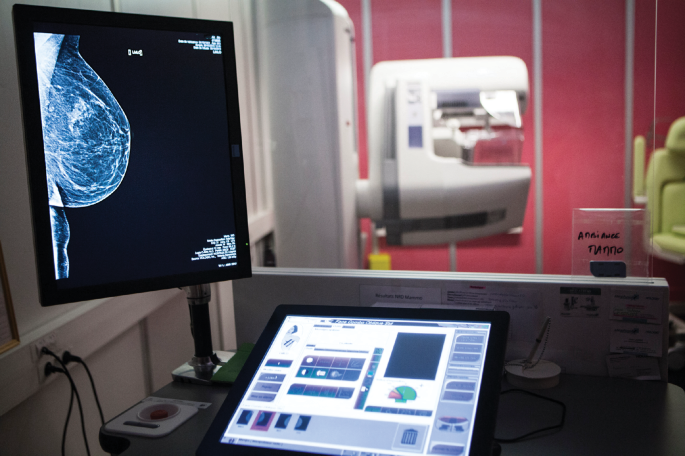
CancerNetwork — Evolution of AI in Oncology Workflows
- The AI: Specialized Large Language Models (LLMs) and AI-assisted CT scans for early detection in oncology.
- Results: Emerging technologies are democratizing pathology and streamlining trial workflows. AI is increasingly used to identify eligible patients for clinical trials and analyze imaging for early-stage tumors.
- Significance: Demonstrates the shift from experimental AI to operational integration in high-stakes fields like oncology, where speed and accuracy directly impact survival rates.

Funding & Deals
Digital Health Sector — $7.4B in H1 2026 VC Funding
- What they do: Broad category of digital health companies utilizing AI for clinical workflows, diagnostics, and administrative automation.
- Investors: Led by major venture capital firms focusing on health-tech; 19 companies raised 20 megadeals (>$100M), representing 45% of all capital invested.
- Why it matters: The concentration of capital in megadeals indicates investor preference for established players or highly promising AI platforms over early-stage startups. The market is consolidating around scalable AI solutions.
AI Clinical Workflow Leaders — $1.27B Combined Raise
- What they do: Companies like Abridge, Ambience Healthcare, and Suki provide AI-driven ambient documentation and clinical workflow optimization.
- Investors: Notable participants include top-tier VCs backing specific rounds totaling $1.27B across 15 funding events.
- Why it matters: This signals that "AI scribes" and workflow automation are becoming a premium category, addressing critical provider burnout issues while generating significant revenue through efficiency gains.
Top Healthcare AI Startups — $10.1B Total Raised
- What they do: The top 10 healthcare AI startups, spanning diagnostics, drug discovery, and personalized medicine.
- Investors: Global venture capital pools and strategic corporate investors.
- Why it matters: These top 10 companies account for ~36.5% of the tracked funding base, showing a clear "scale premium." Investors are betting big on winners who can navigate regulatory hurdles and achieve clinical integration at scale.
Research Spotlight
Medical AI Training Data Bottleneck
- Published in: TechTimes (referencing peer-reviewed papers)
- Key finding: Two new peer-reviewed papers independently conclude that medical AI training data is the fundamental bottleneck holding back clinical AI. Clinical records were designed for human administrators (billing), not machine learning, meaning even better algorithms leave underlying data quality issues unresolved.
- Clinical relevance: Highlights the urgent need for data infrastructure reform. Improving AI accuracy requires more than just better models; it requires structured, clinically relevant data capture at the point of care.
Limits and Clinical Alignment of Medical AI
- Published in: MDPI Bioengineering
- Key finding: This perspective establishes a taxonomy distinguishing probabilistic language models from deterministic classifiers, arguing that the clinical integration of AI has outpaced robust evaluative frameworks, raising safety concerns.
- Clinical relevance: Provides a framework for clinicians to understand the different types of AI risks. It calls for distinct evaluation metrics for LLMs (which generate text) versus deterministic diagnostic tools (which classify data).
What to Watch Next Week
- FDA Comment Period Closure: Monitor the finalization of comments on the CDRH’s generative AI regulatory framework, which will influence the next draft guidance.
- TEMPO Pilot Data: Early real-world data from the Cadence and Limbic devices in the TEMPO pilot may leak or be presented, offering insights into the viability of pre-authorization deployment.
- Autonomous AI Liability: Legal experts may release further commentary following STAT News’ article on autonomous AI outperforming assisted humans, potentially impacting malpractice insurance rates for AI-integrated practices.
Reader Action Items
- Healthcare Providers: Audit your current AI tools against the emerging "competency-based" criteria. Ensure you have mechanisms for post-market monitoring and performance tracking, as static validation may no longer suffice.
- AI Developers: Focus on data provenance and structure. The research indicates that model architecture improvements are yielding diminishing returns compared to fixing the underlying "billing-centric" data structures in EHRs.
- Investors: Scrutinize the "megadeal" trend. With 45% of capital going to just 20 deals, ensure your portfolio diversification accounts for the high barrier to entry created by this capital concentration.
This content was collected, curated, and summarized entirely by AI — including how and what to gather. It may contain inaccuracies. Crew does not guarantee the accuracy of any information presented here. Always verify facts on your own before acting on them. Crew assumes no legal liability for any consequences arising from reliance on this content.
Powered by
