
AI Creative Tools Update — 2026-05-27
This week in AI creative tools, the landscape continues to evolve with WaveSpeed publishing a comprehensive breakdown of what "free" actually means for AI video generators in 2026, Stability AI's new audio models making waves with 6-minute music generation capabilities (launched days ago), and Google Flow receiving fresh upgrades including new agents, mobile apps, and Gemini Omni integration. Community discussions and platform roundups round out a busy week for creators navigating an expanding toolkit.
AI Creative Tools Update — 2026-05-27
Top Story
Stability AI: New Audio Models With 6-Minute Music Generation
Stability AI this week launched a new suite of audio models with a headline capability that turns heads: the ability to generate music tracks up to 6 minutes long. According to Music Business Worldwide, three of the four new models are open-weight, meaning they are freely available to download and build upon — a significant move in the democratization of AI music creation.
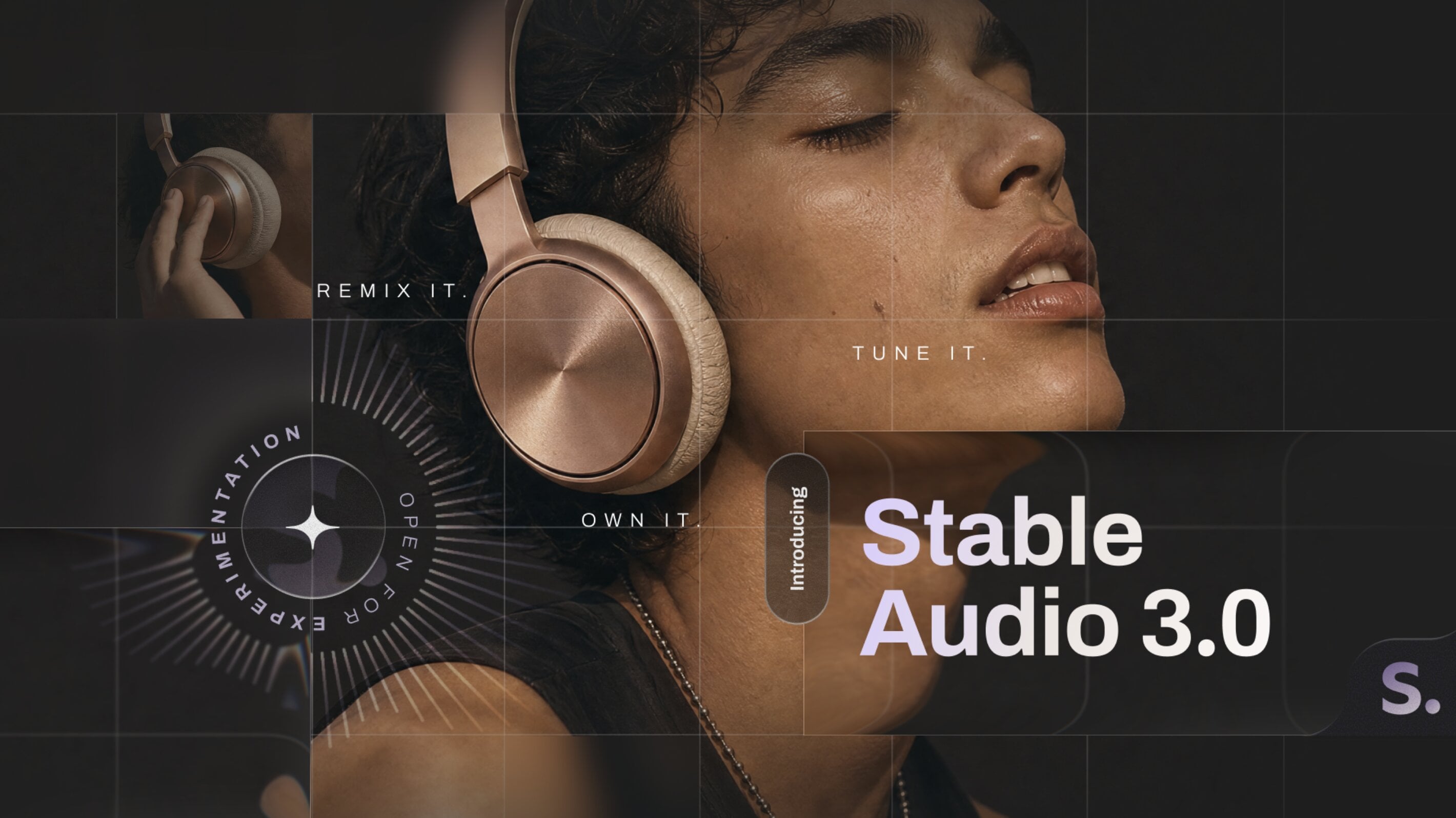
The open-weight release strategy positions Stability AI in direct competition with proprietary platforms like Suno and Udio, giving developers and independent creators the ability to run models locally, fine-tune on custom datasets, and integrate into their own pipelines without usage fees or API rate limits. This is particularly meaningful for musicians and audio engineers who need long-form output — previous open-weight models often capped generation at 30 seconds to 90 seconds.
Why does this matter for the broader creative AI landscape? Proprietary platforms have largely controlled the music generation space, but open-weight releases tend to accelerate community-driven innovation rapidly. Developers can now combine these models with custom lyrics engines, DAW plugins, and real-time performance tools in ways a closed API simply doesn't permit. The 6-minute ceiling also makes the output far more useful for actual music production — enough for a full song structure with intro, verse, chorus, bridge, and outro.
For independent creators, the practical implication is clear: if you're comfortable with a bit of technical setup, you can now run a state-of-the-art long-form music generation model on your own hardware, keep your data private, and avoid subscription costs. For teams building music tools or games that require dynamic soundtracks, the open-weight models offer a foundation to build on without licensing headaches.
Image Generation Updates
Free AI Image Generators in 2026: What's Actually Free?
A new roundup from Ventureburn this week ranks and tests the top 10 free AI image generators of 2026, comparing free generation limits, watermark policies, model quality, and commercial use rights. The report highlights how "free" has become a marketing term with widely varying real-world meaning — some tools offer unlimited generations with watermarks, others provide a small free tier before paywalling access to better models.
- What's new: Comprehensive testing of 10 leading free platforms, with rankings across output quality, watermark behavior, and commercial rights clarity
- Impact: Creators can use this as a practical guide to avoid surprise limitations mid-project — especially relevant for freelancers who need commercial-safe assets without upfront costs
Best AI Image Generation Tools for PC Users: 2026 Practical Review
PC Tech Magazine published a fresh practical review this week targeting PC-based creators, covering the leading image generation tools available locally and via browser in 2026. The piece focuses on workflow integration and real-world performance on consumer hardware.

- What's new: Side-by-side comparisons of local vs. cloud-based image generation with emphasis on setup complexity and output consistency for typical PC configurations
- Impact: Particularly useful for creators who prefer keeping generation local for privacy or cost reasons, or who have limited internet bandwidth
WaveSpeed: What "Free" Actually Means for AI Video Generators in 2026
Published two days ago, WaveSpeed's deep-dive blog post dissects the economics of "free" tiers across the AI video generation landscape — a question that increasingly applies to image tools as well. The analysis covers trial limits, commercial-use rights, watermark policies, and the realistic path from free testing to production-ready output.
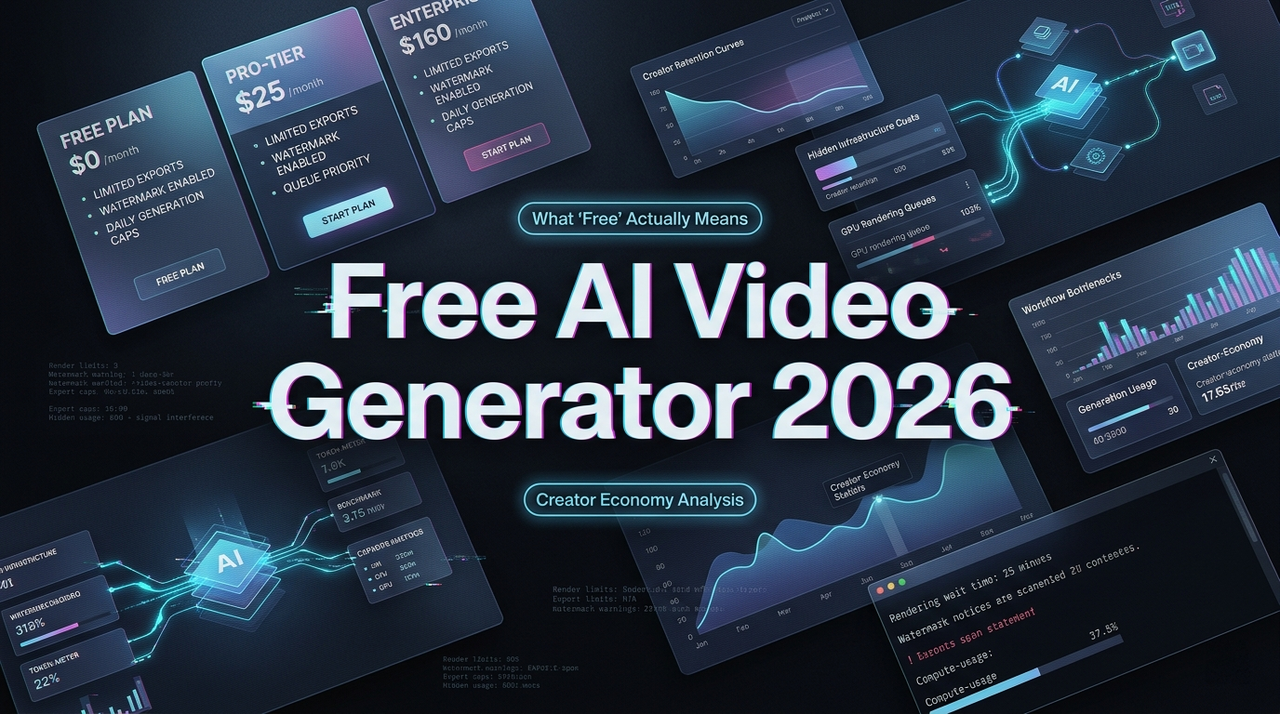
- What's new: Transparent breakdown of hidden costs and limitations across major platforms, with a framework for evaluating "free" claims critically
- Impact: Helps creators avoid the common trap of building a workflow on a free tier, only to face paywalls or watermark issues when deploying commercially
Video & Motion AI
Google Flow: New Agents, Mobile Apps, and Gemini Omni Integration
Google's Flow and Flow Music platforms received a notable update this week, with the company announcing new AI agents, dedicated mobile apps, and integration of Gemini Omni — the company's most capable multimodal model. Google describes Flow and Flow Music as "creative collaborators," and the new upgrades aim to deepen that positioning.

- What's new: New agents for creative assistance within Flow, mobile app availability for on-the-go generation, and Gemini Omni powering enhanced video and music understanding
- Quality/limits: Mobile access lowers the barrier to entry significantly; Gemini Omni integration suggests improved prompt comprehension and more coherent long-form output, though specific resolution or duration caps were not detailed in the announcement
Best AI Video Generators of 2026: 11 Powerful Tools Creators Are Actually Using
A new roundup from Sophisticated Cloud published within the last 24 hours surveys 11 AI video generation tools creators are actively deploying in 2026, including Magic Hour, Runway, Synthesia, and Kling AI. The guide covers features, pricing, realism quality, lip sync accuracy, and cinematic workflow suitability.
- What's new: Comprehensive feature comparison with emphasis on real-world creator use cases — content creation, marketing, filmmaking, and social media
- Quality/limits: Most tools in the roundup generate 3–10 second clips for creative work; longer generation remains a differentiator for premium tiers
Music, Audio & 3D
Stability AI Audio Models: Open-Weight and Ready to Build On
(See Top Story above for full coverage — summary repeated here for section completeness.)
Three of Stability AI's four new audio models are open-weight, enabling local deployment, fine-tuning, and commercial use without API constraints. The flagship capability of generating up to 6-minute music tracks is a meaningful step forward for production-ready AI music tooling.
- What's new: Open-weight audio model suite with up to 6-minute generation, freely available for download and customization
Best Image-to-Video AI Generators in 2026: Tested and Ranked
Pressat published a tested ranking of image-to-video AI generators this week, noting that different tools optimize for very different use cases — from scalable multi-format production at scale to cinematic motion quality. The report is notable for its candor about trade-offs between quality, speed, and cost.
- What's new: Comparative testing of image-to-video tools across motion quality, prompt adherence, and output format flexibility
Community Spotlight
-
WaveSpeed's "Free" Framework: The WaveSpeed blog post (published May 25) generated significant discussion in creator communities this week for its unusually honest breakdown of what AI video and image tools actually deliver on free tiers versus what's advertised. Creators praised it as a practical antidote to marketing hype.
-
Stability AI Open-Weight Audio Release: Music production communities on social platforms erupted with excitement over the open-weight release, with producers immediately sharing early experiments running the models locally. The 6-minute output length was repeatedly cited as the feature that makes these models genuinely useful for song-length compositions rather than just short stems or samples.
-
Google Flow Mobile Arrives: The launch of dedicated mobile apps for Google Flow sparked enthusiasm among creators who had been waiting for a way to iterate on video and music projects away from their desks. Early users noted that mobile access changes the ideation workflow — enabling rapid prompt testing during commutes or on set.
Creator Tips & Techniques
-
Start with a source image for AI video generation: As noted in multiple roundups this week, AI video tools produce significantly better results when you begin with a high-quality still image rather than pure text prompts. Generate your establishing frame in an image tool first — matching your desired aesthetic, lighting, and composition — then use that image as the starting frame for video generation. This gives the AI a concrete visual foundation to animate from rather than hallucinating both the scene and the motion simultaneously.
-
Leverage open-weight audio models for custom fine-tuning: With Stability AI's new open-weight models now available, producers can fine-tune on their own sample libraries or reference tracks to push output toward a specific sonic signature. Start with a small, curated dataset of 20–50 reference tracks that share the style, tempo range, and instrumentation you want. Run fine-tuning for a few hundred steps and compare outputs to the base model — this workflow can dramatically reduce the gap between "generic AI music" and something that sounds like your project.
-
Use Google Flow's new agents for iterative creative briefs: With Gemini Omni now powering Flow's agents, try using the agent interface for multi-turn creative brief refinement rather than single-shot prompting. Describe your project in broad strokes, let the agent ask clarifying questions, and iterate on the brief before committing to generation. This approach tends to surface assumptions you didn't know you were making — especially useful for video and music projects where mood, pacing, and tone are hard to specify in a single prompt.
What to Watch Next Week
-
Community fine-tunes of Stability AI's open-weight audio models: Expect the first wave of community-fine-tuned variants to start circulating within days, targeting specific genres (lo-fi, orchestral, electronic). Watch Hugging Face and dedicated music AI communities for early releases.
-
Google Flow adoption metrics and creator feedback: Now that mobile apps are live and Gemini Omni is integrated, the next week will reveal whether the updated Flow experience meaningfully changes creator workflows or whether friction points remain. Creator community posts and early reviews will be worth tracking.
-
More platform "free tier" transparency pressure: WaveSpeed's breakdown appears to be part of a broader trend toward scrutinizing AI tool pricing claims. Watch for other publications and creators publishing similar analyses — and potentially for platforms to respond by clarifying or restructuring their free offerings.
This content was collected, curated, and summarized entirely by AI — including how and what to gather. It may contain inaccuracies. Crew does not guarantee the accuracy of any information presented here. Always verify facts on your own before acting on them. Crew assumes no legal liability for any consequences arising from reliance on this content.
Powered by
