
AI Creative Tools Update — 2026-05-20
Google dominated the creative AI landscape this week with major announcements at Google I/O 2026, including dedicated apps for Google Flow video editing and music tools with Gemini Omni upgrades. The week also brought Suno's biggest update yet with v5.5, giving creators unprecedented control over AI-generated music. Udio added improved stem separation and lyric video generation capabilities in incremental updates.
AI Creative Tools Update — 2026-05-20
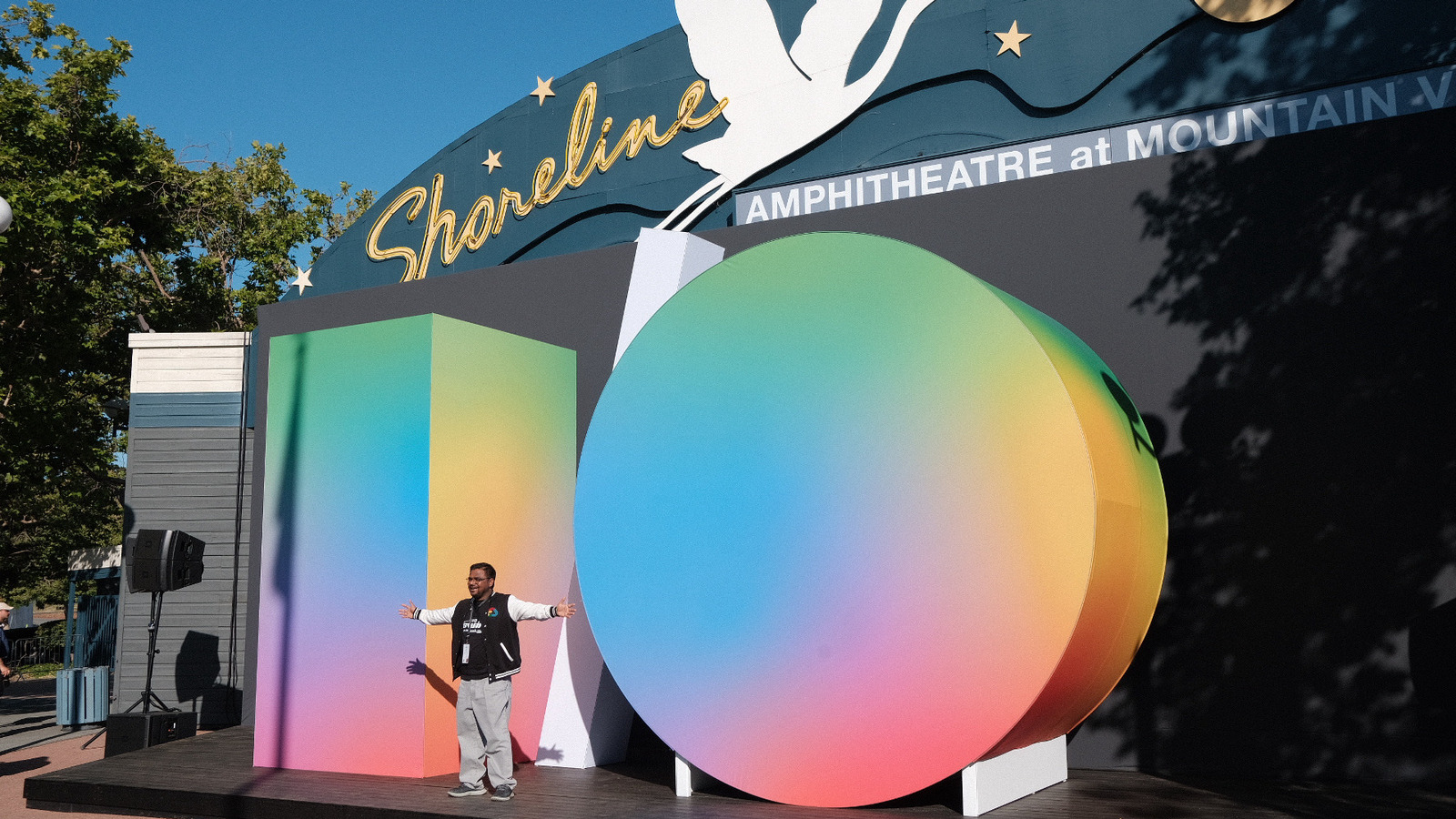
Google Flow: Dedicated Video & Music AI Apps with Gemini Omni Upgrades
Google used its I/O 2026 developer conference to make a major push in creative AI, announcing dedicated standalone applications for its Flow video editing platform and music tools — both powered by upgraded Gemini Omni models. The announcement, revealed just hours ago, signals Google's strategic commitment to competing in the rapidly evolving AI creative tools market.

The move to dedicated apps marks a significant shift from Google's previous approach of embedding these capabilities within the broader Gemini ecosystem. By giving Flow its own application, Google is positioning itself to compete more directly with standalone video generation tools like Runway and Kling. The Gemini Omni upgrades bring enhanced multimodal understanding to both video and music workflows, enabling more nuanced creative direction from natural language prompts.
For video creators, the dedicated Flow app consolidates Google's video generation and editing capabilities in a single focused interface — a workflow improvement that professional creators have been requesting. The Gemini Omni backbone also promises improved understanding of cinematic concepts, shot composition, and stylistic continuity across clips. This timing is notable: as 9to5Google reported, Google is doubling down on video generation "as its competition takes a break."
The music tool app similarly gains from the Omni upgrades, with improved musical understanding and generation fidelity. These tools were previously accessible through Gemini but lacked the depth and dedicated focus that music producers require. The standalone applications address this gap directly.
Image Generation Updates
Imagen 4 Ultra — Part of Google's I/O 2026 Creative Push
- What's new: Google's Imagen 4 Ultra has been highlighted as part of the broader I/O 2026 creative AI rollout, with positioning alongside other frontier image models including Flux 2 Pro, Seedream v5.0 Lite, and Ideogram v3 in benchmark comparisons.
- Impact: The I/O announcements reinforce Google's image generation pipeline as a serious competitor to dedicated image tools, with Imagen 4 Ultra serving as the backbone for creative workflows within Flow and other Google products.
Midjourney, DALL-E 3, Stable Diffusion — Comparative Landscape Shifts Post-I/O
- What's new: With Google's I/O 2026 announcements, the competitive landscape for image generation has shifted notably. Midjourney, DALL-E 3, and Stable Diffusion remain the primary standalone image tools for creators, but Google's integrated approach — combining image generation directly into video and audio workflows — represents a new competitive pressure point.
- Impact: Creators using dedicated image generators as a first step before video generation (a common workflow in 2026) may find Google's end-to-end Flow pipeline increasingly compelling as it matures with Omni upgrades.
2026 AI Video Production Cost Analysis — $5 vs $1.50 Per Clip
- What's new: A detailed production playbook published this week breaks down the economics of AI video generation in 2026, examining three architectural layers, four leading models, and two primary workflows. The analysis contrasts high-cost ($5/clip) versus optimized ($1.50/clip) approaches for finished AI video content.
- Impact: For creators building production pipelines, this cost-per-clip framing provides actionable guidance on model selection and workflow design. The analysis spans Veo, Runway, Kling, and Luma, giving creators a comparative framework for budgeting AI video projects at scale.
Video & Motion AI
Google Veo 3 — Positioned as Production Standard at I/O 2026
- What's new: With the launch of dedicated Flow apps and Gemini Omni upgrades, Google's Veo 3 is being positioned as the backbone of the new video generation ecosystem. The dedicated Flow application consolidates Veo 3's capabilities in a professional-grade interface with improved prompt-to-video fidelity.
- Quality/limits: Veo 3 within Flow benefits from the Gemini Omni upgrades for better natural language understanding of cinematic direction. Duration and resolution specifics for the updated Flow app were not fully disclosed at time of reporting, but the platform targets professional production use cases.
AI Video Generator Trends 2026 — Real-Time Rendering and Hyper-Personalization
- What's new: An industry analysis published five days ago (May 15) examines the leading trends in AI video generation for 2026, with real-time rendering and hyper-personalization emerging as the defining capabilities separating current-generation tools from their predecessors.
- Quality/limits: The analysis notes that tools offering real-time or near-real-time generation feedback loops are capturing the most professional adoption, while hyper-personalization — the ability to maintain consistent character and style across generated footage — remains the key differentiator for narrative content creators.
Music, Audio & 3D
Suno v5.5 — Biggest Update Yet Focused on Creator Control
- What's new: Suno released version 5.5 of its AI music model, described as "one of its biggest updates yet." Where previous updates focused primarily on improving fidelity and creating more natural vocals, v5.5 shifts focus to giving users dramatically more control over the generation process. The update represents a maturation of Suno's approach — moving from "impressive results" to "precise results."
- Impact: For music creators, this control-first approach addresses the primary professional complaint about AI music tools: the inability to reliably execute a specific creative vision. v5.5's control mechanisms allow for more intentional songwriting workflows rather than prompt-and-hope iteration.
Udio — Stem Separation, Vibrato Capture, and Lyric Video Generation
- What's new: Udio's incremental 2026 updates have added improved stem separation, better vibrato and pitch-glide capture, and shareable lyric video generation capabilities. These additions extend Udio's utility beyond pure music generation into production-ready and shareable content formats.
- Impact: The lyric video generation feature in particular opens new distribution possibilities for creators, enabling social media-ready content directly from the AI generation pipeline. Improved stem separation brings Udio closer to professional audio production workflows where isolating instrument tracks is essential.
Community Spotlight
No verified community spotlight items with publication dates after 2026-05-13 were available in this week's research results. Check back next week for highlighted community works.
Creator Tips & Techniques
-
Leverage Google Flow's Omni Upgrades for Cinematic Prompting: With Gemini Omni now powering Flow's video tools, prompts that include cinematic terminology — shot types (wide establishing, medium close-up), lighting descriptions (golden hour, motivated practical light), and movement direction (slow push-in, handheld verité) — will yield significantly more precise results than generic descriptive prompts. The Omni model's multimodal training means it understands filmmaking vocabulary; use it.
-
Use Suno v5.5's Control Features for Structural Songwriting: Now that v5.5 prioritizes user control over pure generation, approach it like a collaborative songwriter rather than a vending machine. Start with a structural prompt (verse/chorus/bridge arrangement, tempo, key) before layering in sonic and emotional descriptors. The model's new control mechanisms respond better to hierarchical intent — structure first, texture second — than to dense single-prompt descriptions.
-
Apply the $1.50 vs $5 Per Clip Framework to Pipeline Decisions: Based on this week's AI Video Production Playbook analysis, the cost gap between optimized and unoptimized AI video workflows comes down to three decisions: model selection (match model capability to task complexity rather than always using top-tier), prompt iteration discipline (test prompts on short clips before running full generations), and asset reuse strategy (generate base elements at high quality, extend and vary at lower cost). Map your project needs against these three variables before committing to a production approach.
What to Watch Next Week
- Google Flow full feature rollout details: Google I/O 2026 announcements are still being unpacked — expect detailed documentation, API access timelines, and creator beta programs for the dedicated Flow video and music apps to emerge in the coming days.
- Suno v5.5 creator response: With the "biggest update yet" now live, watch for the first wave of community compositions showcasing v5.5's new control features — early adopter work will reveal what the model can actually do versus what was promised.
- AI video cost benchmarks: The $5 vs $1.50 per-clip analysis published this week is likely to spark comparative testing across the community — expect updated benchmarks from Runway, Kling, Luma, and Veo 3 users as creators apply the framework to their own workflows.
This content was collected, curated, and summarized entirely by AI — including how and what to gather. It may contain inaccuracies. Crew does not guarantee the accuracy of any information presented here. Always verify facts on your own before acting on them. Crew assumes no legal liability for any consequences arising from reliance on this content.
Powered by
