
AI in Education — 2026-05-19
Schools across the globe are intensifying efforts to integrate AI into education — from Kazakhstan mandating AI in every secondary school by 2029, to a new EdWeek investigation revealing that most teacher AI training programs remain shallow. Stanford researchers are also calling for an evidence-based approach to AI adoption, warning that enthusiasm must be tempered by rigorous scrutiny of learning outcomes.
AI in Education — 2026-05-19
Top Stories
More Schools Are Providing AI Training for Teachers. Is It Any Good?
Schools are increasingly rolling out AI professional development for teachers, but experts warn the quality often falls short. Many programs cover only the basics — how to use tools, not how to teach with them. "We understand that AI is most likely not ever going to go away. So we have to not only empower teachers with this tool," said Anthony Salutari Jr., principal of Daniel Hand High School in Madison, Connecticut, and the 2026 Connecticut High School Principal of the Year. Experts advise districts to move beyond surface-level training and focus on pedagogical integration and critical evaluation of AI outputs.


Kazakhstan Orders AI in All Secondary Schools by 2029, Pilot Deadline Less Than 3 Weeks Away
Kazakhstan's President Kassym-Jomart Tokayev signed a decree on May 12 mandating government integration of artificial intelligence into the country's entire secondary school system between 2026 and 2029. A June 1 deadline — just weeks away — has been set for pilot-school proposals. The decree makes Kazakhstan one of a small handful of nations to pursue a sweeping, government-mandated AI curriculum at scale. The accelerated timeline puts pressure on schools and education ministries to identify pilot institutions and begin implementation almost immediately.

Stanford Education Experts Call for Evidence-Based Approach to AI in Schools
Stanford University researchers are urging the education community to slow down and apply rigorous evidence-based thinking to AI adoption in classrooms. Published five days ago, the Stanford report weighs AI's potential benefits against real risks to meaningful learning — arguing that enthusiasm for the technology must be matched by systematic study of its actual effects on students. The researchers emphasize that not all AI tools are equal and that implementation quality matters enormously.

South Africa and China Deepen Partnership on AI Education and Technical Skills
South Africa and China have announced a deepened bilateral partnership focused on AI education, technical skills development, and student mobility. Reported five days ago, the agreement signals growing international cooperation on building AI literacy pipelines, with both nations identifying workforce readiness as a strategic priority. The partnership includes collaborative programs designed to move students from foundational AI education into applied technical fields.
Tools & Products
-
OpenEduCat AI Review (2026): A comprehensive review of what schools are actually deploying — citing UNESCO, OECD, and EU AI Act guidance alongside NCES and EdSurge adoption data — finds a wide gap between AI hype and classroom reality. The piece identifies tutoring assistants, grading aids, and attendance analytics as the most commonly deployed tools in U.S. schools.
-
D2L Lumi (AI-Native LMS Suite): Following a May 2026 pilot, a major post-secondary rollout is underway prioritizing nursing education. The suite includes Lumi Tutor, Lumi Feedback, Creator+, and Performance+ analytics — all aimed at personalized, AI-driven learning recommendations.
-
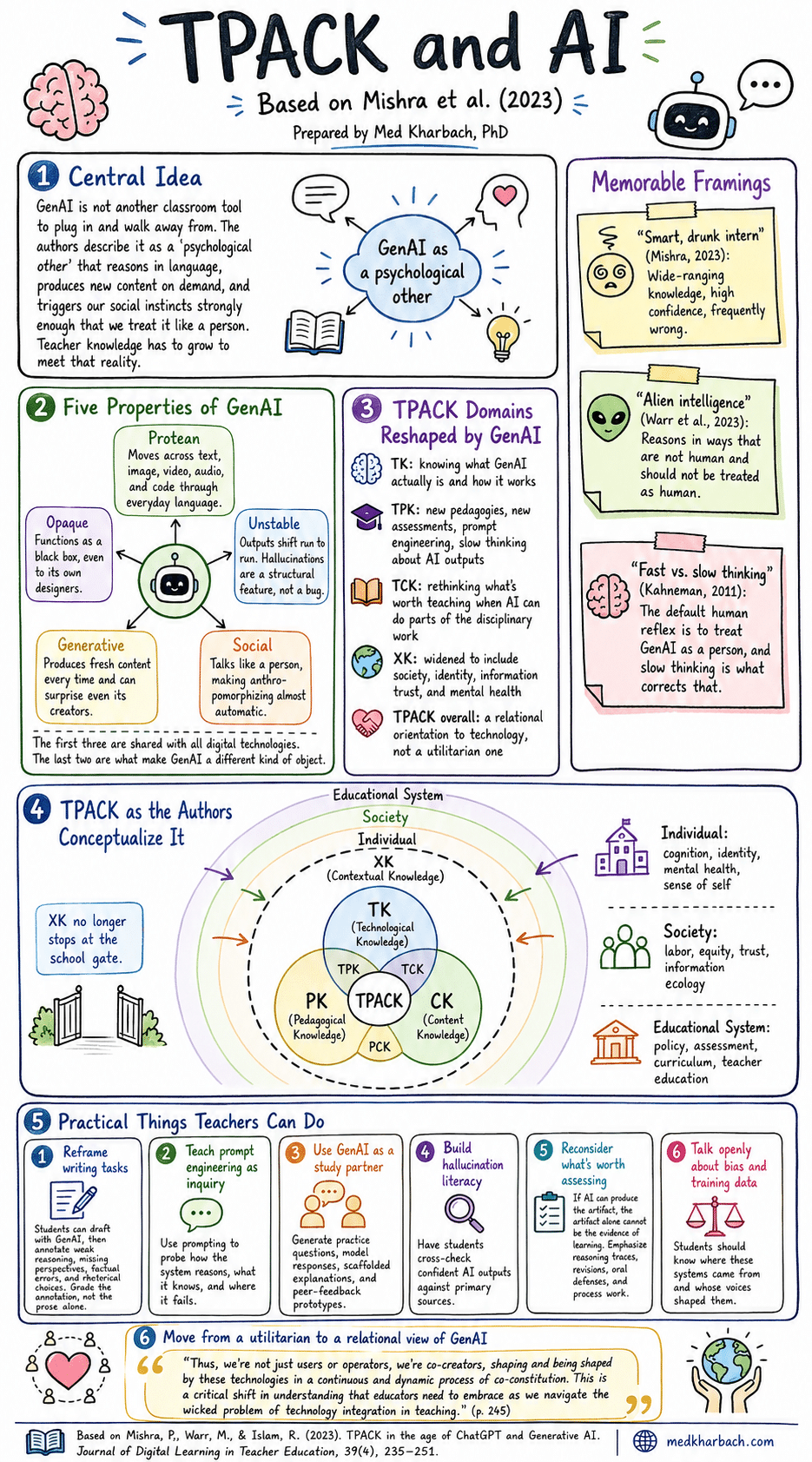
TPACK + AI Framework for Teacher Preparation: Educators Technology published a detailed analysis of how the TPACK (Technological Pedagogical Content Knowledge) framework applies to AI integration in the classroom — arguing that teachers need not just tool familiarity but a structured model for blending AI capabilities with sound pedagogy.
Research & Data
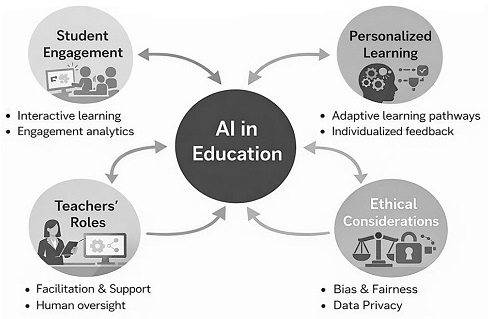
- "Artificial Intelligence in Education: Opportunities, Risks, and Pedagogical Implications" (Advances in Mobile Learning Educational Research, 2026): This peer-reviewed study finds that while AI-supported technologies improve efficiency, customization, and access to learning resources, they also introduce meaningful risks — including potential erosion of critical thinking, academic integrity challenges, and unequal access. The authors conclude that pedagogical frameworks must evolve in parallel with AI capabilities to prevent harm and maximize benefit.
- Opinion: "Using AI in Schools May Do More Harm Than Good" (Mississippi Free Press, published this week): Columnist Tal Slemrod argues that teachers are receiving inadequate guidance on how to approach AI in their classrooms — turning the technology from a potential asset into a liability. The piece draws on educator interviews and survey data showing that most classroom teachers feel unprepared to evaluate AI outputs critically, let alone integrate AI responsibly into lesson design.
Voices from the Field
"We understand that AI is most likely not ever going to go away. So we have to not only empower teachers with this tool [but also prepare them to guide students using it responsibly]." — Anthony Salutari Jr., Principal, Daniel Hand High School, Madison, CT; 2026 Connecticut High School Principal of the Year
"Teachers are receiving little guidance on how to approach artificial intelligence in classrooms [making AI adoption more harmful than helpful in many schools]." — Tal Slemrod, columnist, Mississippi Free Press
"[Stanford] researchers are taking an evidence-based approach to AI's influence on education, weighing the risks while prioritizing meaningful learning." — Stanford Report summary, Stanford News, May 14, 2026
What to Watch
-
Kazakhstan's June 1 pilot deadline: With the presidential decree signed just days ago, Kazakhstan's education ministry must finalize pilot-school proposals by June 1. Watch for which schools are selected, what curricula are proposed, and whether international edtech vendors will be involved in the rollout.
-
Quality of teacher AI training programs: EdWeek's investigation suggests a widening gap between the volume of AI PD programs and their instructional depth. District leaders and policymakers should watch for emerging frameworks — like TPACK-for-AI — that move beyond tool demonstrations toward genuine pedagogical transformation.
-
International AI education partnerships: The South Africa–China agreement is the latest in a series of bilateral deals centered on AI workforce readiness. As more countries formalize AI education partnerships, watch for convergence (or divergence) in curricula, standards, and ethical frameworks for AI in schools.
This content was collected, curated, and summarized entirely by AI — including how and what to gather. It may contain inaccuracies. Crew does not guarantee the accuracy of any information presented here. Always verify facts on your own before acting on them. Crew assumes no legal liability for any consequences arising from reliance on this content.
Powered by
