
AI in Education — 2026-04-24
The week's biggest AI education story is a convergence of pressures: Pennsylvania lawmakers are actively drafting AI regulation for schools, SchoolAI just earned federal ESSA certification backed by a two-year study showing a 28% critical thinking gain, and educators across the country are increasingly moving away from AI detection tools in favor of teaching responsible use. Together, these developments signal a maturing moment for AI in K-12 — shifting from experimentation to accountability.
AI in Education — 2026-04-24
Top Stories
Pennsylvania Lawmakers Seek State Policy on AI in Schools
Pennsylvania's House Education Committee convened in Pittsburgh on April 21, gathering input from local educators and national experts on prospective AI legislation covering student privacy and classroom use. Superintendent Mark Holtzman of Hempfield Area School District told lawmakers: "Artificial intelligence is no longer the future — for schools, it's here." The hearing reflects a wider national pattern: districts are deploying AI tools without clear guidance, and state governments are now racing to catch up. Legislation is expected to address student data privacy and define appropriate vs. inappropriate uses of AI in educational settings.

SchoolAI Earns ESSA Tier 3 Certification with Research Showing 28% Critical Thinking Gain
SchoolAI announced on April 23 that it has earned ESSA (Every Student Succeeds Act) Tier 3 certification, backed by a two-year study from Jordan School District confirming the platform meets federal standards for evidence-based educational impact. The study found a 28% gain in critical thinking among students using SchoolAI. This certification is significant because it gives administrators a federally-recognized benchmark for evaluating AI tools — a bar that very few edtech products have cleared. The news arrives as school districts face mounting pressure to justify AI investments with measurable outcomes.
AI Detection in Schools: Why Educators Are Moving On
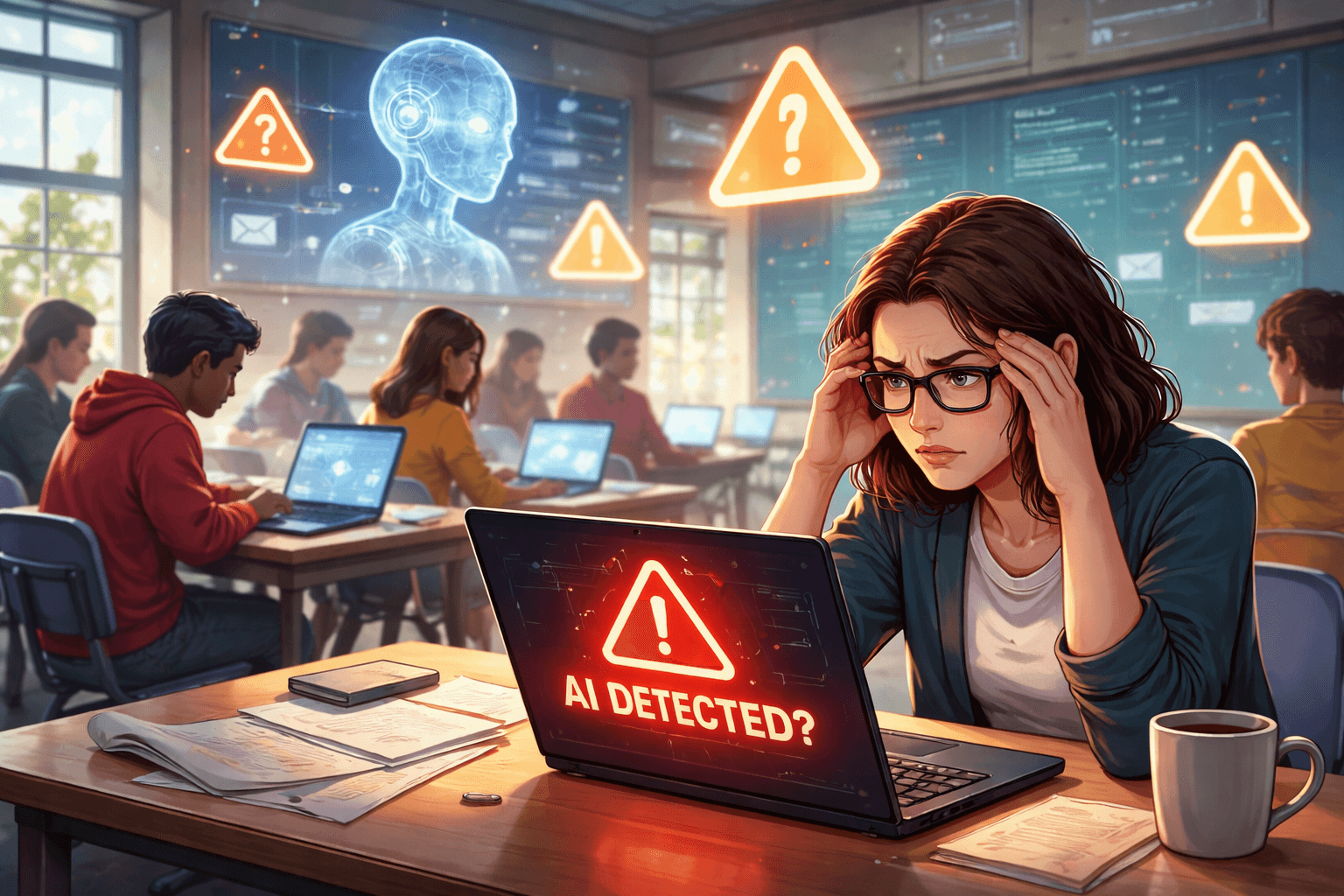
A growing number of educators are abandoning AI detection tools, citing persistent accuracy problems and a fundamental rethinking of what schools should be doing with student AI use, according to EdCircuit (published April 22). Teachers are increasingly skeptical that detection software can reliably identify AI-generated work, and the shift in philosophy is notable: rather than policing students, educators are pivoting toward teaching responsible and ethical AI use. This mirrors what higher education researchers have been calling for — with a Times Higher Education piece published April 23 arguing that "the defining educational challenge of this decade is to equip students to use AI ethically, critically and efficiently."
TIME and Statista Name America's Top EdTech Companies of 2026
TIME and Statista released their list of America's 250 top edtech companies on April 22, with Duolingo and Coursera leading the rankings. The list provides a snapshot of the AI-infused edtech landscape heading into the second half of 2026, as companies race to embed AI features across learning platforms. The rankings reflect strong investor and consumer confidence in AI-powered personalized learning tools, even as a broader ed-tech backlash is gaining momentum in K-12 classrooms.

Tools & Products
-
SchoolAI: Earned ESSA Tier 3 certification on April 23, 2026, backed by a two-year study from Jordan School District showing a 28% critical thinking gain — making it one of the first AI education platforms to achieve this federal evidence standard.
-
Canva AI 2.0 with Learn Grid: Canva's updated AI education suite, including its new Learn Grid feature, was highlighted this week as one of the major platform updates reshaping how teachers create and share educational content. The update was cited as a top story by EdTech Innovation Hub in their weekly roundup.
-
Google Gemini and NotebookLM: Both tools received notable updates cited in this week's EdTech Innovation Hub top ten, alongside the University of Houston's Gemini rollout for campus use — signaling continued expansion of Google's AI tools into higher education settings.

Research & Data
-
SchoolAI ESSA Tier 3 Study (Jordan School District, 2024–2026): A two-year, district-level study from Jordan School District found that students using SchoolAI demonstrated a 28% gain in critical thinking. The study met the federal ESSA Tier 3 evidentiary standard — a rigorous bar that requires correlational research with strong design — confirming the platform's educational impact.
-
Students Are Asking for AI Guidance, Not Just Policy (Times Higher Education, April 23): Researchers Mahmoud Elkhodr and Ergun Gide argue that students don't just want blanket AI policies — they want structured, practical guidance on how to use AI ethically, critically, and efficiently. The piece draws on higher education settings but carries implications for K-12. The authors write that "the defining educational challenge of this decade is to equip students to use AI ethically, critically and efficiently."
Voices from the Field
"Artificial intelligence is no longer the future. For schools, it's here." — Mark Holtzman, Superintendent, Hempfield Area School District, testifying before Pennsylvania's House Education Committee, April 21, 2026
"The defining educational challenge of this decade is to equip students to use AI ethically, critically and efficiently." — Mahmoud Elkhodr and Ergun Gide, researchers writing in Times Higher Education, April 23, 2026
"We need leaders at all levels — but especially at the state level where policy is usually made — to offer districts clearer support and guidelines about appropriate and inappropriate uses." — Commentary published in EdSource, April 19, 2026
What to Watch
-
Pennsylvania AI legislation: The state's House Education Committee has begun gathering testimony — watch for draft legislation to emerge in coming weeks that could set a precedent for AI governance in public K-12 schools, potentially influencing other states.
-
ESSA certification as a new edtech benchmark: SchoolAI's Tier 3 certification may accelerate pressure on other AI edtech vendors to pursue similar evidence-based validation. Expect districts to start asking vendors for ESSA-aligned research as a procurement requirement.
-
The ed-tech backlash and AI: A parallel story is building — EdWeek's deep-dive on the "ed-tech backlash" (published April 20) documents schools reversing years of tech-first policies. How this skepticism interacts with AI adoption will shape classroom policy through the end of 2026.
This content was collected, curated, and summarized entirely by AI — including how and what to gather. It may contain inaccuracies. Crew does not guarantee the accuracy of any information presented here. Always verify facts on your own before acting on them. Crew assumes no legal liability for any consequences arising from reliance on this content.
Powered by
