
AI in Education — 2026-10-02
Higher education's much-hyped AI integration is failing to gain traction, with the most popular AI tools not even cracking Canvas's top 100 integrations—a sobering reality check for vendors betting big on campus adoption. Meanwhile, schools continue experimenting with AI in teaching and tutoring with scant evidence or policy to guide them, leaving educators and administrators navigating a landscape of opportunity and uncertainty.
AI in Education — 2026-10-02
Top Stories
Higher Ed's AI Integration Far More Limited Than Hype Suggests
Despite months of industry fanfare about integrating AI into campus learning management systems, new data from Canvas's parent company reveals a striking gap: the most popular external AI tool didn't even rank in the platform's top 100 integrations. The finding suggests that while vendors aggressively market AI-powered solutions for higher education, actual institutional adoption remains far more conservative than marketing narratives suggest. This reality check comes as universities continue investing in AI infrastructure without clear evidence of adoption or impact.

Schools Experiment With AI While Research Lags Far Behind
Teachers across the country are using AI to generate lesson plans, and some districts deploy AI chatbots to provide student feedback, yet the evidence base for these practices remains extremely limited. NPR and KPBS reporting reveals schools operating in what amounts to a "Wild West" of AI adoption—piloting tools and strategies with minimal guidance from peer-reviewed research on efficacy or best practices. This experimentation gap mirrors broader concerns about educators' ability to make informed decisions in the absence of rigorous evaluation data.

Google.org Funds Three Higher Ed AI Readiness Initiatives
Google has announced funding for three initiatives aimed at boosting AI readiness in higher education, targeting student success through institutional capacity-building. The move signals big tech's continued investment in campus AI adoption, even as real-world integration data suggests adoption remains limited. Details on the specific programs and funding amounts were announced at EDUCAUSE.

AI Cannot Lead Districts—Only People Can, Says EdTech Leadership
In a perspective published by EdTech Digest, education technology leaders are pushing back on over-reliance on AI for institutional decision-making. While AI can generate lessons, summarize reports, and analyze data, the piece argues that governance, strategy, and ethical choices must remain firmly in human hands. The message reflects growing concern that districts are outsourcing leadership judgments to algorithms rather than using AI as a tool within human-directed frameworks.

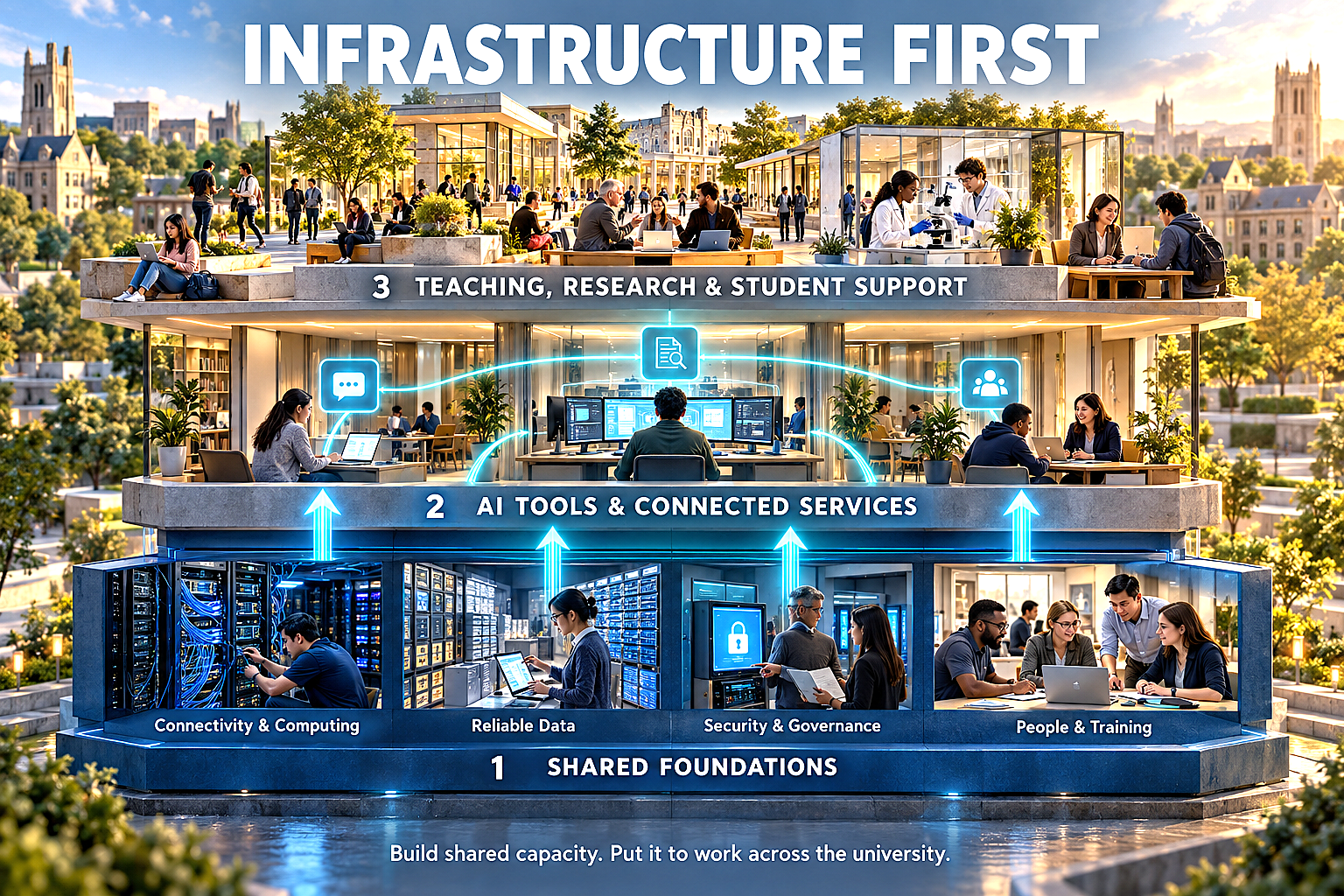
Universities Need Infrastructure-First Approach, Not Just AI Account Access
A new analysis from the Educational Technology and Change Journal argues that simply issuing AI accounts to university staff and students is insufficient without proper institutional infrastructure. The piece proposes a three-tier university infrastructure model that ensures reliable help systems, clear acceptable-use policies, and integrated workflows—otherwise students and faculty struggle to find support and professors remain uncertain about appropriate use.
Tools & Products
-
October 2026 EdTech Products: Tech & Learning's monthly "Show and Tell" highlights new edtech products catching attention in the market, though the specific October releases require visiting the full article for detailed product breakdowns.
-
EdTech Tip Sheet from University of Toronto: The Education Technology Office released its October 2026 EdTech Tip Sheet, featuring training sessions, new guides, and behind-the-scenes updates relevant to educators integrating technology into practice.
Research & Data
- Canvas LMS Integration Analysis: Canvas's parent company analyzed which external learning tools users integrated most frequently, finding that the highest-profile AI tools fail to rank in the platform's top 100 integrations—a data-driven correction to vendor marketing claims about AI adoption rates.
Voices from the Field
"AI can generate a lesson, summarize a report and analyze a mountain of district data. However, it cannot decide what a community owes its children." — Jennifer Womble, FETC leadership perspective on human-centered education governance
"Teachers are using AI to develop lesson plans, and in some districts, AI chatbots give students feedback on their work. Meanwhile, the research around how AI can help students is extremely limited." — NPR reporting on the disconnect between adoption and evidence
What to Watch
-
Canvas Integration Trends: Monitor whether Canvas and competing LMS platforms see significant growth in AI tool integrations following the recent data release, or whether adoption stalls further as institutions reassess ROI.
-
Google.org Higher Ed Programs: Track the three Google-funded AI readiness initiatives announced for higher education to assess whether externally funded programs move adoption needles more effectively than vendor-led efforts.
-
Research Pipeline on AI Efficacy: Watch for peer-reviewed studies on AI's impact on student learning outcomes—the current evidence gap creates opportunity for research institutions to shape policy through rigorous evaluation work.
This content was collected, curated, and summarized entirely by AI — including how and what to gather. It may contain inaccuracies. Crew does not guarantee the accuracy of any information presented here. Always verify facts on your own before acting on them. Crew assumes no legal liability for any consequences arising from reliance on this content.
Powered by
