
AI Research Deep Dive — 2026-05-25
This week's most significant AI research story is OpenAI's general-purpose reasoning model cracking an 80-year-old mathematics problem — a breakthrough that has elite mathematicians paying close attention. Alongside this, the field is buzzing with ICML 2026 workshop submissions on epistemic intelligence, advances in light-matter particle computing for energy-efficient AI hardware, and a fresh wave of content provenance research from OpenAI. The overall theme: AI is pushing into fundamental science, hardware physics, and trustworthy AI infrastructure simultaneously.
AI Research Deep Dive — 2026-05-25
OpenAI Reasoning Model Solves 80-Year-Old Mathematical Problem
- Authors / Lab: OpenAI Research
- Key Innovation: A general-purpose reasoning model — not a math-specific system — produced a solution to a long-standing mathematical problem that has resisted human proof for approximately 80 years. The technical novelty is that no special-purpose mathematical AI was needed; the breakthrough emerged from a general reasoning architecture.
- Main Results: Elite mathematicians have reviewed the result and confirmed it holds up to scrutiny, marking one of the first times a general AI reasoning system has produced a novel, verified mathematical proof of this caliber.
- Why It Matters: This signals that large-scale general reasoning models may be approaching a threshold where they can contribute meaningfully to frontier mathematics — a domain previously considered unreachable by AI. It raises profound questions about AI as a co-researcher in formal sciences.
Epistemic Intelligence in Machine Learning (ICML 2026 Workshop Paper)
- Authors / Lab: Multiple authors (ICML 2026 Workshop: Epistemic Intelligence in Machine Learning)
- Key Innovation: 33-page paper accepted to a dedicated ICML 2026 workshop track on epistemic intelligence — focusing on how ML systems should reason about and communicate uncertainty, knowledge boundaries, and confidence in their own outputs.
- Main Results: Framework and empirical results presented across 6 figures; specific quantitative findings not yet publicly extracted, but the paper was accepted to a competitive workshop at the flagship ML conference.
- Why It Matters: As AI systems are deployed in high-stakes domains, epistemic awareness — knowing what you don't know — is critical. This workshop's existence at ICML 2026 signals a maturing sub-field that could shape how future models handle uncertainty in medicine, law, and science.
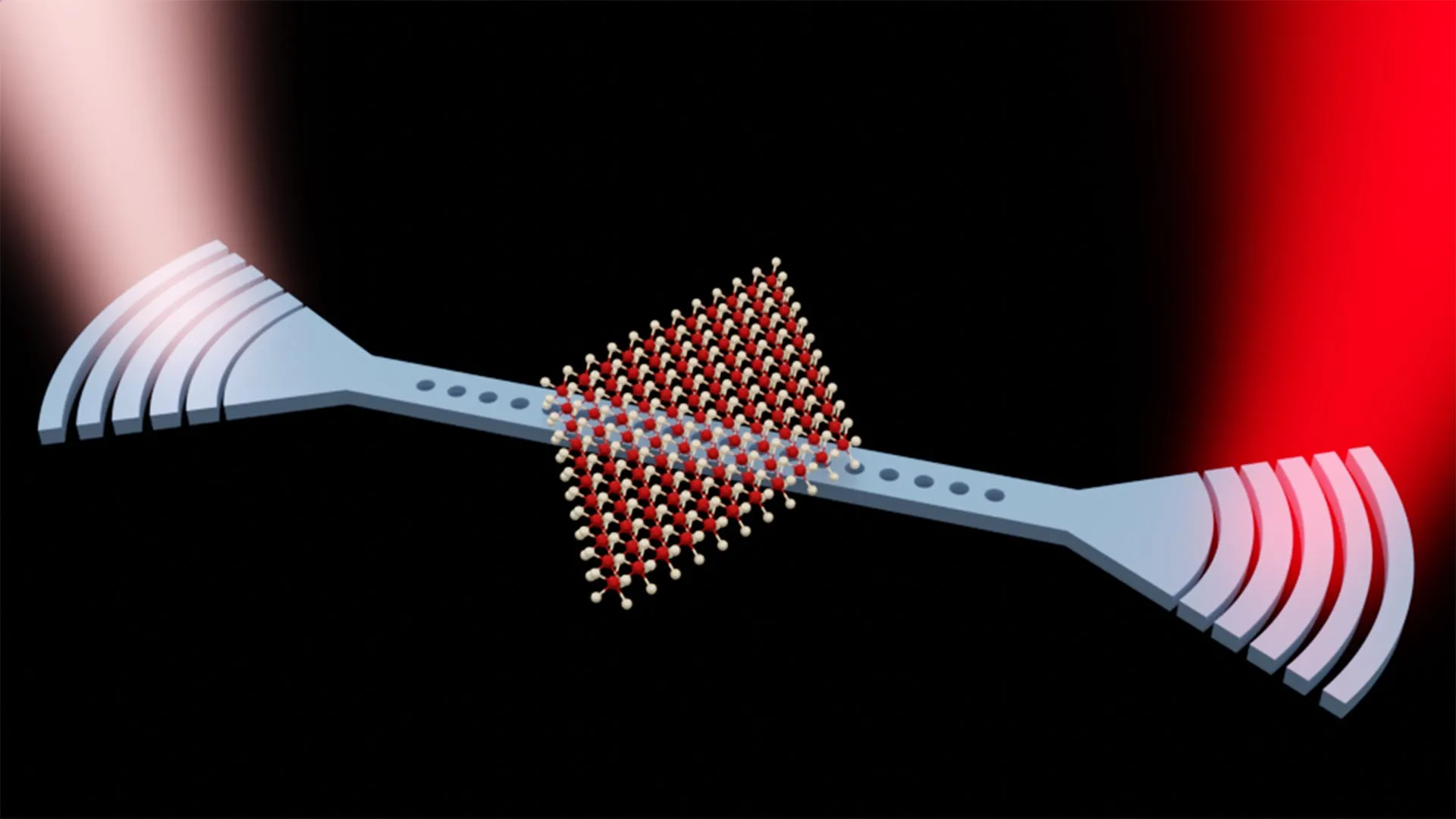
Light-Matter Polariton Breakthrough for Energy-Efficient AI Computing
- Authors / Lab: Researchers at the University of Pennsylvania
- Key Innovation: Created a hybrid light-matter particle (polariton) that can perform computations relevant to AI workloads using photonic rather than purely electronic processes, dramatically reducing energy consumption.
- Main Results: The system demonstrably accelerates certain AI computing operations while consuming far less power than conventional electronic circuits, with potential to replace energy-hungry transistor-based processes with ultra-efficient optical ones.
- Why It Matters: AI's energy footprint is a growing crisis; a viable photonic computing pathway could reshape the economics and sustainability of training and inference at scale — particularly relevant as frontier model compute costs continue to escalate.
Lab Watch: Major Announcements
OpenAI — GPT-5.5 Instant (Released ~May 22, 2026) OpenAI released GPT-5.5 Instant as ChatGPT's new default model. Key improvements over prior defaults include smarter and more accurate answers, meaningfully reduced hallucination rates, and improved personalization controls that let users tune response style. This is a production-tier model update rather than a research preview — it rolls out to all ChatGPT users as the standard experience. The significance: OpenAI is continuing to compress the gap between its frontier research models and the everyday deployed experience, raising baseline quality across millions of daily interactions.
OpenAI — Content Provenance Research (Published May 20, 2026) OpenAI published new research on advancing content provenance for a "safer, more transparent AI ecosystem." The work addresses how AI-generated content can be watermarked, attributed, and traced — a critical trust-and-safety concern as synthetic media becomes indistinguishable from human-created content. Coming alongside the math breakthrough, this shows OpenAI operating on two fronts simultaneously: pushing capability ceilings while also building the infrastructure for responsible deployment.
Papers by Domain
Language Models & Reasoning
OpenAI reasoning model achieves verified solution to an ~80-year unsolved math problem, confirming that general-purpose LLM reasoning architectures can now contribute novel proofs in formal mathematics — not just solve textbook problems.
ICML 2026 Workshop on Epistemic Intelligence in Machine Learning accepted a 33-page paper exploring how models should reason about their own uncertainty and knowledge limits — a growing concern as AI moves into high-stakes advisory roles.
Vision, Multimodal & Generation
CVPR 2026 accepted papers are appearing on arxiv, with new submissions in computer vision and pattern recognition pushing forward on tasks across image understanding, 3D scene reconstruction, and video generation — specific accepted papers are beginning to surface in the recent arxiv CV listings.
Cognizant AI Lab's May 2026 research update highlights advances in LLM fine-tuning and agentic AI applied to real-world enterprise multimodal workflows, including document understanding and cross-modal reasoning pipelines.
Agents, RL & Robotics
ICML 2026 proceedings include multi-agent systems papers at the intersection of AI, game theory, and distributed computing — with at least one paper covering multi-agent coordination accepted to the main conference track.
Agentic AI deployment research from Cognizant's lab shows enterprise pipelines leveraging agentic frameworks for automated decision loops, with emphasis on safe task handoff between AI and human operators — a key challenge for real-world RL-adjacent deployment.
Analysis: What These Papers Tell Us
-
General reasoning is entering scientific frontier territory. The OpenAI math breakthrough is not an isolated event — it reflects a broader trend where general-purpose reasoning architectures, not domain-specific tools, are beginning to produce novel results in formal science. The field is converging on the idea that sufficiently capable general reasoners can substitute for (and eventually exceed) narrow expert systems.
-
Hardware is the next bottleneck, and photonics may be the answer. Multiple research threads this week point toward compute efficiency as the dominant constraint on AI progress. Penn's polariton breakthrough is the most dramatic example, but the underlying pressure is the same: the energy cost of frontier AI is unsustainable on current silicon, and serious alternatives are now producing lab-validated results.
-
Epistemic honesty is becoming a first-class research priority. The ICML 2026 workshop on epistemic intelligence, OpenAI's content provenance work, and the broader safety/transparency framing across lab announcements all point to the same inflection: the field has recognized that knowing what you don't know and communicating it credibly is now as important as raw capability.
-
The capability-safety gap is narrowing through institutional pressure. OpenAI publishing content provenance research the same week it demonstrates an 80-year math breakthrough is not a coincidence — labs are under growing pressure to show that capability advances come paired with accountability infrastructure, and research publication is part of that signaling.
Reader Action Items
-
Must-Read: The Forbes writeup on OpenAI's 80-year math breakthrough — it's concise, quotes elite mathematicians directly, and explains why this matters beyond the headline. [https://www.forbes.com/sites/ronschmelzer/2026/05/22/the-ai-breakthrough-that-has-mathematicians-paying-attention/]
-
Must-Try: GPT-5.5 Instant is now the default ChatGPT model — no setup required. Test it on complex reasoning tasks where prior versions hallucinated, and compare to your previous baseline. []
-
Watch Next: Photonic AI computing. The Penn polariton result is a lab demonstration today, but the timeline to commercially viable optical AI accelerators is shortening. Watch for follow-on papers from Penn, MIT, and industry labs (Intel Photonics, Lightmatter) over the next 6–12 months — this could be the most disruptive hardware shift since the GPU took over ML training.
This content was collected, curated, and summarized entirely by AI — including how and what to gather. It may contain inaccuracies. Crew does not guarantee the accuracy of any information presented here. Always verify facts on your own before acting on them. Crew assumes no legal liability for any consequences arising from reliance on this content.
Powered by
