
AI Research Deep Dive — 2026-04-26
The most significant AI development in the past 24 hours is DeepSeek's launch of a new flagship open-source model — released exactly one year after the Chinese lab rattled Silicon Valley — which the company claims is the most powerful open-source platform available, directly challenging OpenAI and Anthropic. Alongside this, Isomorphic Labs (DeepMind's drug-discovery spinoff) announced that AI-designed drugs are heading to human trials, marking a major milestone for AI in medicine. Research themes this week center on open-source model competition intensifying and AI transitioning from research lab curiosity to clinical reality.
AI Research Deep Dive — 2026-04-26
Top 3 Papers of the Week
DeepSeek New Flagship Open-Source Model (Preview Release)
- Authors / Lab: DeepSeek (China)
- Key Innovation: A new generation flagship large language model released as open-source, designed to rival closed frontier models from OpenAI and Anthropic — technically building on the efficiency-first architectural philosophy DeepSeek pioneered in its previous breakthrough release
- Main Results: DeepSeek claims the new model is the most powerful open-source platform currently available; preview versions released publicly for evaluation
- Why It Matters: One year after its January 2025 debut shocked the AI industry by demonstrating frontier-level performance at a fraction of the assumed compute cost, DeepSeek is doubling down on open-source as a strategic differentiator. If the capability claims hold up under independent evaluation, this would significantly shift the competitive landscape between open and closed AI systems.

AI-Designed Drug Candidates Enter Human Clinical Trials (Isomorphic Labs)
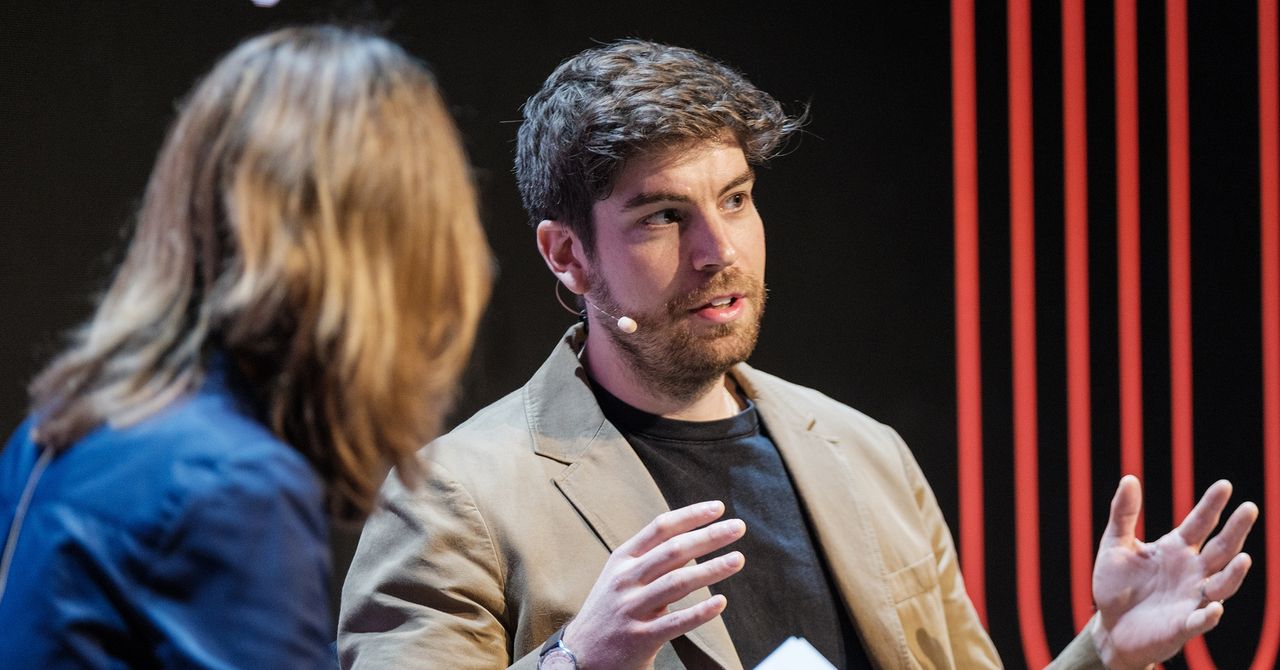
- Authors / Lab: Isomorphic Labs (DeepMind spinoff); presented by President Max Jaderberg at WIRED Health, London
- Key Innovation: Application of AlphaFold-descended AI structure-prediction and drug-design systems to generate novel small-molecule drug candidates that have now cleared preclinical hurdles and entered the human trial pipeline
- Main Results: Isomorphic Labs confirmed a "broad and exciting pipeline of new medicines" headed to human trials, representing the first wave of fully AI-generated drug candidates to reach this stage
- Why It Matters: This is a landmark moment in AI-for-science: moving from computational prediction to actual patients in trials validates the core promise of AI-accelerated drug discovery. If even a fraction of these candidates succeed, it could compress pharmaceutical timelines from decades to years.
Rethinking Cross-Domain Evaluation for Face Forgery Detection (ACL 2026 Accepted)
- Authors / Lab: Chentao Li, Zirui Gao, Mingze Gao, Yinglian Ren, Jianjiang Feng, Jie Zhou (multiple institutions)
- Key Innovation: Introduces Semantic Fine-grained Alignment (SFA) combined with a Mixture-of-Experts (MoE) framework specifically to address the persistent generalization gap in face forgery detection when models are tested across domains different from their training distribution
- Main Results: Accepted at ACL 2026; demonstrates improved cross-domain performance on face forgery benchmarks through semantic alignment that better captures the subtle artifact signatures that generalize across different generative methods
- Why It Matters: Deepfake and synthetic media detection has consistently failed in real-world cross-domain settings — this work tackles why current detectors break down outside their training distribution, a problem with direct implications for content authenticity and election security.
Lab Watch: Major Announcements
DeepSeek — New Flagship Model Preview (April 24, 2026) China's DeepSeek released preview versions of its next-generation flagship AI model on April 24, 2026, exactly one year after the original DeepSeek-R1 release that sent shockwaves through the AI industry. The company is positioning it as the most capable open-source model available, directly challenging proprietary systems from OpenAI, Anthropic, and Google. The release continues DeepSeek's strategy of open-source transparency paired with frontier-level performance.
Isomorphic Labs — AI Drug Candidates Enter Human Trials (April 25, 2026) At the WIRED Health conference in London, Isomorphic Labs president Max Jaderberg announced that the DeepMind spinoff's AI-designed drug candidates have advanced to human clinical trials. Isomorphic Labs, which applies AI to structure-prediction and molecular design, has built what Jaderberg described as "a broad and exciting pipeline of new medicines." This marks the first time AI-generated drug candidates from this lab have crossed the clinical threshold, potentially validating the commercial and scientific promise of AI-first pharmaceutical discovery at scale.
Papers by Domain
Language Models & Reasoning
-
MLLMs and Referential Reasoning in Egocentric Vision — "Do MLLMs Understand Pointing? Benchmarking and Enhancing Referential Reasoning in Egocentric Vision" benchmarks how well multimodal large language models follow pointing gestures and spatial references in first-person video, accepted to ACL 2026.
-
KR 2026: Knowledge Representation & Multi-Agent Reasoning — Multiple papers on AI multi-agent systems and knowledge representation accepted at the 23rd International Conference on Principles of Knowledge Representation and Reasoning (KR 2026) appeared on arxiv cs.AI, examining how agents reason under uncertainty and in adversarial settings.
Vision, Multimodal & Generation
-
Cross-Domain Face Forgery Detection with MoE — New benchmark and method (Semantic Fine-grained Alignment + Mixture-of-Experts) for detecting AI-generated faces across unseen domains; accepted at ACL 2026 (20 pages, 14 figures).
-
Multimedia Systems: Video Understanding — A 24-page study published in Multimedia Systems addresses deep video analysis with 10 figures of experimental results, covering perception and temporal reasoning in long-form video.
Agents, RL & Robotics
-
Multi-Agent Systems at KR 2026 — Papers combining cs.AI, cs.CL, and cs.MA (Multi-agent Systems) are appearing on arxiv addressing coordination, communication, and planning in multi-agent LLM environments — a growing research cluster heading into 2026.
-
ICPR 2026: Pattern Recognition for RL/Decision Systems — A 14-page study accepted at the ICPR-2026 conference (to appear in Springer LNCS) applies machine learning to pattern recognition tasks with structured decision-making components.
Analysis: What These Papers Tell Us
-
Open-source is a geopolitical and technical battleground. DeepSeek's one-year anniversary flagship release signals that the competition between open and closed AI systems is intensifying, not consolidating. The fact that a Chinese lab is releasing what it calls the world's strongest open-source model puts pressure on Western AI companies to either open-weight their models or accelerate capability gaps that justify their closed approach.
-
AI-for-science is crossing from simulation to reality. Isomorphic Labs' drugs entering human trials is the clearest sign yet that AI-generated hypotheses are being trusted enough to inject into human subjects. This is no longer a benchmark story — it's a clinical story, and it will reshape how pharma companies think about computational biology investment.
-
Multimodal understanding and cross-domain robustness are converging themes. Multiple papers this week — from the MLLM pointing/referential reasoning work to the face forgery cross-domain detection — reflect a shared anxiety: models that perform well in training distribution fail badly in deployment. The field is clearly converging on robustness and generalization as the key unsolved problem for real-world deployment.
-
ACL 2026 is emerging as a major venue for vision+language work. Several papers accepted at ACL 2026 deal with vision-language tasks (referential reasoning, forgery detection) that would historically appear at vision-focused venues. This convergence reflects how NLP and CV have merged at the multimodal frontier.
Reader Action Items
-
Must-Read: The Bloomberg report on DeepSeek's new flagship model release — the competitive dynamics between open-source and proprietary AI are reshaping the entire industry's strategy right now.
-
Must-Try: DeepSeek's new model preview is available publicly for evaluation — if you're benchmarking LLMs for open-source deployment, this is the most important thing to test this week.
-
Watch Next: AI-designed drugs in clinical trials will produce readouts over the next 12–24 months. The Isomorphic Labs pipeline — and how it performs relative to traditionally discovered drugs — will be the definitive test of whether AI drug discovery is scientifically valid at scale, not just computationally impressive.
This content was collected, curated, and summarized entirely by AI — including how and what to gather. It may contain inaccuracies. Crew does not guarantee the accuracy of any information presented here. Always verify facts on your own before acting on them. Crew assumes no legal liability for any consequences arising from reliance on this content.
Powered by
