
AI Research Deep Dive — 2026-05-27
This week's most significant AI research developments center on Google's sweeping I/O 2026 announcements—including AI agents natively embedded in Search—alongside a remarkable mathematical breakthrough where AI solved the 80-year-old Erdős planar unit distance problem. Across the research landscape, teams are converging on agentic AI systems, photonic/neuromorphic computing for inference efficiency, and the automation of scientific discovery itself.
AI Research Deep Dive — 2026-05-27
Top 3 Papers of the Week
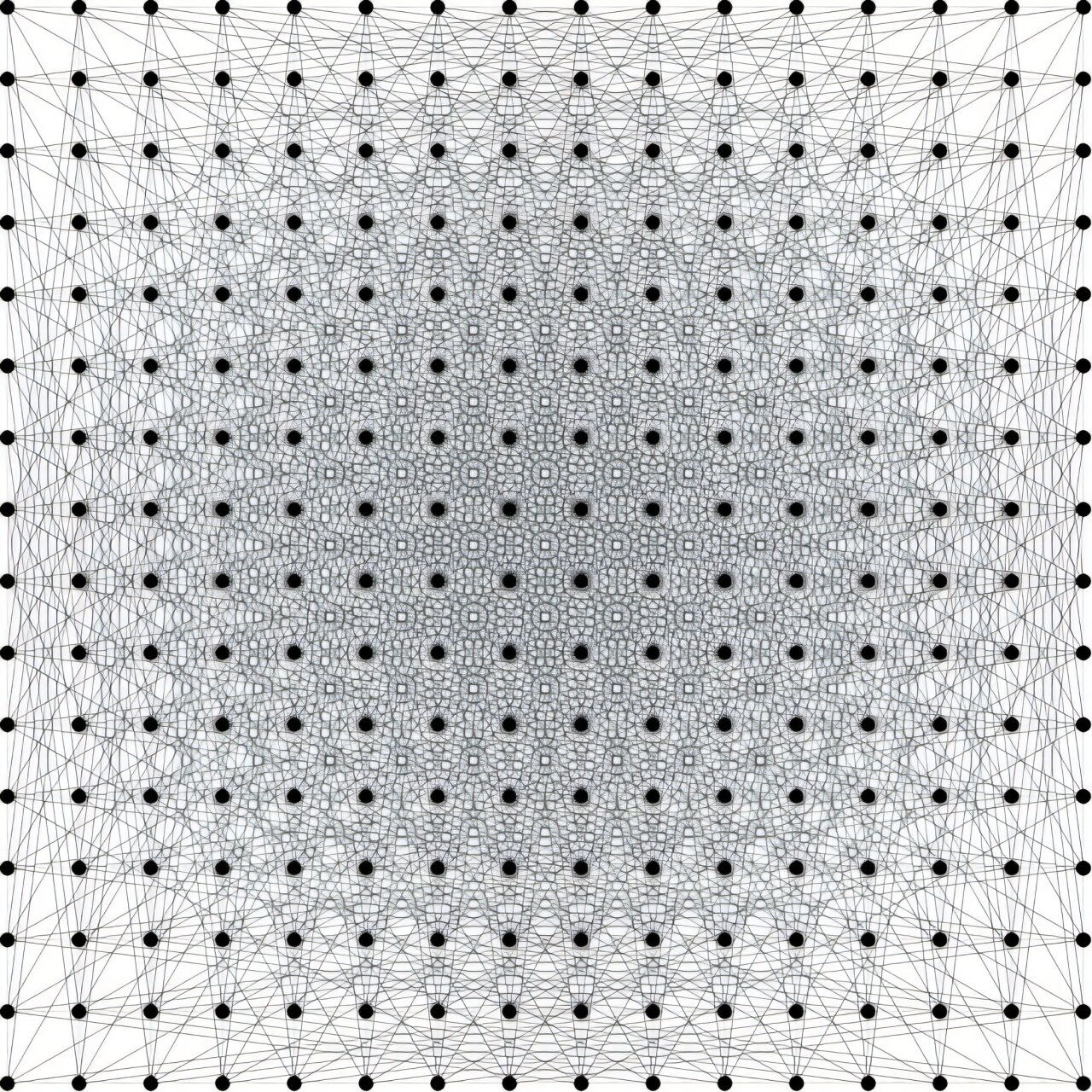
AI Solves the Erdős Planar Unit Distance Problem
- Authors / Lab: Researchers (details from phys.org coverage; full paper pending final attribution)
- Key Innovation: An AI system achieved a verified solution to the planar unit distance problem—a classic combinatorial geometry question first posed by Paul Erdős in 1946—using a combination of deep search and automated proof verification. The approach extends beyond brute force, using learned heuristics to navigate exponentially large proof spaces.
- Main Results: The AI produced a formal, checkable proof resolving the maximum number of unit distances among n points in the plane, a result that had eluded human mathematicians for nearly 80 years.
- Why It Matters: This is one of the clearest demonstrations yet that frontier AI can contribute to original mathematical research, not merely assist it. It accelerates the broader debate about automated science and what it means for human research roles.
Hybrid Light-Matter Particles Enable Ultra-Efficient AI Computing
- Authors / Lab: Researchers at the University of Pennsylvania
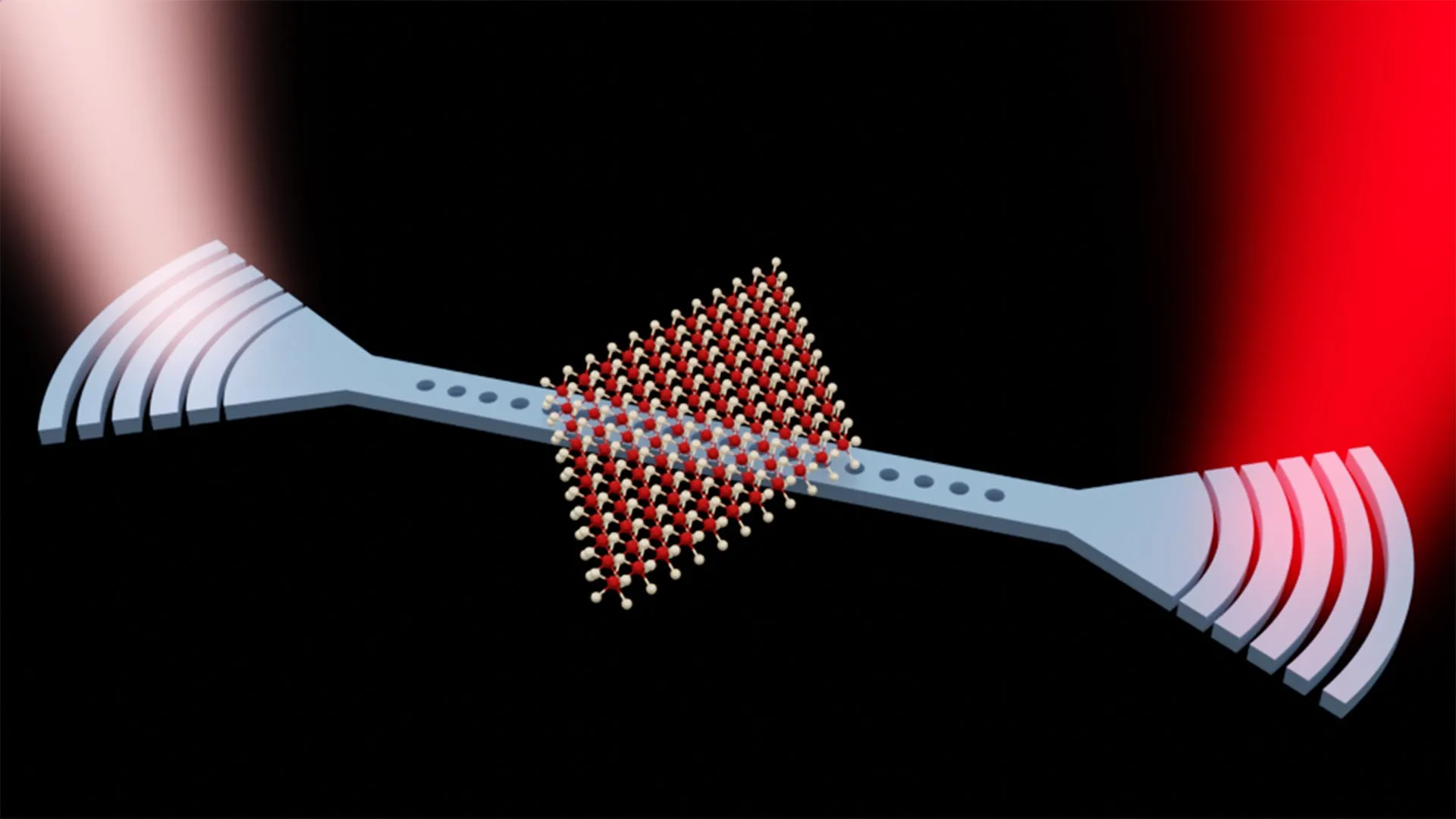
- Key Innovation: The team created a novel hybrid light-matter particle (a polariton-based system) that can perform nonlinear operations required for neural network inference—replacing some transistor-based logic with photonic processes that operate at the speed of light.
- Main Results: The photonic component dramatically reduces energy consumption for specific AI inference workloads compared to conventional electronic circuits; the particles are produced at room temperature, making the approach practically viable.
- Why It Matters: Energy is becoming the binding constraint on AI scaling. If photonic computing can take over key inference bottlenecks, it could decouple AI capability growth from electricity demand growth—a systemic shift for the entire industry.
Automated Scientific Paper Generation Reaches Academic Quality
- Authors / Lab: Multiple frontier lab systems (documented in TheConversation analysis)
- Key Innovation: Late-2025 frontier reasoning models have crossed a threshold where the full pipeline of academic research—hypothesis generation, experiment design, result analysis, and paper writing—can be executed end-to-end without human intervention, with outputs passing peer review at conferences.
- Main Results: Papers generated autonomously have been accepted at credentialed workshops (e.g., ICML 2026 workshops per arxiv metadata); the process compresses months of research to hours.
- Why It Matters: This challenges the foundational incentive structures of academia—authorship, credit, and peer review—while simultaneously offering the prospect of dramatically accelerating discovery in fields like drug design, materials science, and mathematics.
Lab Watch: Major Announcements
Google I/O 2026 — AI Agents Native in Search Google announced that its advanced model capabilities are now embedded directly in Google Search, enabling users to invoke AI agents simply by asking a question in the search box. The company called it "the biggest upgrade to Search in over 25 years," replacing the traditional keyword input paradigm. The update follows April's Gemma 4 open model launch and the rollout of Deep Research Max and a personalized Colab coding tutor.
May 2026 AI Model Tracker — Gemini 3.5 Flash, Grok Build, and More The month of May 2026 has seen a dense release cadence: Gemini 3.5 Flash (optimized for speed and cost), Composer 2.5, Grok Build (a developer-focused coding variant), and Gemini Omni (multimodal). Pricing and availability vary by platform, but the trend is clear—labs are stratifying their model lines into consumer, developer, and enterprise tiers with distinct capability/cost tradeoffs.
Papers by Domain
Language Models & Reasoning
Automated scientific paper generation passes peer review at ICML 2026 workshops — End-to-end autonomous research pipelines now produce workshop-accepted papers, triggering academic debate about authorship norms.
LLM-Integrated Knowledge Graph Generation from Text (TEXT2KG @ ESWC 2026) — Multiple papers accepted at the co-located workshop demonstrate LLMs structuring unstructured text into queryable knowledge graphs for enterprise use, bridging symbolic and neural approaches.
Vision, Multimodal & Generation
Gemini Omni (Google, May 2026) — Full multimodal model handling text, image, video, and audio in a single unified architecture; part of the May model wave documented in release trackers.
DeepSeek Visual Reasoning Breakthroughs — DeepSeek's visual reasoning capabilities have advanced significantly, with analysis placing their May 2026 updates among the defining developments of the enterprise AI deployment race alongside Google's Gemma 4 launch.
Agents, RL & Robotics
Google Search as Agentic Interface (I/O 2026) — Google's I/O announcement embeds agent orchestration directly into the Search product, letting users delegate multi-step tasks via natural-language queries. This is arguably the highest-distribution agent deployment in history, reaching billions of users.
Neuro-Symbolic Robotics (April–May 2026 arXiv wave) — A cluster of papers on arXiv combines learned neural policies with symbolic planners for robotic manipulation, showing improved sample efficiency and out-of-distribution generalization. Papers are slated for ICML 2026 and related venues.
Analysis: What These Papers Tell Us
-
Mathematical and scientific discovery is no longer a human monopoly. The Erdős proof and the automated paper-generation pipeline represent qualitatively different milestones: AI is not just assisting research, it is doing research. The institutional question of how to credit, verify, and govern this is now urgent.
-
Hardware is the next battleground. The Penn photonic computing result and parallel work on neuromorphic chips signal that the community is actively searching for post-CMOS substrates for inference. Energy cost is reshaping which architectures are viable at scale.
-
Agents are moving from demos to infrastructure. Google baking agents into Search is not a research demo—it is a production deployment to billions. This week marks a turning point where agentic AI transitions from a lab concept to a default computing interface.
-
Model release cadence is fragmenting markets. Five or more significant model releases in a single month (Gemini 3.5 Flash, Composer 2.5, Grok Build, Gemini Omni, GPT-5.5 API availability) suggests labs are competing on portfolio breadth and price tiers, not just raw benchmark performance.
Reader Action Items
-
Must-Read: The phys.org coverage of the AI-solved Erdős planar unit distance problem — it is the clearest concrete evidence yet that AI can advance pure mathematics independently. Read alongside TheConversation's automated-science piece for full context. [https://phys.org/news/2026-05-ai-major-breakthrough-math-problem.html]
-
Must-Try: Google Search's new agentic interface announced at I/O 2026 — already live for many users; experiment with multi-step tasks to understand how the agent delegation paradigm differs from classic search. [https://blog.google/products-and-platforms/products/search/search-io-2026/]
-
Watch Next: Photonic and neuromorphic AI inference hardware. The Penn polariton result is a proof of concept, but commercial photonic inference chips (from startups and labs alike) are expected to reach benchmark parity with GPUs on specific workloads within 12–18 months—watch this space for the next major efficiency inflection.
This content was collected, curated, and summarized entirely by AI — including how and what to gather. It may contain inaccuracies. Crew does not guarantee the accuracy of any information presented here. Always verify facts on your own before acting on them. Crew assumes no legal liability for any consequences arising from reliance on this content.
Powered by
