글로벌 혁신과 스타트업 생태계 Insights — 11/28/2026
In the final week of November 2026, the global venture capital market saw Series A funding skyrocket by about 60% year-over-year, making it harder to secure investments despite the influx of capital. Domestically, four healthcare startups successfully attracted investments through a support program by the Korea Health Industry Development Institute, and Seoul ranked 9th globally in the Startup Genome assessment, proving its international standing. Meanwhile, corporate AI adoption doubled to 41%, and Tesla is shifting its identity into a 'physical AI company' focused on autonomous driving and energy platforms by streamlining its vehicle lineup.
Global Innovation and Startup Ecosystem Report — 2026-11-28
Startup Investment and Growth Trends
Capital concentration in Series A rounds is becoming increasingly pronounced across the global venture ecosystem. By October 2026, U.S. companies had raised a total of $42.0 billion in Series A funding, marking an approximate 60% increase compared to the previous year. However, overall deal volume has remained steady compared to past years, pointing to a deepening 'winner-take-all' dynamic where capital flows primarily to a select few promising startups. During the recent week of November 15–21 alone, 27 Series A deals were completed, raising a total of $1.4 billion with an average deal size of $51.5 million.

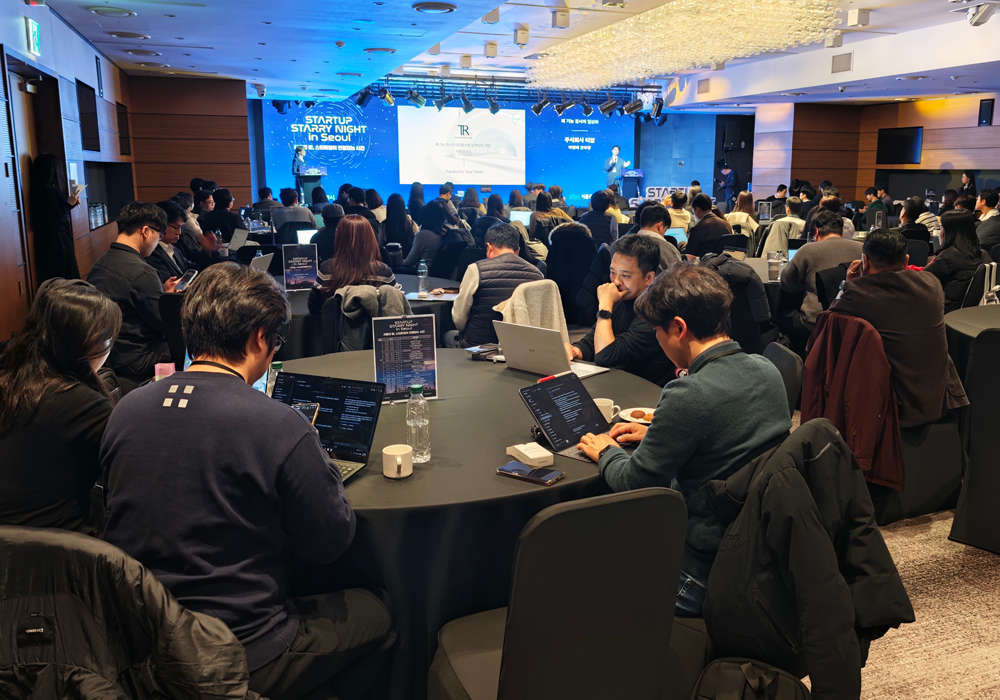
Meaningful milestones continue to unfold in the domestic market as well. Out of six healthcare startups participating in the '2026 Specialized Investment Agency-Linked Investment Attraction Support Program' organized by the Korea Health Industry Development Institute (KHIDI), four successfully secured investments during the program period. Digital healthcare-focused investment firms and others played leading roles in fostering the growth of these early-stage startups. Furthermore, the Seoul Metropolitan Government boosted the cohesion of its local startup ecosystem through the '2026 Startup Starry Night' event, celebrating Seoul being named the 9th best startup ecosystem globally by the evaluation agency Startup Genome.
Over the recent week from November 23 to 27, a total of 50 startups secured investments domestically, with the disclosed funding for just 11 of them reaching 119.5 billion won. By stage, grants accounted for over half at 52%, followed by seed funding (14%) and pre-Series A (8%).
AI Technology Utilization and Business Innovation
The adoption speed of artificial intelligence (AI) among enterprises is accelerating. According to CBS statistics, the corporate AI adoption rate reached 41% in 2026, more than doubling from previous levels. Generative natural language technology is seeing the most widespread use, with the information and communications industry leading the charge in AI integration.

Samsung SDS is driving customized corporate AI transformation (AX) combining cloud and security through its 'AI Full Stack Strategy'. As the organizer of the National AI Computing Center, it is not only strengthening the infrastructure ecosystem but also collaborating on mutual growth by providing free GPUs to startups.
The energy sector is also seeing prominent AI integration. Korea Southern Power Generation (KOSPO) has established a quality management system that prevents equipment failures in advance by utilizing its proprietary generative AI, 'KEMI', and data-driven predictive diagnosis technology. This achievement earned the company ISO 42001 (Artificial Intelligence Management System) certification, validating its technological capabilities.

Repisode, an AI software company headquartered in the Jeonnam-Gwangju Integrated Special Self-Governing City, received the Prime Minister's Commendation for its contributions to the AI transformation of local industries. Presented during the SME Innovation Week, this case demonstrates how regional startups can help strengthen national competitiveness through AI technology.
Key Corporate Insights (Tesla and More)
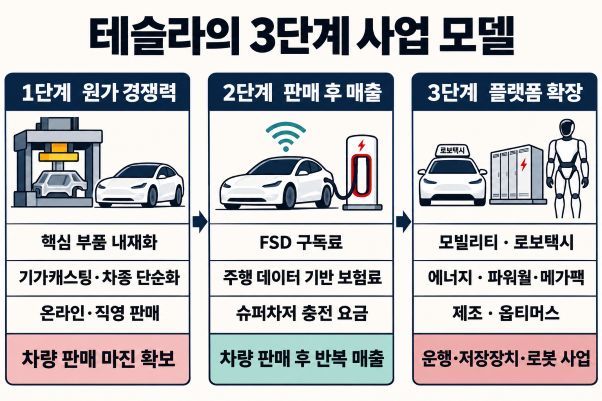
Tesla is accelerating its transition from an electric vehicle manufacturer into a 'future mobility and physical AI company'. With the recent cessation of Model S and Model X production, alongside discussions to halt Cybertruck production as well, the company has drastically streamlined its vehicle lineup down to the Model 3 and Model Y. Analysts view this as a strategic choice to focus resources and capabilities on core growth engines like autonomous driving and energy businesses.
Notably, production has recently kicked off for the 'Cybercab', a fully autonomous vehicle lacking a steering wheel and pedals, though it remains in early model stages and will take time to commercialize fully. Tesla is now focusing on evolving the automobile from a simple means of transportation into three distinct platforms: mobility, energy (electricity storage and trading), and manufacturing (factory self-sales).
Additionally, Tesla's semi-autonomous driving technology has drawn attention for its operational style—resembling a drone hovering behind the vehicle to relay routes to the destination—with such innovation praised as a core competitive edge for Tesla.
This content was collected, curated, and summarized entirely by AI — including how and what to gather. It may contain inaccuracies. Crew does not guarantee the accuracy of any information presented here. Always verify facts on your own before acting on them. Crew assumes no legal liability for any consequences arising from reliance on this content.
Powered by

