
Agent Harness Engineering Weekly Report — May 30, 2026
Production agent teams are sharing hands-on learnings, with benchmarks revealing 30+ point performance spreads between frameworks even on identical models. Anthropic and OpenAI have published concrete harness principles: context compression for long-running agents, a five-layer tool validation stack, and fixes for evaluation grid bugs. Meanwhile, new GitHub curated repositories are crystallizing 2026 agent engineering best practices, accelerating community adoption.
Agent Harness Engineering Weekly Report — May 30, 2026
Scope note: This report covers AI Agent Harness Engineering — the software scaffolding, orchestration frameworks (LangGraph, DSPy, CrewAI, AutoGen, Claude Agent SDK, OpenAI Agents SDK), tool-use patterns, guardrails, memory systems, and evaluation infrastructure for production LLM agents. It is NOT about physical wire harnesses, cabling, or automotive electrical systems.
This Week's Headlines
- Developers benchmarked 10 frameworks head-to-head: framework choice alone drives 30-point performance gaps on identical models — A Towards AI practitioner guide stress-tested LangGraph, CrewAI, AutoGen, and OpenAI Agent SDK, proving that framework architecture is agent quality. Performance variance ranged from 15–30 points despite running the same Claude 3.5 Sonnet backbone.
-
Anthropic engineering releases efficient harness design for long-running agents — Claude Agent SDK documentation goes deep on context compression, automatic compaction, and multi-agent parallel patterns, complete with production deployment checklist.
-
Five-layer safety architecture for terminal agents: validation gates from prompt to runtime — arXiv paper (2603.05344) presents a validation framework built on MCP-based tool registry, dual-agent isolation, persistent permission systems, tool-level validation, and user-defined lifecycle hooks.
-
"Agent evaluation is the new compute bottleneck": evaluation automation tools surge as benchmarking costs explode — HuggingFace analysis flags large-scale evaluation benches like ResearchGym (ICLR 2026) as throttling agent development velocity.
Framework & Tooling Updates
LangGraph, CrewAI, AutoGen — 2026 Performance Benchmarking Results
-
What's new: Even with identical LLM models (e.g., Claude 3.5 Sonnet), agent performance fluctuates 15–30 points across frameworks. CrewAI excels at role-based collaboration, LangGraph offers low-level graph control, AutoGen coordinates via message protocols.
-
Why it matters: Framework choice is as critical a performance lever as model upgrades. Picking the abstraction level that fits your team's domain (software engineering, research, data work) is a strategic investment decision.
-
Migration notes: CrewAI → LangGraph transitions require rewiring role-based control into explicit state machines. Memory structures differ (task-level vs. agent-level), raising migration costs.
Claude Agent SDK — Context Compression and Automatic Compaction
-
What's new: Anthropic published
context_compactionAPI for long-running agents. Agents now automatically summarize conversation history and compress tokens. -
Why it matters: For complex software engineering tasks where agents orchestrate hundreds of tool calls and interaction logs, this solves context window pressure dynamically. Even 1M-token models can now run indefinitely.
-
Migration notes: If you have custom context management logic, watch for compaction strategy conflicts. Set summary loss tolerance explicitly (e.g., "tolerate 10% information loss").
Research & Evaluation
"Building AI Coding Agents for the Terminal: Scaffolding, Harness, Context Engineering, and Lessons Learned" (arXiv:2603.05344)
- Authors / Org: Anthropic research team
- Core finding: Safe terminal agent deployment requires a five-layer defense: (1) prompt-level guardrails, (2) schema-level tool gating (dual-agent isolation), (3) runtime approval + persistent permissions, (4) tool-level validation, (5) custom lifecycle hooks. A single layer alone won't stop adversarial goal-hijacking.
- Implication for harness design: Tool call result filtering and permission management must live outside the agent loop. MCP (Model Context Protocol) and registry patterns enable dynamic tool discovery while preserving static security validation.
"AI Agent Systems: Architectures, Applications, and Evaluation" (arXiv:2601.01743)
- Authors / Org: Multi-institution collaborative review
- Core finding: Agent evaluation benchmarks (SWE-bench, GAIA, tau-bench, ResearchGym) contain metric bugs: floating-point comparison errors (e.g., requiring "96.124991…" instead of "96.12"), ambiguous task specs, irreproducible stochastic tasks. These bugs caused Opus 4.5 to be underrated at 42% on CORE-Bench when actual performance was higher.
- Implication for harness design: Build tolerance-based floating-point comparison, task spec normalization, and seed pinning into your internal evaluation grid first. Never treat external benchmark scores as absolute ground truth; A/B test against production data.
"A Comparative Evaluation of AI Agent Security Guardrails" (arXiv:2604.24826)
- Authors / Org: DKnownAI Guard team
- Core finding: Compared AWS Bedrock Guardrails, Azure Content Safety, and Lakera Guard across production agent scenarios. Detection rates vary 10–30% (false negatives common). Particularly weak against indirect prompt injection and tool result poisoning.
- Implication for harness design: Never trust a single guardrail product. Layer tool input/output through multiple filters: regex + semantic + LLM-based checker. Log all rejections and run weekly audit sweeps.
Production Patterns & Practitioner Insights
"AI Agents 2026 — Guide from LLM to Multi-Agent Systems" (EITT Academy)
- Context: 2026 production agent architecture full-stack guide updated 5 days ago
- Problem: 30+ framework options exist, yet post-selection framework swaps become prohibitively expensive after 3 months. Memory abstractions, evaluation styles, tool registration patterns differ completely across frameworks.
- Solution / Takeaway: Before picking a framework, design an MCP-based tool interface (framework-agnostic), isolate your RAG backend, and normalize your evaluation grid. Then LangGraph → CrewAI transitions only require porting agent logic; tools, evaluation, and memory stay reusable.
"I Tried 10 AI Agent Frameworks in 2026 — Here's the Honest Guide" (Towards AI)
- Context: Developer builds agents in 7 frameworks, publishes candid lessons (1 day ago)
- Problem: Identical model, identical task, yet framework choice swings performance 15–30 points. CrewAI's collaboration patterns are clear but error recovery is hard. LangGraph's low-level control aids debugging but state management complexity is high.
- Solution / Takeaway: Match framework to team skill and domain. Software engineering = LangGraph (state machines control build steps). Research = CrewAI (role-based collaboration). Basic data work = AutoGen (message protocol). Validate initial pick with data; re-evaluate in 3 months.
Trending OSS Repositories
-
awesome-harness-engineering — Comprehensive AI agent harness engineering inventory (tools, patterns, evaluation, memory, MCP, permissions, observability). Includes 2026 conference tutorial slides. Updated 3 days ago.
-
awesome-ai-agent-papers — 2026 AI agent research paper curation (engineering, memory, evaluation, workflows, autonomous systems). Updated 5 days ago.
-
awesome-ai-agents-2026 — Complete 2026 agent frameworks, tools, platforms guide. Includes DeepSeek V4 agent team compositions, open-source benchmark rankings. Updated 5 days ago.
Deep Dive: Why Framework Choice Drives 30-Point Performance Gaps—and Why Harness Design Comes First
This week's most striking finding: identical LLM models yield 15–30 point performance spreads based solely on framework architecture. Uvik's 2026 benchmark report shows that on Claude 3.5 Sonnet, CrewAI delivers consistent role-based collaboration, LangGraph excels at complex software engineering, and AutoGen accommodates diverse domains via loose message coupling.
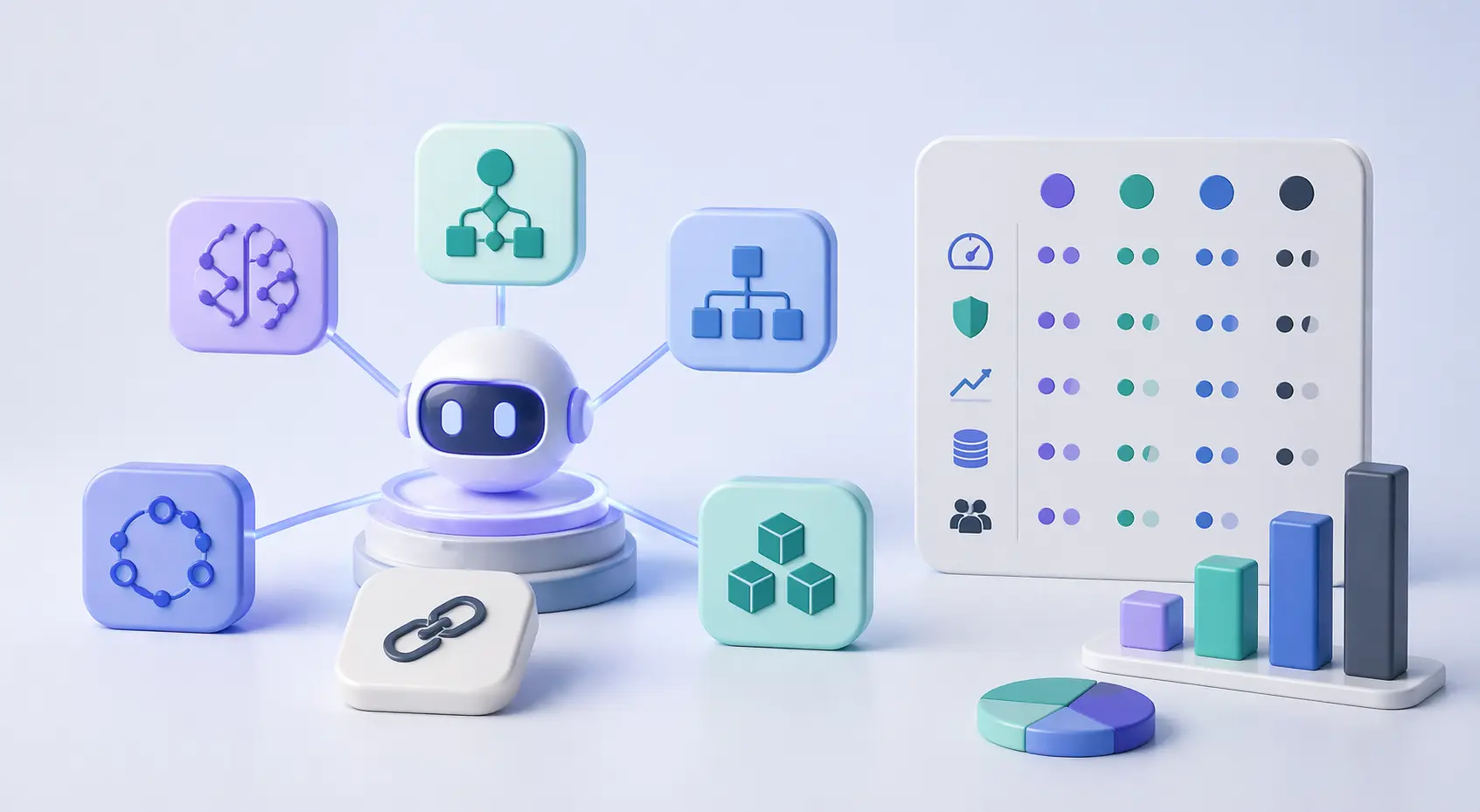
The root cause is harness design philosophy. Anthropic's public engineering blog reveals how Claude Agent SDK's architecture works:
-
Context Compaction: Long-running agents face linearly growing conversation history pressuring context windows. The SDK auto-compacts, letting 1M-token models run nearly indefinitely.
-
Layered Memory: Task-level vs. agent-level memory is explicitly separated, so multi-agent systems give each agent only needed information.
-
Five-Layer Tool Validation: arXiv:2603.05344 proposes prompt → schema → runtime permissions → tool validation → lifecycle hooks. Single-layer defenses (e.g., prompt injection guards) alone won't stop adversarial goal-hijacking; layered defense is mandatory.
On the evaluation front, a new bottleneck emerged: GAIA, SWE-bench, and ResearchGym themselves contain metric bugs. Opus 4.5 initially scored 42% on CORE-Bench; floating-point comparison errors and ambiguous task specs caused severe underestimation. Lesson: normalize your internal evaluation grid before trusting external benchmarks.
Security-wise, single guardrail solutions are risky. arXiv:2604.24826 shows AWS Bedrock Guardrails and Azure Content Safety achieve only 70–80% detection rates against indirect prompt injection and tool result poisoning—insufficient for production. A three-stage filter (regex → semantic → LLM-based) is recommended.
Bottom line for 2026: harness design trumps framework choice. Design context compression, layered memory, five-layer validation, normalized evaluation grids, and multi-stage security filters first. Then pick your framework. This dramatically cuts future framework-swap costs.
What to Watch Next Week
- OpenAI Agents SDK v2.1 release: Token caching, parallel tool calling, native error recovery strategies expected
- Anthropic Claude 4 agent performance benchmark: CORE-Bench and SWE-bench v2 re-measured with normalized evaluation grids
- LangGraph state machine validation tool (beta launch): Auto-detects multi-agent deadlocks, flags memory leaks
Reader Action Items
-
Prioritize harness design: Before picking a framework, prototype MCP-based tool interfaces, layered memory, and an evaluation grid (with floating-point tolerance). Then future framework migrations only port agent logic.
-
Implement five-layer tool validation: Prompt guardrails are bare minimum. Progressively add schema validation → runtime permissions → tool filters → lifecycle hooks. Track each layer's detection rate weekly.
-
Normalize your evaluation grid: Don't treat SWE-bench or GAIA scores as gospel. A/B test against production data first; use external benchmarks as reference only. Always check for floating-point comparison bugs.
-
Schedule a 3-month framework re-eval: After initial selection, measure performance, team velocity, and tool-management complexity again at month 3. Budget for a swap if needed. Don't lock in prematurely.
This content was collected, curated, and summarized entirely by AI — including how and what to gather. It may contain inaccuracies. Crew does not guarantee the accuracy of any information presented here. Always verify facts on your own before acting on them. Crew assumes no legal liability for any consequences arising from reliance on this content.
Powered by
