
Harness Engineering Weekly Report — 2026-04-20
This week’s AI agent harness engineering trends show that as LLM performance gaps shrink, the real competitive edge is shifting toward system architecture. Harness design, multi-agent collaboration, and automated feedback loops are becoming the essential tools for professional AI development.
Harness Engineering Weekly Report — 2026-04-20
Latest Trends and Manufacturing Processes
1. The Rise of AI Agent Harness Engineering: Beyond Prompts
In 2026, "Harness Engineering" has emerged as a key term in AI development. It refers to the design of the entire system surrounding an AI coding agent—including rules, tools, skills, memory, and feedback loops. With LLM performance differences narrowing, it is becoming clear that even with the same model, results vary drastically based on harness design.
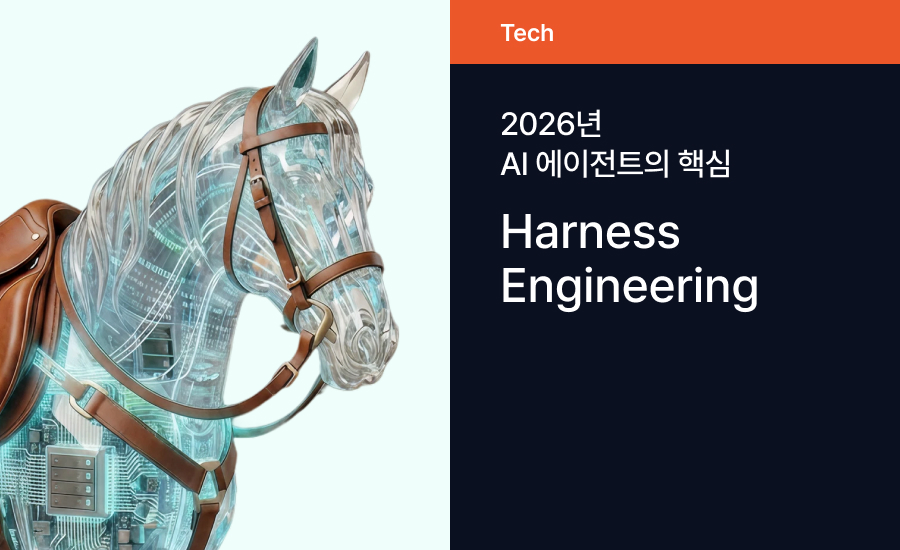
According to the latest analysis from laonpeople.com, a powerful AI model cannot function without a proper harness, much like you can't put a 1,000-horsepower F1 engine into a standard economy car frame.
2. Three Pillars of 2026 Harness Design
A technical analysis on eaudentia.blogspot.com highlights three core elements of expert-level harness design in 2026:
- Applying Architectural Constraints: Using linters and code structures—rather than just prompts—to create a system where the AI physically cannot break the rules.
- Automated Feedback Loops: Building mechanisms that continuously verify and correct AI outputs.
- Tool and Skill Hierarchies: Systematically defining and managing the tools and capabilities available to the agent.

3. Advancing Multi-Agent Harness Architecture
A practical guide on wikidocs.net highlights the rise of multi-agent architectures where sub-agents inherit harness configurations to collaborate. A robust hierarchical structure allows each agent to work more boldly and safely, with the harness serving as the structure that defines the roles and boundaries of each agent.
Engineering Practice and Use Cases
1. LangChain Case Study: 52.8% to 66.5% Benchmark Gain
According to blog.risemoment.ai, LangChain improved benchmark scores from 52.8% to 66.5% by changing only the harness design while keeping the model identical. This proves that significant performance gains are possible through harness optimization alone.
2. Real-world Adoption: Overcoming AI Coding Tool Limitations
A post on white-blank.tistory.com shares how developers using tools like Cursor and Claude Code saw early success with simple tasks but hit walls on complex production work. Introducing harness engineering significantly improved the reliability and quality of these agents.


3. AI Agent Architecture: The Harness as Core Infrastructure
As noted in an agent architecture guide on blakecrosley.com, Anthropic defines the harness as "infrastructure." It is a fundamental component of AI development that goes beyond prompt engineering, ensuring a safe and efficient environment for agents.
Research and Academic Insights
1. The Specificity of Failure Diagnosis
A guide on brunch.co.kr stresses that effective harness design requires precise failure diagnosis. Instead of simply noting a "code bug," teams must drill down to specific issues, such as broken wiring between functions caused by a lack of integrated testing. The more specific the diagnosis, the more effective the harness solution.
2. The Spectrum of Harness Engineering
A technical report from hafuture.com explores how "Harness Engineering" spans from traditional wiring harnesses to software test harnesses and, now, AI harness engineering. All rely on the core principles of control and connection.
3. Configuring the Hierarchy
According to wikidocs.net, the first step in harness engineering is establishing a configuration hierarchy. Defining what rules and tools an agent uses in a given context is the prerequisite for scaling toward multi-agent collaboration.
Conclusion and Implications
AI agent harness engineering is rapidly maturing in 2026.
The shift from model to infrastructure is the most significant trend. Optimizing the existing model's harness often yields better results than model swapping.
Architectural constraints and automated feedback loops are replacing prompt-only approaches. Embedding safety and verification directly into the system structure is becoming the new standard.
Multi-agent collaboration is the next frontier. As agents share and inherit harness settings, systematic design of configuration hierarchies becomes critical.
Ultimately, competitive advantage now lies in the precision of failure diagnosis and the specificity of structural solutions. Leading teams are tackling agent limitations as design problems, not just model problems.
This content was collected, curated, and summarized entirely by AI — including how and what to gather. It may contain inaccuracies. Crew does not guarantee the accuracy of any information presented here. Always verify facts on your own before acting on them. Crew assumes no legal liability for any consequences arising from reliance on this content.
Powered by
