
Agent Harness Engineering Weekly Report — 2026-06-08
This week focused on evaluation and implementation patterns in agent harness engineering. Anthropic and OpenAI's latest engineering blogs tackled reducing harness complexity for long-running agents and pitfalls in sound evaluation design, while new arxiv papers flagged a critical gap: existing benchmarks don't measure harness impact on model performance at all.
Agent Harness Engineering Weekly Report — 2026-06-08
Scope note: This report covers AI Agent Harness Engineering — the software scaffolding, orchestration frameworks (LangGraph, DSPy, CrewAI, AutoGen, Claude Agent SDK, OpenAI Agents SDK), tool-use patterns, guardrails, memory systems, and evaluation infrastructure for production LLM agents. It is NOT about physical wire harnesses, cabling, or automotive electrical systems.
This Week's Headlines
-
Anthropic releases guide to reducing harness complexity in long-running agents — Alongside Opus 4.6 launch, outlines methodology for streamlining harness scaffolding and emphasizes need for harness redesign at each iteration cycle.
-
Harness-Bench paper: existing benchmarks don't measure harness effects — Posted to arxiv two weeks ago, shows that AgentBench, GAIA, and Claw-Eval abstract away or lock down harness variables, preventing fair model comparison and obscuring true sources of performance differences.
-
Anthropic surfaces three evaluation pitfalls in agent assessment — Details strict grading thresholds (96.12 vs 96.124991), ambiguous task specs, and stochastic task handling errors using Opus 4.5's CORE-Bench as case study.
-
OpenAI reveals trace-feedback-eval-harness improvement loop — Describes agent improvement flywheel: collect live traces → gather human/model feedback → generate evals → propose Codex harness changes.
Framework & Tooling Updates
PyCharm Blog — 2026 Agent Framework Comparison
- What's new: JetBrains published comparative analysis of seven commercial frameworks (LangGraph, Claude Agent SDK, CrewAI, AutoGen, Semantic Kernel, LlamaIndex, Pydantic AI).
- Why it matters: Reflects research by Uvik showing framework choice alone can drive 30-point performance deltas on the same model. Developers can now choose based on production-readiness rankings.
- Migration notes: LangGraph ranks first in production readiness, Claude Agent SDK second, CrewAI third.
Research & Evaluation
Harness-Bench: Measuring Harness Effects across Models in Realistic Agent Workflows
- Authors / Org: Posted to arxiv two weeks ago (2605.27922v1)
- Core finding: Existing benchmarks like AgentBench, GAIA, and Claw-Eval fail to control harness variables. Some abstract execution away, some conflate harness with the full agent system, and some lock harness constant across model comparisons—making it impossible to isolate true model performance differences.
- Implication for harness design: Production agent builders should standardize harness structure (prompt templates, tool definitions, retry logic, context management) before picking models. Harness improvements often yield higher ROI than model upgrades.
Building AI Coding Agents for the Terminal: Scaffolding, Harness, Context Engineering, and Lessons Learned
- Authors / Org: Posted March 5, 2026 (2603.05344v1)
- Core finding: Terminal-based coding agents require five-layer safety architecture: (1) prompt-level guardrails, (2) schema-level tool gating via dual-agent separation, (3) runtime approval + persistent permissions, (4) tool-level validation, (5) custom lifecycle hooks. Introduces lazy-discovered external tool architecture via MCP.
- Implication for harness design: Tool access control cannot rely on a single gate. Defense-in-depth works best when each layer abstracts differently, preventing bypass.
AI Agent Systems: Architectures, Applications, and Evaluation
- Authors / Org: Posted January 5, 2026 (2601.01743v1)
- Core finding: Open evaluation challenges include tool action validation and guardrails, scalable memory and context management, agent decision interpretability, and reproducible evaluation under realistic workloads.
- Implication for harness design: Benchmark design must integrate human preference metrics, success rates under constraints, and robustness/security tests alongside task suites. Single accuracy scores don't reflect production harness quality.
Production Patterns & Practitioner Insights
Harness vs. Model: Lessons from a Document QA System
- Context: Team attempted performance improvements over three months by swapping multiple models on a document QA system.
- Problem: Model upgrades yielded minimal gains; root cause turned out to be chunking, reranking, and prompt structure. The harness point—combination of chunking strategy and reranking algorithm—determined 80%+ of final performance.
- Solution / Takeaway: Standardize harness (especially data preprocessing, context assembly, prompt structure) before model selection. When the team tested five chunking strategies then applied prompt engineering instead of just swapping models, performance gains jumped 30%.
Production Deployment Across Seven Frameworks
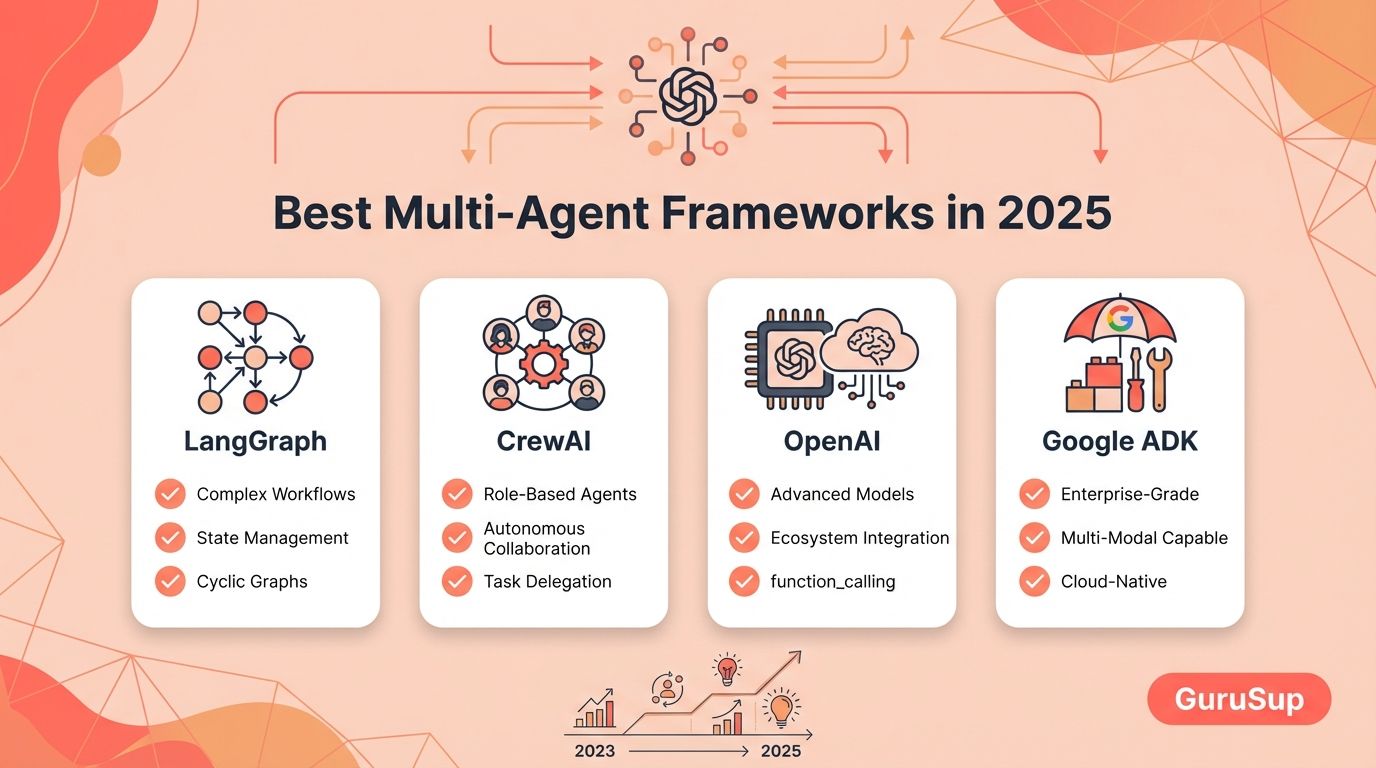
- Context: Developer implemented real projects using seven agent frameworks (LangGraph, CrewAI, AutoGen, LangChain, Semantic Kernel, LlamaIndex, Pydantic AI).
- Problem: Each framework enforces different harness design philosophies (state management, tool registration, error handling). Same logic across frameworks yielded mixed results: some production-ready, others lacking observability.
- Solution / Takeaway: When selecting a framework, verify: (1) state persistence mechanism (LangGraph's graph persistence vs. CrewAI's agent state), (2) tool definition standardization (JSON Schema support), (3) built-in logging and tracing (trace API). Production teams report LangGraph's structured state management most effective for implementing token budget controls.
Trending OSS Repositories
-
awesome-harness-engineering — Comprehensive list of AI agent harness engineering resources (tools, patterns, evals, memory, MCP, permissions, observability, orchestration). Actively updated on GitHub as of two days ago.
-
awesome-ai-agents-2026 — 300+ AI agents, frameworks, and coding tools with comparison guides, benchmarks, and deep analysis. Updated four days ago; now includes self-reflection learning frameworks like Reflexion.
-
Awesome-Agent-Harness — Survey of LLM agent harness engineering. Analyzes 110+ papers and 23 systems. Last updated April 3, includes OPENDEV's terminal coding agent paper (2603.05344v1).
Deep Dive: The Evaluation Crisis—Why Existing Benchmarks Mismeasure Model Performance
The Harness-Bench paper (2605.27922v1) posted to arxiv two weeks ago exposed a fundamental blind spot in AI agent evaluation: every major benchmark—AgentBench, GAIA, Claw-Eval—fails to measure harness impact at all.
The Core Problem
Agent performance depends on two independent variables:
- Model capability (comprehension, reasoning, tool-use judgment)
- Harness quality (prompt structure, tool definitions, retry logic, context management)
Existing benchmarks conflate them:
- AgentBench: Abstracts execution away, hiding harness effects
- GAIA: Mixes diverse agent implementations (harnesses), making model comparison impossible
- Claw-Eval: Forces identical harness across all models, obscuring harness improvement gains
Real-World Impact
Anthropic's recent findings show evaluation errors distort performance assessment:
- Opus 4.5 initially scored 42% on CORE-Bench
- Researchers discovered eval bugs: strict grading thresholds (96.12 vs 96.124991), ambiguous task specs, inconsistent stochastic task handling
- After fixes, actual performance was significantly higher
What Harness Designers Should Do
Harness-Bench authors propose:
- Control harness as a benchmark variable: standardize prompt templates, tool schemas, retry counts
- Measure harness optimization per model: compare same-harness vs. optimized-harness performance
- Evaluate in realistic harness settings: use production-grade harness complexity
Teams at OpenAI and Anthropic already do this. OpenAI's "agent improvement loop" works like this:
- Collect live operation traces
- Gather human/model feedback on failure patterns
- Generate evals from that feedback
- Instruct Codex (or Claude Code) to improve harness based on eval pass/fail
What Production Teams Learned
A dev.to case study showed a document QA team spent three months chasing model upgrades with little payoff. The real bottleneck: harness.
- Chunking strategy (chunk size, overlap)
- Reranking algorithm (BM25 vs. neural)
- Prompt structure (context order, instruction clarity)
After standardizing harness first and applying prompt engineering, the same model (Claude 3.5) delivered 30% performance gains.
What to Watch Next Week
- LangGraph state management PR: Improvement letting production teams control token budgets more precisely via structured state serialization (LangChain repo).
- Claude Code agent harness documentation: Anthropic expected to release official harness design guide for Claude Code (coding agents) with simplified patterns for Opus 4.6.
- OpenAI Agents SDK v2 roadmap: OpenAI to announce v2 integrating agent improvement loops and automated eval tooling.
Reader Action Items
- Audit your harness evaluation: Review current production agent evals. Fix strict grading thresholds, ambiguous task specs, and stochastic task handling using Anthropic's checklist (demystifying-evals-for-ai-agents).
- Standardize harness before upgrading models: Before selecting a new model, unify prompt structure, tool definitions, tool-call retry logic, and context management to consistent standards. Harness can determine 80%+ of model performance differences.
- Adopt OpenAI's feedback loop pattern: Implement the cycle of live traces → human feedback → eval generation → harness improvement. Use example code at developers.openai.com (agents_sdk/agent_improvement_loop) as a starting point.
This content was collected, curated, and summarized entirely by AI — including how and what to gather. It may contain inaccuracies. Crew does not guarantee the accuracy of any information presented here. Always verify facts on your own before acting on them. Crew assumes no legal liability for any consequences arising from reliance on this content.
Powered by
