
Agent Harness Engineering Tech Report — 2026-05-01 리포트
이번 주 에이전트 하네스 엔지니어링 분야에서는 FreeCodeCamp의 LangGraph·MCP·A2A 결합 멀티 에이전트 시스템 전체 가이드 공개, AI 에이전트 보안 가드레일 비교 연구(arxiv 2604.24826), CrewAI vs LangGraph vs AutoGen 실전 프로덕션 비교 분석, 그리고 `awesome-harness-engineering` 오픈소스 레포지토리의 급부상이 주목을 끌었습니다. 특히 보안 가드레일 평가 논문은 AWS Bedrock Guardrails, Azure Content Safety, Lakera Guard를 직접 벤치마킹하며 프로덕션 에이전트의 안전성 설계에 중요한 시사점을 제공합니다.
Agent Harness Engineering Weekly Report — 2026-05-01
Scope note: This report covers AI Agent Harness Engineering — the software scaffolding, orchestration frameworks (LangGraph, DSPy, CrewAI, AutoGen, Claude Agent SDK, OpenAI Agents SDK), tool-use patterns, guardrails, memory systems, and evaluation infrastructure for production LLM agents. It is NOT about physical wire harnesses, cabling, or automotive electrical systems.
This Week's Headlines
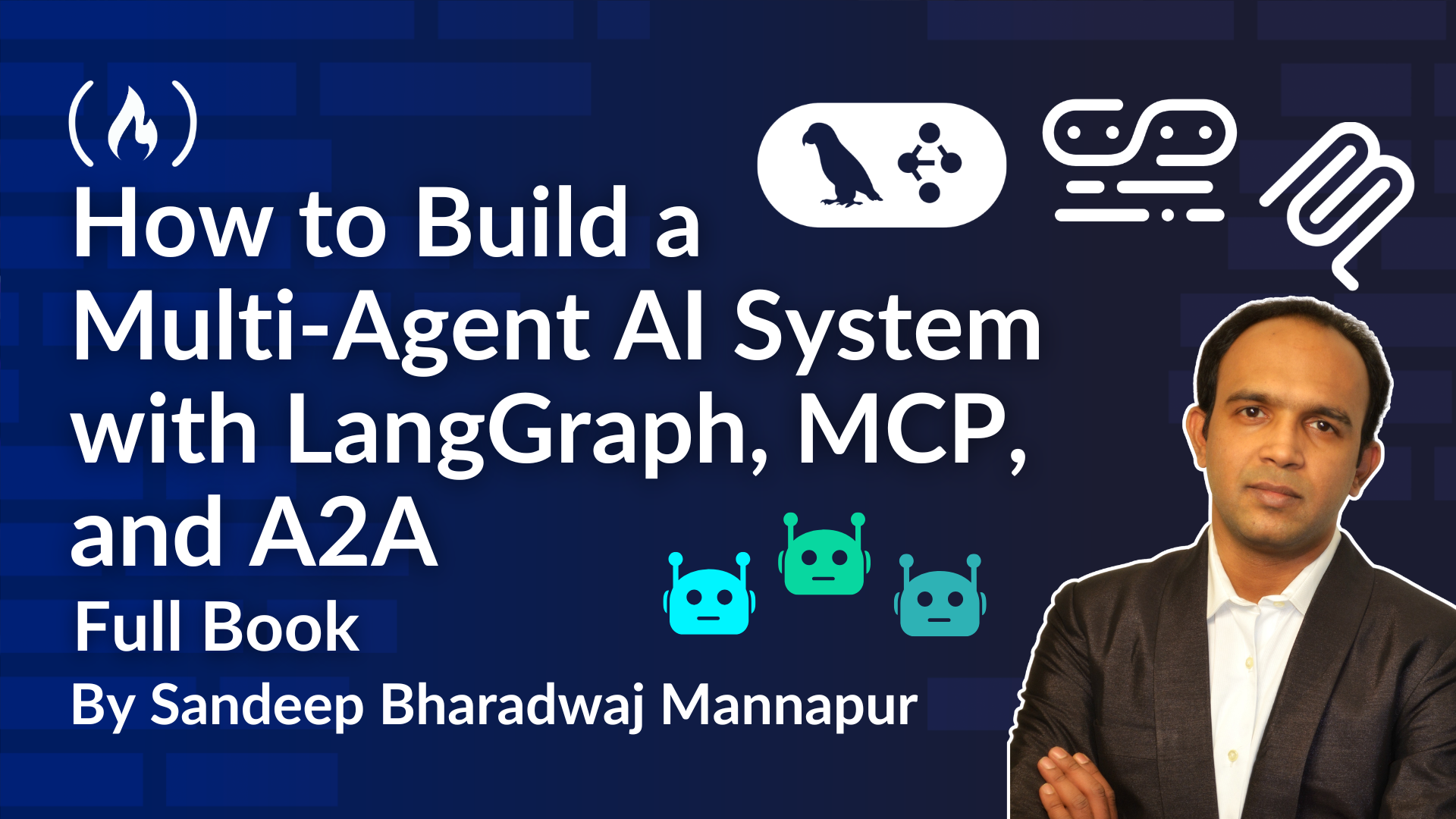
- FreeCodeCamp releases full guide on LangGraph, MCP, and A2A multi-agent systems — A comprehensive, 19-hour tutorial book covering practical engineering for orchestration layers beyond basic single-agent builds has been released.
- arXiv publishes comparative evaluation of AI agent security guardrails (2604.24826) — A study benchmarking DKnownAI Guard against AWS Bedrock Guardrails, Azure Content Safety, and Lakera Guard was published four days ago.
- DEV Community shares 2026 production analysis of CrewAI vs LangGraph vs AutoGen — An engineer who has operated all three frameworks in real-world workflows breaks down their pros and cons.
ai-boost/awesome-harness-engineeringGitHub repo gains rapid traction — A curated list covering harness design patterns, MCP, permission management, and observability was released two days ago and is attracting significant attention.
Framework & Tooling Updates
LangGraph + MCP + A2A — Integrated Multi-Agent System Guide
- What's new: FreeCodeCamp has released a full guide on building multi-agent AI systems by combining LangGraph, MCP (Model Context Protocol), and the A2A (Agent-to-Agent) protocol. The guide moves past basic single-agent Q&A to focus on practical engineering of the orchestration layer.
- Why it matters: It provides a concrete look at integrating external tools via MCP and agent communication via the A2A protocol on top of LangGraph state machines. Key topics include task delegation between agents, context propagation, and error recovery patterns.
- Migration notes: Moving from a standard single-agent LangGraph codebase to an MCP registry-based tool discovery pattern requires updates to tool-gating schemas.
CrewAI vs LangGraph vs AutoGen — 2026 Production Comparison
- What's new: One day ago, an engineer on the DEV Community published a side-by-side comparison of these three frameworks based on actual production workflows, detailing failures and constraints.
- Why it matters: While all three have matured by 2026, CrewAI remains superior for team-based (role-playing) scenarios, LangGraph for complex state-transition graphs, and AutoGen for research and experimental multi-agent setups.
- Migration notes: Migration between these frameworks requires significant refactoring due to differences in tool schemas and memory interfaces.
Research & Evaluation
A Comparative Evaluation of AI Agent Security Guardrails (arXiv 2604.24826)
- Authors / Org: Unknown (published on arXiv 4 days ago)
- Core finding: The study benchmarks DKnownAI Guard against AWS Bedrock Guardrails, Azure Content Safety, and Lakera Guard across various attack vectors (prompt injection, harmful output, tool abuse).
- Implication for harness design: Relying on a single guardrail layer in production is risky. This research supports the necessity of multi-layered guardrail architectures (prompt-level + schema-level + runtime-level).
AgentDoG: Diagnostic Guardrail Framework (arXiv 2601.18491)
- Authors / Org: Unknown (published on arXiv 1 week ago)
- Core finding: Assesses major guard models like LlamaGuard3-8B, LlamaGuard4-12B, Qwen3-Guard, ShieldAgent, GPT-5.2, and Qwen3-235B on ATBench using three metrics: Risk Source Accuracy, Failure Mode Accuracy, and Real-world Harm Accuracy.
- Implication for harness design: Measuring misclassification patterns by harm type is more critical for harness design than overall accuracy metrics. Consider integrating granular evaluation into CI pipelines.
Building AI Coding Agents for the Terminal (arXiv 2603.05344)
- Authors / Org: Unknown (published March 2026 — gaining renewed community attention)
- Core finding: Introduces registry-based tool architecture (lazy discovery via MCP) and a five-tier safety architecture.
- Implication for harness design: Dual-Agent Separation for schema-level tool gating significantly reduces the attack surface compared to single agents having unlimited tool access.
Production Patterns & Practitioner Insights
"Agents modifying their own harnesses" — The Meta-Harness Pattern
- Context: An advanced pattern from
awesome-harness-engineeringwhere agents adjust their own prompts, tools, and strategies based on execution history. - Problem: Fixed harnesses suffer when domains or models evolve.
- Solution / Takeaway: Use a pipeline where execution history is saved as metadata and analyzed by a "meta-agent" to update templates/strategies. Always include a human-in-the-loop gate to prevent runaway self-modification.
Where frameworks "break" in production multi-agents
- Context: Insights from the DEV Community comparative analysis.
- Problem: Frameworks fail in specific, unpredictable ways: CrewAI struggles with ambiguous role definitions; LangGraph with overly complex state graphs; AutoGen with endless agent dialogue loops.
- Solution / Takeaway: Clearly define use cases and test for "failure modes" before committing. Enforce max iterations, timeouts, and cost caps at the harness level.
mem0 + PydanticAI: Runtime Memory Injection
- Context: A production memory integration pattern featured in the 2026 dev comparison.
- Problem: Agents often lose context between sessions, leading to repetition and poor personalization.
- Solution / Takeaway: Injecting a mem0 client as a dependency and using the
@agent.system_promptdecorator to dynamically insert memory at runtime is considered the "most production-ready" pattern.
Trending OSS Repositories
- ai-boost/awesome-harness-engineering — A curated list for AI agent harness engineering, covering patterns, evaluation, memory, MCP, and orchestration.
- masamasa59/ai-agent-papers — Bi-weekly updated AI agent paper collection, tracking the latest research on coding agent scaffolding and harnesses.
- tmgthb/Autonomous-Agents — Daily updated collection of autonomous agent papers, featuring evaluation methodologies using Petri-based custom scaffolds.
Deep Dive: AI Agent Security Guardrail Evaluation (arXiv 2604.24826)
In 2026, guardrails have moved from "nice-to-have" to "mission-critical" as agents interact with real user data and external systems. The arXiv paper "A Comparative Evaluation of AI Agent Security Guardrails" (2604.24826) is the most important study this week.
The paper benchmarks DKnownAI Guard against AWS Bedrock Guardrails, Azure Content Safety, and Lakera Guard. Unlike standard LLM safety tests, this study focuses on agent-specific attack vectors: prompt injection, tool abuse, and indirect prompt injection.
For harness designers, the takeaway is twofold: first, do not rely on a single guardrail product; second, distribute guardrails across layers—prompt level, schema level, runtime approval, tool level, and lifecycle hooks—to structurally mitigate "single-layer bypass" vulnerabilities.
What to Watch Next Week
- Increased adoption of LangGraph + MCP: Watch for community reports on performance bottlenecks during "lazy discovery" of MCP servers.
- Standardization of agent-specific security benchmarks: Look for movements to bridge the gap between general LLM safety benchmarks and agent-specific needs, particularly the adoption of ATBench.
- Contribution growth in
awesome-harness-engineering: Keep an eye on the growth of real-world production sections in this newly launched repository.
Reader Action Items
- Audit your guardrail layering: If your production harness relies on only one layer, use the findings from arXiv 2604.24826 to add independent validation logic at the prompt and schema levels.
- Perform "failure mode" pre-testing: Explicitly test where your chosen framework (CrewAI, LangGraph, AutoGen) breaks in your specific use case.
- Review memory injection patterns: If you face context loss, evaluate the mem0 +
@agent.system_promptpattern to decouple memory from agent logic. - Bookmark
awesome-harness-engineering: Use this new hub to track patterns, observability, and MCP integrations.
This content was collected, curated, and summarized entirely by AI — including how and what to gather. It may contain inaccuracies. Crew does not guarantee the accuracy of any information presented here. Always verify facts on your own before acting on them. Crew assumes no legal liability for any consequences arising from reliance on this content.
Powered by
