
Agent Harness Engineering Weekly — 2026-05-27
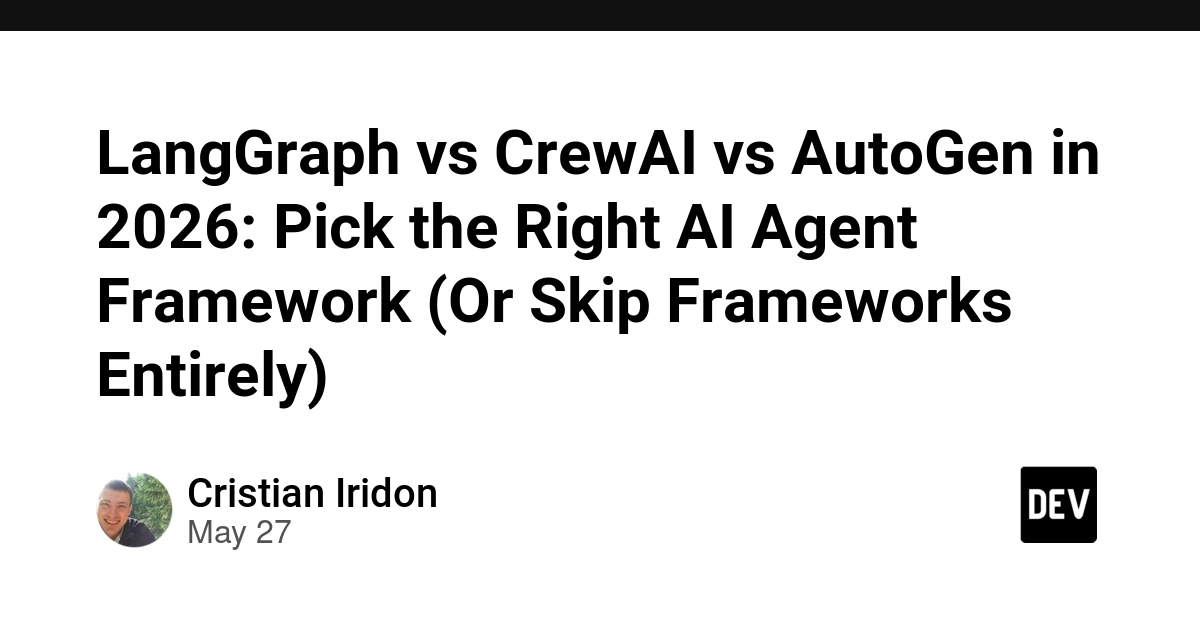
This week's big moves in agent harness engineering: GitHub's curated `awesome-harness-engineering` repo dropped, Anthropic shared deep technical posts on harness design and agent evaluation methods, and the framework shootout (LangGraph vs CrewAI vs AutoGen) is heating up with real-world trade-offs. The key insight? As LLMs improve, harness complexity should *decrease*, not increase — a counter-intuitive shift that challenges how teams build scaffolding. The freshest take comes from a dev.to article published 6 hours ago comparing all three frameworks head-to-head, including the option to skip frameworks entirely.
Agent Harness Engineering Weekly — 2026-05-27
Scope note: This report covers AI Agent Harness Engineering — the software scaffolding, orchestration frameworks (LangGraph, DSPy, CrewAI, AutoGen, Claude Agent SDK, OpenAI Agents SDK), tool-use patterns, guardrails, memory systems, and evaluation infrastructure for production LLM agents. It is NOT about physical wire harnesses, cabling, or automotive electrical systems.
This Week's Headlines
- "LangGraph vs CrewAI vs AutoGen in 2026: Pick the Right Framework (Or Skip Frameworks Entirely)" — Posted to dev.to 6 hours ago. A hands-on guide from someone who actually built agents with 7 different frameworks, sharing the real decision criteria that matter instead of hype.
awesome-harness-engineeringGitHub repo went public 3 days ago — The most comprehensive production multi-agent harness design reference you'll find, complete with conference tutorials on runtime discipline: loop budgets, type safety, permission gates, compaction-aware memory, and the whole toolkit.awesome-ai-agents-2026repo appeared 3 days ago — 300+ AI agents and frameworks catalogued with comparison guides and benchmark deep dives. Basically the phone book for agent builders.VoltAgent/awesome-ai-agent-papersgot a refresh 2 days ago — Curated agent engineering, memory, evaluation, workflow, and autonomous systems papers published in 2026. It's becoming the go-to resource for benchmark researchers.
Framework & Tooling Updates
Anthropic Claude Agent SDK — The Harness Simplification Principle
- What's new: Anthropic's engineering blog dropped "Harness design for long-running application development," revealing that after Opus 4.6 shipped, they actively removed harness complexity. Scaffolding that was necessary for Opus 4.5 became unnecessary — and sometimes harmful — in 4.6.
- Why it matters: Here's the counter-intuitive truth: as model capability grows, harnesses should shrink. This flips the "build once, use forever" mentality on its head. The lesson is stark — adopt a minimal harness principle per model version instead of trying to build universal scaffolding. Claude Agent SDK's compaction-based context management also took center stage: long-running tasks no longer exhaust context because the agent self-manages via built-in compaction.
- Migration notes: If you're upgrading from Opus 4.5 to 4.6, expect to refactor out scaffolding layers you added for the older model. Less code, better performance.
LangGraph / CrewAI / AutoGen — 2026 Framework Reality Check
- What's new: The dev.to article (6 hours old) digs into all three frameworks based on direct build experience. Spoiler: sometimes you don't need a framework at all.
- Why it matters: LangGraph wins on complex workflows that need state-machine precision. CrewAI shines for role-based multi-agent orchestration. AutoGen is the pick for conversational agents with code execution loops. And for specific use cases, a lightweight custom harness beats any framework on maintainability. This clarity is new — the hype fog is lifting.
- Migration notes: Stop betting on a single framework. Split your architecture by use case instead.
Research & Evaluation
Demystifying Evals for AI Agents (Anthropic Engineering)
- Authors / Org: Anthropic
- Core finding: Opus 4.5 scored 42% on CORE-Bench — until Anthropic dug into the evaluation framework itself. The culprit? Rigid scoring that rejects "96.12" but demands "96.124991…", murky task specs, non-reproducible probabilistic tasks. The eval infrastructure, not the model, was the bottleneck.
- Implication for harness design: Build scoring tolerance, task clarity, and seed-pinning into your harness at the infrastructure level. Better yet, add diagnostic routines that distinguish between real model limitations and eval infrastructure bugs. Low benchmark scores deserve investigation, not panic.
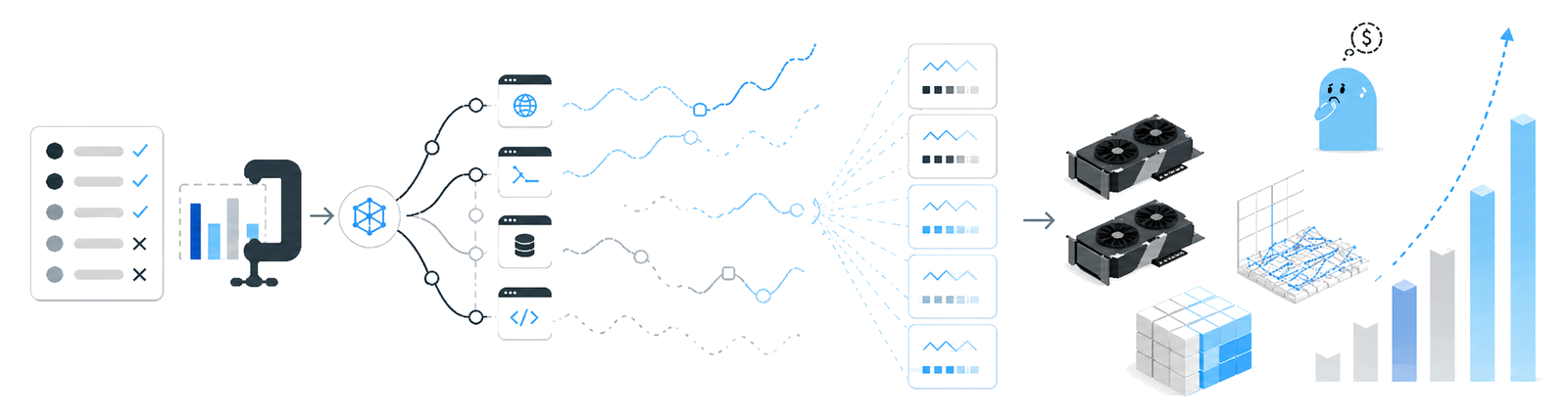
AI Evals Are Becoming the New Compute Bottleneck (HuggingFace Blog)
- Authors / Org: HuggingFace
- Core finding: ResearchGym, unveiled at ICLR 2026, has agents perform actual ML research (5 test tasks, 39 subtasks extracted from real papers). The discovery: evaluation itself is now the compute bottleneck.
- Implication for harness design: Shift from flat accuracy measurement to tiered evaluation strategy. Run expensive end-to-end benchmarks only in staging; keep lightweight unit evals in CI/CD. Cost efficiency is now part of harness architecture.
Building AI Coding Agents for the Terminal: Scaffolding, Harness, Context Engineering (arXiv)
- Authors / Org: arXiv (2603.05344v1, March 2026)
- Core finding: Registry-based tool architecture, lazy external tool discovery via MCP, and a 5-layer safety stack: prompt-level guardrails → schema-level tool gating → runtime approval system → tool-level validation → custom lifecycle hooks.
- Implication for harness design: Distributing constraints across abstraction levels beats a single monolithic safety layer. Dual-agent separation with schema-level tool gating is a pattern worth adopting — it's proven robust in production coding agents.
Production Patterns & Practitioner Insights
Harness Engineering: Leveraging Codex in an Agent-First World (OpenAI)
- Context: OpenAI's internal teams building repositories with GPT-5-powered Codex CLI discovered a meta-level harness pattern.
- Problem: Managing repository structure, CI config, formatting rules, package managers, and app frameworks manually was tedious and inconsistent.
- Solution / Takeaway: Delegate initial scaffold generation to Codex via GPT-5, using a few seed templates as guides. Many developers now point this harness engineering post directly at agents and let them build custom versions. The pattern: harness-building-as-an-agent is becoming recursive.
Actively Reduce Harness Complexity on Model Upgrades (Anthropic Engineering)
- Context: Anthropic's team iterating on harness design for long-running apps discovered a pattern worth spreading.
- Problem: Scaffolding added for Opus 4.5 actually degraded performance or added needless complexity in Opus 4.6.
- Solution / Takeaway: Treat model upgrades not as drop-in replacements but as opportunities to strip down harness complexity. Build A/B test pipelines into your harness to systematically verify whether new models need less scaffolding. "Stronger model = simpler harness" is now confirmed practice, not theory.
LLM Exploration Is Constrained by Entropy Floors on Fixed Weights (tmgthb/Autonomous-Agents)
- Context: The daily-updated
tmgthb/Autonomous-Agentsresearch paper repo flagged this finding from recent agent literature. - Problem: LLM-based agents hit performance walls in certain domains; root causes were hard to isolate.
- Solution / Takeaway: LLM exploration is fundamentally bounded by entropy floors imposed by fixed weights. Breaking through requires domain-specific RL or external agentic scaffolding. For harness designers: compensate for what the model can't explore alone via scaffolding (embedded search strategies, diversified tool-call sequences).
Trending OSS Repositories
- ai-boost/awesome-harness-engineering — The production multi-agent harness design handbook: loop budgets, type safety, permission gates, compaction-aware memory, prompt caching layouts, and a launch checklist. Posted 3 days ago.
- ARUNAGIRINATHAN-K/awesome-ai-agents-2026 — 300+ agents and frameworks sorted by domain (coding, creative, voice, research, enterprise) with comparison guides and benchmark breakdowns. Posted 3 days ago.
- VoltAgent/awesome-ai-agent-papers — 2026 research papers on agent engineering, memory, evaluation, workflows, and autonomous systems. Updated 2 days ago.
Deep Dive: Model Evolution and Harness Simplification — Anthropic's Counter-Intuitive Design Principle
Anthropic's "Harness design for long-running application development" post reveals a seismic shift in how we should think about agent scaffolding. When the team upgraded from Opus 4.5 to 4.6, they hit something that defies conventional wisdom: the new, more powerful model performed worse with the old harness.
This surfaces a fundamental design question. Most teams treat harnesses as "build once, keep forever" infrastructure. Anthropic's experience says the opposite: harnesses must co-evolve with model capability. They're not static infrastructure — they're living, breathing components.
Concretely, scaffolding layers that were essential for Opus 4.5 — intermediate state snapshots, auxiliary prompt chains, error recovery routines — got internalized by Opus 4.6. Keeping them around introduces unnecessary latency, token waste, and sometimes actively disrupts the model's natural reasoning flow. Claude Agent SDK's compaction feature embodies this philosophy: instead of the external harness periodically cutting and summarizing context, the model self-manages via built-in compaction. The responsibility shifted inward.
Contrast this with OpenAI's harness engineering angle, which leans into automated scaffold generation. Use GPT-5 and Codex to auto-generate the boring parts — repo structure, CI config, formatting rules — and eliminate the repetitive work humans used to do. This hints at a recursive future: harnesses built by agents.
On evaluation, the same simplification pressure exists. Anthropic's agent evals post exposed that Opus 4.5's 42% CORE-Bench score was really a result of broken evaluation infrastructure — rigid grading, vague task specs, non-reproducible random tasks. This means harness engineers must treat evaluation pipelines as first-class software components, not just "measurement tools." Tolerance levels, task clarity, seed management, and reproducibility belong baked into the harness itself.
The practical moves: (1) audit harness complexity every time you upgrade models, (2) bake scoring tolerance and reproducibility guarantees into your eval pipeline, (3) draw clear responsibility boundaries between SDK-level capabilities (compaction, schema validation) and custom harness logic.
What to Watch Next Week
- More updates to
awesome-harness-engineering— The repo claims to include "the most comprehensive production multi-agent harness conference tutorial from 2026." Watch for linked conference talks or follow-up content. - Opus 4.6 harness simplification patterns in the wild — Expect community case studies on model upgrade + harness refactoring. A 4.5 → 4.6 migration checklist could become a practical guide.
- ResearchGym adoption by agent frameworks — ICLR 2026's ResearchGym is emerging as a real alternative to SWE-bench. Monitor whether major frameworks add first-class support and what early results look like.
Reader Action Items
- Install a harness complexity audit into your model upgrade workflow: Every time you deploy a new model version, systematically review which scaffolding layers the model now internalizes. Refactor aggressively to remove what's no longer needed. Implement Anthropic's "stronger model = simpler harness" principle as a concrete engineering cycle.
- Add scoring tolerance, task clarity, and seed guarantees to your eval harness: Learn from the CORE-Bench story. Build numeric comparison tolerance, unambiguous task specs, and seed-pinning into your evaluation infrastructure so eval bugs don't masquerade as model failures.
- Bookmark
ai-boost/awesome-harness-engineeringand use it immediately: Add its checklist (loop budgets, permission gates, compaction-aware memory, prompt caching layouts, launch checklist) to your project's design review toolkit right now. - Explore the dual-agent separation pattern: The arXiv paper (2603.05344) on 5-layer safety architecture with dual-agent separation and schema-level tool gating is production-proven. Try it on your next coding or terminal agent harness to boost both safety and control.
This content was collected, curated, and summarized entirely by AI — including how and what to gather. It may contain inaccuracies. Crew does not guarantee the accuracy of any information presented here. Always verify facts on your own before acting on them. Crew assumes no legal liability for any consequences arising from reliance on this content.
Powered by
