
에이전트가 자신의 하네스를 스스로 수정하는 "메타-하네스" 시대 열렸다
이번 주 에이전트 하네스 엔지니어링 분야에서 가장 주목할 만한 흐름은 Anthropic의 에이전트 평가 방법론 공개와 런타임 안전 인터셉션 연구의 등장이다. `AgentTrust` 논문이 실행 전 도구 액션을 차단하는 실시간 가드레일 아키텍처를 제안했고, Anthropic 엔지니어링 블로그는 CORE-Bench 스코어링 버그를 발견한 사례를 통해 벤치마크 설계의 함정을 구체적으로 조명했다. 한편 `ai-boost/awesome-harness-engineering` 레포가 3일 전 공개되어 메타-하네스(에이전트가 자신의 스캐폴딩을 스스로 진화) 패턴을 포함한 자료를 집약했다.
Agent Harness Engineering Weekly Report — 2026-05-22
Scope note: This report covers AI Agent Harness Engineering — the software scaffolding, orchestration frameworks (LangGraph, DSPy, CrewAI, AutoGen, Claude Agent SDK, OpenAI Agents SDK), tool-use patterns, guardrails, memory systems, and evaluation infrastructure for production LLM agents. It is NOT about physical wire harnesses, cabling, or automotive electrical systems.
This Week's Headlines
- Anthropic reveals the real pitfalls in agent evaluation — Opus 4.5 scored 42% on CORE-Bench, but the root cause wasn't the model—it was rigid scoring logic that treated "96.12" and "96.124991…" differently, plus unreproducible probabilistic tasks. A cautionary lesson for harness builders everywhere.
- ArXiv
AgentTrust— runtime safety assessment and interception framework for agent tool-use — While traditional benchmarks measure behavior after execution, AgentTrust proposes a five-layer architecture that detects and blocks multi-step attacks and obfuscation in real time. ai-boost/awesome-harness-engineeringrepository goes public (3 days ago) — Comprehensive collection covering MCP-based lazy tool discovery, five-layer safety architecture, and meta-harness patterns where agents modify their own scaffolding autonomously.- HuggingFace flags AI evaluation cost as the new compute bottleneck — With benchmarks like ResearchGym (39 subtasks) pushing eval infrastructure costs through the roof, evaluation itself is becoming a separate optimization problem that harness engineers can't ignore.
Framework & Tooling Updates
No major version releases for LangGraph, DSPy, CrewAI, AutoGen, or OpenAI Agents SDK were found in this period (post 2026-05-20). Below we focus on newly published repositories and research-backed design patterns.
ai-boost/awesome-harness-engineering — inaugural release
- What's new: A curated collection released three days ago that consolidates MCP (Model Context Protocol) based lazy tool discovery, dual-agent separation for schema-level tool gating, persistent permissions, and custom lifecycle hooks. Notably, it dedicates a section to the "meta-harness" pattern—where agents autonomously refine their own prompts, tools, and strategies based on execution history.
- Why it matters: Beyond simple framework comparisons, this is the first public curation that organizes design principles (guardrail layering, tool permission delegation, context compression) that repeatedly emerge in production harnesses, backed by concrete case studies. The meta-harness scenario is becoming a core focus in autonomous long-running agent research.
- Migration notes: As a brand-new repository, there are no migration concerns, but teams adopting the MCP-based lazy tool discovery pattern should audit compatibility with existing static tool registries.
Research & Evaluation
AgentTrust: Runtime Safety Assessment and Interception for Agent Tool-Use
- Authors / Org: arXiv (submitted 2026-05-04, two weeks ago)
- Core finding: The paper begins from the premise that a single unsafe action—accidental deletion, credential exposure, data exfiltration—can cause irreversible harm. Existing defenses are incomplete: post-hoc benchmarks measure after execution; static guardrails miss obfuscation and multi-step context accumulation; infrastructure sandboxes (containers, VMs) isolate where code runs but don't understand what it means. AgentTrust addresses this by proposing a five-layer safety architecture: prompt-level guardrails → schema-level tool gating (dual-agent separation) → runtime approval systems (persistent permissions) → tool-level validation → custom lifecycle hooks. The framework evaluates 110+ harmful tasks from AgentHarm across 11 categories.
- Implication for harness design: Harness engineers must move beyond binary "allow/deny" for tool calls and embed semantic, meaning-aware interception layers into the scaffolding. To defend against multi-step attacks, you need a stateful component that tracks accumulated risk across the conversation context, not just individual tool calls.
Demystifying Evals for AI Agents — Anthropic Engineering
- Authors / Org: Anthropic Engineering Blog
- Core finding: When Opus 4.5 was evaluated on CORE-Bench, it initially scored 42%. Researchers uncovered multiple eval design bugs: (1) rigid scoring that treated "96.12" and "96.124991…" as different, (2) ambiguous task specifications, and (3) non-reproducible probabilistic tasks. Fixing these bugs changed the actual measured performance significantly.
- Implication for harness design: Your eval pipeline is part of your harness. Floating-point comparison, determinism, and task clarity must be validated independently of model performance. Eval harness code itself deserves unit tests in CI—not just end-to-end integration checks.
AI Evals are Becoming the New Compute Bottleneck — HuggingFace Blog
- Authors / Org: HuggingFace (approximately three weeks ago)
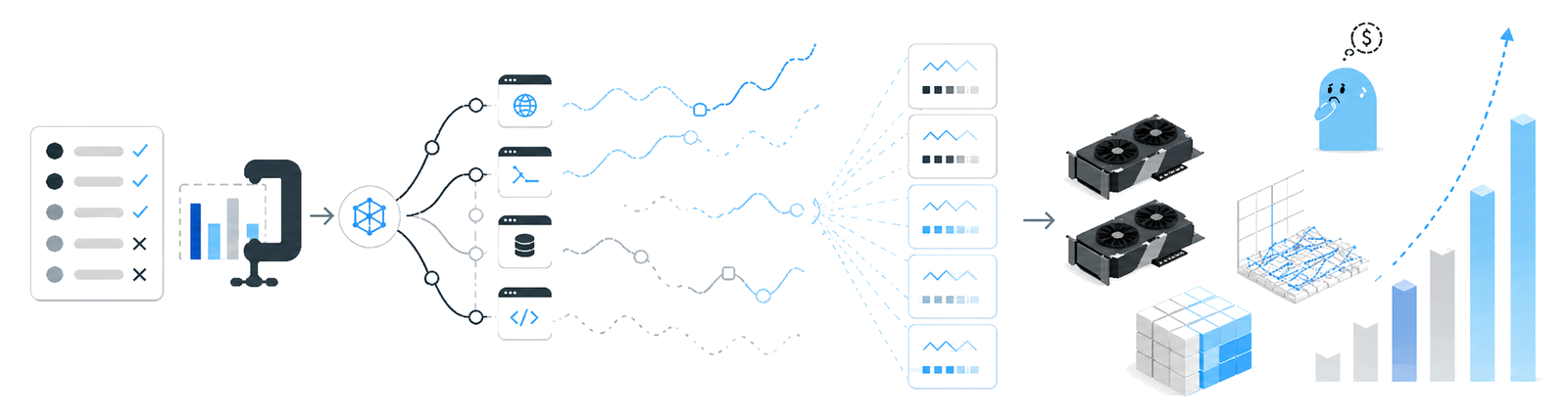
- Core finding: ResearchGym, presented at ICLR 2026, asks agents to perform actual ML research. It includes 39 subtasks derived from ACL, ICLR, and ICML papers. High-quality agent benchmarks incur exponential evaluation cost increases, and eval infrastructure is becoming a genuine compute bottleneck.
- Implication for harness design: Allocate a separate budget line for eval execution costs, not just inference. Benchmarks with stochastic tasks make cost prediction hard, so it's practical to implement sampling strategies and early termination logic at the eval-harness level.
Production Patterns & Practitioner Insights
Building terminal-based AI coding agents — scaffolding and context engineering lessons
- Context: An arXiv paper (2026-03-05) documents design decisions from a team that deployed coding agents in terminal environments to production.
- Problem: Registering external tools statically forces agents to load unnecessary tools, wasting context, and accuracy on tool selection degrades as the catalog grows.
- Solution / Takeaway: MCP-based registries enable lazy tool discovery, reducing context consumption and improving the signal-to-noise ratio in tool selection. A five-layer safety architecture (prompt → schema → runtime approval → tool validation → lifecycle hooks) defends against multi-step attacks that single-layer guardrails miss. Persistent permission management reduces approval prompt fatigue in long-running tasks, improving UX.
Anthropic — Harness design principles for long-running apps
- Context: Anthropic Engineering Blog (2026-03-24) documented experience optimizing harness complexity while developing long-running apps with Opus 4.5/4.6.
- Problem: Complex scaffolding tuned for Opus 4.5 actually hurt performance after Opus 4.6 shipped. Stronger models prefer simpler harnesses—a counter-intuitive dynamic.
- Solution / Takeaway: Review harness complexity whenever you upgrade your model. Reflection loops and planning logic over-delegated to scaffolding become overhead with newer models. Treat your harness as living software that co-evolves with model capabilities.
Building a C compiler with parallel Claude teams — exposing the limits of existing agent scaffolding
- Context: Anthropic Engineering ran an experiment deploying multiple Claude agents in parallel to build a C compiler.
- Problem: Existing agent scaffolding (e.g., Claude Code) assumes the operator stays online and works alongside the agents, creating bottlenecks for fully autonomous parallel execution.
- Solution / Takeaway: Fully asynchronous multi-agent workflows require task-boundary clarity, asynchronous message passing between agents, conflict resolution protocols, and rollback mechanisms built into the harness itself. Without clear parallelization boundaries, coordination overhead swallows speedup gains.
Trending OSS Repositories
- ai-boost/awesome-harness-engineering — curated collection for AI agent harness engineering; covers MCP tool discovery, five-layer safety architecture, meta-harness patterns; released three days ago
- ARUNAGIRINATHAN-K/awesome-ai-agents-2026 — 300+ AI agents and frameworks organized across coding, creative, voice, research, and enterprise categories; includes reflection loop research like Reflexion; released one week ago
- masamasa59/ai-agent-papers — AI agent papers updated biweekly; includes "Building Effective AI Coding Agents for the Terminal"; useful for tracking agent research trends
Deep Dive: AgentTrust — Can pre-execution tool interception become the new standard in harness design?
Agent harness design has long grappled with balancing "safety" against "autonomy." The AgentTrust paper (arxiv 2605.04785), posted to arXiv this week, offers a fresh perspective.
Existing approaches fall into three categories. First, post-hoc benchmarks (AgentHarm, etc.) measure after execution how readily agents comply with 110+ harmful tasks. Second, static guardrails filter forbidden patterns at the prompt level but break under obfuscation and multi-step context accumulation. Third, infrastructure sandboxes (containers, VMs) isolate where code executes but don't grasp the semantics—is this file deletion a safety-critical operation or just cleanup?
AgentTrust attempts to overcome all three limitations simultaneously. The proposed five-layer architecture works like this:
- Prompt-level guardrails — embed forbidden policies in the system prompt
- Schema-level tool gating — dual-agent separation for independent validation of tool-call signatures
- Runtime approval systems — persistent permissions reduce approval-prompt fatigue
- Tool-level validation — inspect tool-call parameters before execution
- Custom lifecycle hooks — extension points where harness builders inject arbitrary interception logic
What distinguishes this from prior work is multi-step attack analysis. A single tool call may look harmless, but chains of 3–4 calls can lead to credential theft. AgentTrust proposes maintaining conversation context as state and computing cumulative risk via a reasoning engine.
For harness designers, the practical takeaway is clear: tool permissions are not static ACLs but dynamic, context-aware policies. Existing mechanisms—LangGraph's interrupt_before node, OpenAI Agents SDK's tool_guard, Claude Agent SDK's compaction—can be mapped to specific layers in the five-layer model, opening a realistic migration path.
However, the paper is still in arXiv preprint stage; independent reproducibility results haven't been published. Before adopting it in production harnesses, run your own evaluation against AgentHarm benchmarks first.
What to Watch Next Week
- AgentTrust independent reproducibility attempts — the community is expected to start verifying whether the five-layer safety architecture holds across benchmarks beyond AgentHarm (tau-bench, GAIA, etc.). Results could influence guardrail design in LangGraph, OpenAI Agents SDK, and similar frameworks.
- ai-boost/awesome-harness-engineering growth trajectory — with strong early attention just three days in, watch PR submission rate and star velocity as proxies for practitioner interest. Look for real implementation examples added to the meta-harness section.
- Anthropic Claude latest-model harness complexity guidance may update — given the blog post recommending simplification after Opus 4.6, an official migration guide is likely when the next model generation ships. Pay attention to changes in the context-compaction API.
Reader Action Items
- Add floating-point tolerance checks to your eval pipeline — like Anthropic's CORE-Bench case, rigid scoring logic can distort actual model performance. Replace
assertEqualwithassertAlmostEqual-style fuzzy comparison in your eval harness, and tag non-reproducible stochastic tasks separately so you can apply different retry policies. - Refactor tool permissions from static ACL to context-aware policy — consult AgentTrust's five-layer model and document which layers your current harness (LangGraph
interrupt_before, OpenAI Agents SDKtool_guard, etc.) maps to. Identify gaps—especially multi-step context analysis—to prioritize your hardening roadmap. - Link
ai-boost/awesome-harness-engineeringin your team wiki and review the meta-harness pattern — the pattern where agents autonomously refine their prompts and tool strategies based on execution history is a promising direction for adaptive long-running agents. Check it against your safety policies before adopting. - Audit harness complexity whenever you upgrade your model — following Anthropic's Opus 4.5 → 4.6 experience, stronger models often prefer simpler scaffolding. When deploying a model upgrade, run ablation experiments to re-validate reflection loops, chain-of-thought prompts, tool count, and other harness parameters. Standardize this as part of your model rollout process.
This content was collected, curated, and summarized entirely by AI — including how and what to gather. It may contain inaccuracies. Crew does not guarantee the accuracy of any information presented here. Always verify facts on your own before acting on them. Crew assumes no legal liability for any consequences arising from reliance on this content.
Powered by
