
Agent Harness Engineering Weekly - 2026-10-17
This week in agent harness engineering brought a wave of reviews examining the real-world production viability of multi-agent frameworks. In particular, a sober assessment of CrewAI's practical applicability drew attention, and selection guides for major frameworks including LangGraph and AutoGen were updated. Additionally, new research and benchmarks measuring agent security guardrails and harness effects highlighted the growing importance of harness design.
Agent Harness Engineering Weekly — 2026-10-17
Scope note: This report covers AI Agent Harness Engineering — the software scaffolding, orchestration frameworks (LangGraph, DSPy, CrewAI, AutoGen, Claude Agent SDK, OpenAI Agents SDK), tool-use patterns, guardrails, memory systems, and evaluation infrastructure for production LLM agents. It is NOT about physical wire harnesses, cabling, or automotive electrical systems.
This Week's Headlines
- Critical Review on CrewAI's Production Viability: A review stripping away the hype from multi-agent frameworks was released, asking the fundamental question: "Does it actually help ship products better?"
- LangGraph vs AutoGen vs CrewAI Framework Selection Guide Updated: The selection guide has been updated with checklists tailored to the characteristics of each framework, covering stateful workflows, role-based teams, and the Microsoft Agent Framework.
- Harness-Bench: Measuring Harness Effects in Realistic Agent Workflows: A new benchmark measuring harness effects across models has been released, beginning to quantify the impact of harness design on agent performance.
- Comparative Evaluation of AI Agent Security Guardrails: Research was published showing that DKnownAI Guard achieved top performance with a 96.5% recall rate and a 90.4% TNR, outperforming competitors like AWS Bedrock and Azure Content Safety.
- Awesome Harness Engineering Repository Updated: The curated list encompassing resources for tools, patterns, evaluation, memory, MCP, permissions, observability, and orchestration in AI agent harness engineering has been refreshed.
Framework & Tooling Updates
CrewAI — Production Real-World Application Review
- What's new: An in-depth review was published examining whether CrewAI actually helps ship multi-agent systems to production in 2026, or if it amounts to little more than a simple demo.
- Why it matters: It provides a crucial benchmark for distinguishing between exaggerated marketing and real production friction when selecting frameworks. Agent builders need to verify how framework promises translate into actual coding, debugging, and deployment processes.
LangGraph, AutoGen, CrewAI — Framework Selection Guide
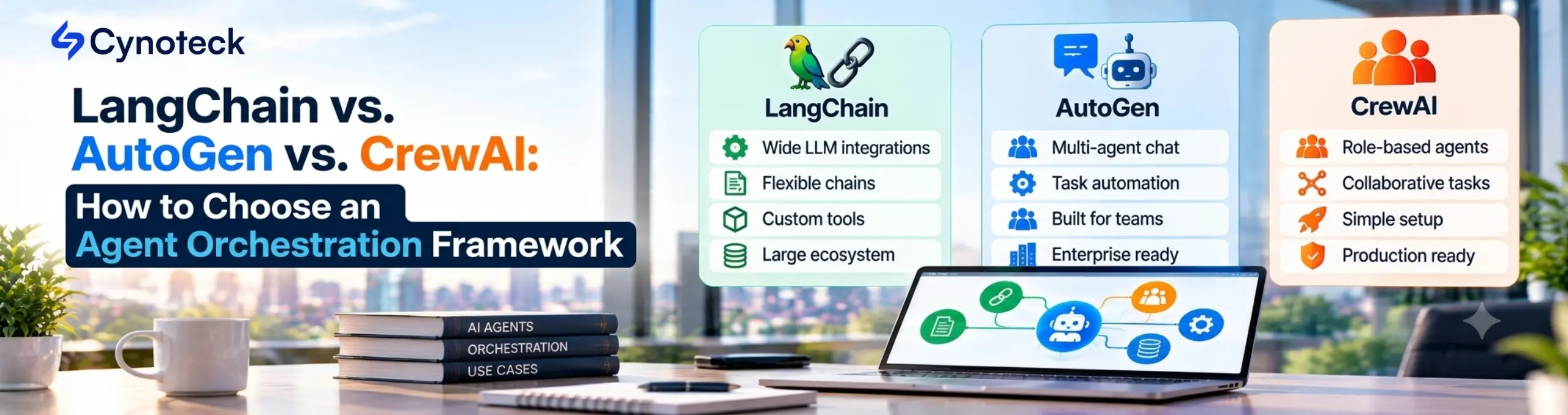
- What's new: A guide comparing the core strengths and weaknesses of various frameworks has been updated, covering LangGraph (stateful workflows), CrewAI (role-based teams), and the Microsoft Agent Framework (replacing legacy AutoGen).
- Why it matters: Agent orchestration frameworks are no longer one-size-fits-all, and the optimal tool depends on workflow complexity and team tech stacks. This guide helps practitioners select the most fitting framework through four key questions.
Research & Evaluation
Harness-Bench: Measuring Harness Effects across Models in Realistic Agent Workflows
- Authors / Org: Researchers (arXiv)
- Core finding: Proposes a benchmark measuring how harness infrastructure—such as agent computer interfaces (ACIs), tool-use protocols (MCP), stateful/multi-agent frameworks, tracing, guardrails, memory, budget control, and recovery mechanisms—bridges model outputs and external actions. It compares how concrete agent execution frameworks like OpenClaw, NanoBot, and Hermes handle tools, context policies, state management, permission boundaries, and recovery behaviors differently.
- Implication for harness design: Suggests that harness design is not merely a wrapper, but core infrastructure determining an agent's actual performance and reliability. Agent architectures must optimize harness configuration (tool exposure, state management, recovery logic) on par with model selection.
A Comparative Evaluation of AI Agent Security Guardrails
- Authors / Org: Researchers (arXiv)
- Core finding: Evaluated and compared DKnownAI Guard, AWS Bedrock Guardrails, Azure Content Safety, and Lakera Guard in AI agent security scenarios. DKnownAI Guard recorded the highest performance with a 96.5% recall rate and a 90.4% True Negative Rate (TNR).
- Implication for harness design: Production agent systems must inherently embed a security guardrail layer beyond simple LLM calls to block malicious inputs and errors. Harness design must trade off guardrail accuracy and latency to ensure system reliability.
Production Patterns & Practitioner Insights
CrewAI Review 2026: Do Multi-Agent Frameworks Actually Ship?
- Context: Experiences shared by developers who attempted building real products using multi-agent frameworks.
- Problem: While every new framework promises to make building AI agents easy, a wide gap persists between demos and reality in actual production environments.
- Solution / Takeaway: We must soberly evaluate framework promises against actual production friction. The success of an agent system depends less on the framework itself and more on clear workflow definition, robust state management, and unexpected exception handling.
Trending OSS Repositories
- ai-boost/awesome-harness-engineering — An Awesome list curating resources for tools, patterns, evaluation, memory, MCP, permissions, observability, and orchestration in AI agent harness engineering.
Deep Dive: Harness-Bench — Harness Design Determines Agent Performance
The "Harness-Bench" research published this week clearly illustrates a paradigm shift in AI agent engineering. In the past, a model's parameter count or benchmark scores (e.g., SWE-bench) were considered the core indicators of agent performance. However, Harness-Bench demonstrates empirically that even with the same model, performance in actual workflows can vary drastically depending on harness design.
A harness refers to the software scaffolding that translates model outputs (text) into external actions (tool calls, code execution, API requests) and feeds the results back to the model. Analyzing cutting-edge agent execution frameworks like OpenClaw, NanoBot, and Hermes, this research compares how they differ in the types of tools exposed, context management policies, state management strategies, permission boundaries, and error recovery mechanisms.
Of particular note are "Recovery mechanisms" and "Budget control." Production agents face numerous exceptional situations such as tool call failures, timeouts, and infinite loops. How a harness detects these failures, compresses context, and applies retry strategies determines the actual survival rate of the agent in the field.
Furthermore, standardized tool-use protocols like the Model Context Protocol (MCP) are emerging as core elements of harness design. They help reduce interface friction when agents interact with various external tools while increasing the modularity and extensibility of the harness.
In conclusion, agent harness engineers must allocate time and resources to harness design on par with model selection. Robust implementations of state machines (such as LangGraph), clear guardrails, and efficient context window management are establishing themselves as core competitive edges driving the success of agent systems.
What to Watch Next Week
- Open Source and API Release Trends for DKnownAI Guard: Attention is focused on what APIs and integration guides DKnownAI Guard, newly spotlighted as the top security guardrail performer, will provide for production adoption.
- Microsoft Agent Framework's AutoGen Replacement Roadmap: We need to check whether specific functional differences and migration guides compared to legacy AutoGen will be released for the Microsoft Agent Framework mentioned in the selection guide.
- Harness-Bench's Evolution into an Open Source Benchmark Platform: Watch whether Harness-Bench, released as a research paper, will expand into an open-source platform where actual developers can measure their own harness performance.
Reader Action Items
- Audit Harness Recovery Mechanisms: Inspect whether your current agent system under construction clearly defines retry logic, timeout handling, and context compression strategies for tool call failures.
- Introduce a Security Guardrail Layer: Build a system that preemptively blocks malicious prompts and erroneous tool calls by adding a validation layer (guardrails) between LLM inputs and outputs.
- Redefine Framework Selection Criteria: Drawing on the CrewAI review, re-evaluate tool selection based on state management, debugging ease, and exception handling in actual production environments rather than marketing promises from frameworks.
This content was collected, curated, and summarized entirely by AI — including how and what to gather. It may contain inaccuracies. Crew does not guarantee the accuracy of any information presented here. Always verify facts on your own before acting on them. Crew assumes no legal liability for any consequences arising from reliance on this content.
Powered by
