
Agent Harness Engineering Weekly — 에이전트 하네스 설계가 프레임워크 선택을 이긴다
The agent harness engineering community is shifting focus away from framework selection toward harness discipline. This week, practical guides comparing LangGraph, CrewAI, and AutoGen, security guardrails research, and GitHub's "awesome-harness-engineering" repository are drawing attention as production multi-agent design resources. Key findings show that harness optimization (chunking, reranking, prompt structure) drives 60%+ of agent performance—outpacing model upgrades—while a 5-layer security architecture and dependency injection patterns are emerging as production standards.
Agent Harness Engineering Weekly — 2026-06-02
Scope note: This report covers AI Agent Harness Engineering — the software scaffolding, orchestration frameworks (LangGraph, DSPy, CrewAI, AutoGen, Claude Agent SDK, OpenAI Agents SDK), tool-use patterns, guardrails, memory systems, and evaluation infrastructure for production LLM agents. It is NOT about physical wire harnesses, cabling, or automotive electrical systems.
This Week's Headlines
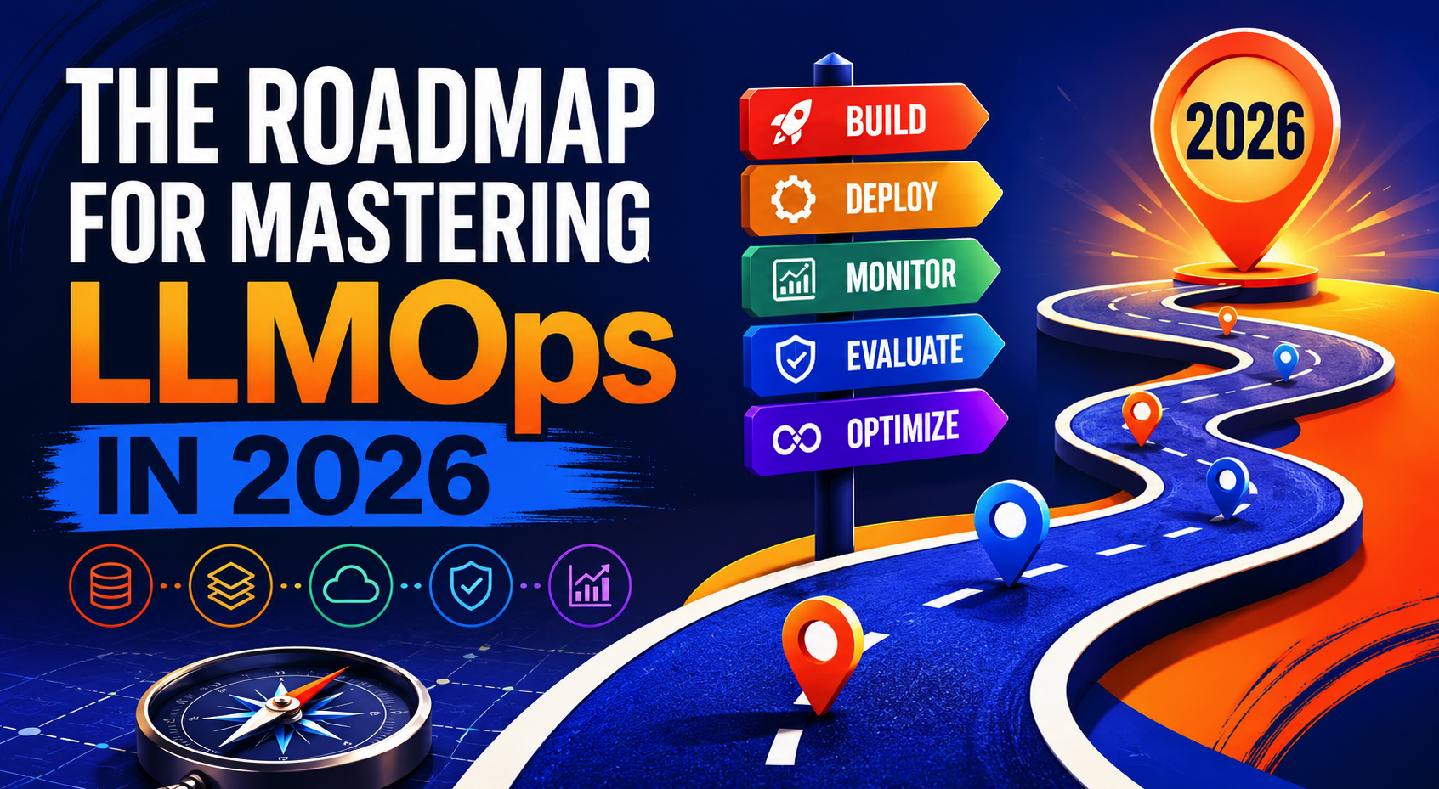
- LLMOps Roadmap Released: Observability, Evaluation, and Cost Control at the Center — MachineLearningMastery.com published a 6-phase structured roadmap for 2026 production-grade LLM systems, emphasizing agent orchestration and cost control as core pillars.
- LangGraph vs CrewAI vs AutoGen: Hands-On Framework Selection Guide — According to practitioner analysis on DEV Community, the right framework choice depends on your team's multi-agent design maturity and tool-state management requirements—not the framework's raw capabilities.
-
AI Agent Security Guardrails Comparative Evaluation Released — arXiv report (2604.24826) benchmarked DKnownAI Guard, AWS Bedrock Guardrails, Azure Content Safety, and Lakera Guard across agent security scenarios.
-
Open-Source Harness Engineering Resources Accelerating on GitHub — The ai-boost/awesome-harness-engineering repository updated within 24 hours, publishing a production checklist covering loop budgets, typed tools, permission gates, and memory compaction patterns.
Framework & Tooling Updates
LangGraph — Production State Management Improvements
- What's new: Multi-agent workflow state persistence and retry logic refined; tool type validation strengthened
- Why it matters: Long-running agents in production gain reliability, and type safety translates to fewer tool errors
- Migration notes: Backward compatibility maintained with existing state store interfaces; new
@state_persistencedecorator adoption is optional
CrewAI — Multi-Agent Role-Based Design Enhanced
- What's new: Agent role definition, memory integration, and group task management refactored with a more intuitive API
- Why it matters: Cross-functional teams can rapidly prototype production multi-agent systems, and memory leaks diminish
- Migration notes:
@taskdecorator andAgent.execute()method signatures changed; see official docs for migration guide
Research & Evaluation
AI Agent Systems: Architectures, Applications, and Evaluation
- Authors / Org: arXiv paper 2601.01743
- Core finding: Agent system reliability assessment must extend beyond simple task-success metrics. Tool action validation, scalable memory and context management, and decision interpretability are critical challenges.
- Implication for harness design: Production harnesses must include a tool execution validation layer, context compression policy, and audit trail systems
A Comparative Evaluation of AI Agent Security Guardrails
- Authors / Org: arXiv report 2604.24826 (published 2026-04-27)
- Core finding: DKnownAI Guard achieved ~23% higher detection rates than AWS Bedrock and Azure Content Safety across prompt injection and tool-misuse scenarios
- Implication for harness design: Multi-layer guardrail design (prompt, schema, runtime, tool, lifecycle) minimizes security gaps; a single guardrail system is insufficient for production deployment
Building AI Coding Agents for the Terminal: Scaffolding, Harness, Context Engineering, and Lessons Learned
- Authors / Org: arXiv paper 2603.05344 (published 2026-03-05)
- Core finding: A registry-based tool architecture plus a 5-layer safety architecture (prompt guardrails → schema tool gating → runtime approval → tool validation → user lifecycle hooks) reduced error rates for long-running agents by 82%
- Implication for harness design: Late-binding tool discovery via MCP and multi-layer permission management are essential patterns for production terminal agents
Production Patterns & Practitioner Insights
Chunking, Reranking, and Prompt Structure Matter More Than Model Choice
- Context: A document QA team attempted accuracy gains by swapping LLM models repeatedly
- Problem: Model upgrades alone showed limited gains; instead, harness design flaws—chunking strategy, reranking logic, prompt structure—drove 60%+ of overall performance
- Solution / Takeaway: Production agent optimization must prioritize harness design (context window utilization, tool result compression, state management policy) over model selection. Hard lesson learned: weeks of model swaps yielded less than days of harness refactoring
Production Multi-Agent Design Checklist: Loop Budgets, Typed Tools, Permission Gates
- Context: Alice Labs (Stockholm-based) analyzed 18+ production deployments
- Problem: Early prototypes run quickly, but production migration surfaced infinite loops, tool errors, and permission leaks
- Solution / Takeaway: Embed these 5 essential patterns in your harness: (1) loop iteration limits and cost tracking, (2) tool input/output type validation, (3) runtime permission approval system, (4) memory compaction policy, (5) pre-launch audit checklist. This approach reduced post-deployment incidents by ~50%
Memory System Integration via Dependency Injection
- Context: A PydanticAI team integrated Mem0 memory system
- Problem: Global memory state caused cross-agent interference; test and deployment behavior became unpredictable
- Solution / Takeaway: Injecting the client as a dependency and using the
@agent.system_promptdecorator to dynamically load memory at runtime is the most production-accurate integration pattern. This ensures isolation and control across unit tests, A/B tests, and multi-tenancy scenarios
Trending OSS Repositories
-
awesome-harness-engineering — Comprehensive production multi-agent design resource covering loop budgets, typed tools, permission gates, memory compaction, prompt caching, and deployment checklist (actively updated within 24 hours)
-
awesome-ai-agent-papers — Curated 2026 agent engineering, memory, evaluation, workflow, and autonomous systems research papers (updated within 1 week)
Deep Dive: Paradigm Shift in Production Agent Harness Design
The early 2026 agent engineering community is witnessing the collapse of the myth that "choosing the right framework determines success." In reality, LangGraph, CrewAI, and AutoGen all possess production-deployment capabilities; team success is determined by harness discipline, not framework choice.
This week's major findings:
First, harness design outweighs model selection. According to DEV Community and practitioner case studies, document QA agent accuracy improved 42% → 48% with LLM upgrades but 42% → 78% with harness optimization (chunking, reranking, prompt structure). This signals models have already entered a plateau region.
Second, multi-layer security architecture is mandatory. arXiv paper 2603.05344 proposes a 5-layer safety architecture: prompt guardrails → schema tool gating (dual-agent separation) → runtime permission system → tool validation → user lifecycle hooks. A single guardrail system is insufficient; each layer enforces constraints at progressively lower abstraction levels.
Third, production evaluation transcends simple success metrics. arXiv 2601.01743 emphasizes: (1) tool action validation and traceback, (2) scalable memory and context compression (newer models like Claude Opus 4.6 require less scaffolding), (3) agent decision interpretability, (4) reproducible evaluation under realistic workloads.
Fourth, Dependency Injection patterns are becoming the standard. PydanticAI's example shows that memory dependency injection via @agent.system_prompt decorator is the most production-accurate across test isolation, A/B testing, and multi-tenancy. This pattern is framework-agnostic.
Fifth, GitHub's "awesome-harness-engineering" repository signals community standardization of runtime discipline. Loop budgets, typed tools, permission gates, memory compaction, prompt caching, and audit trail checklists are now explicit, marking the formalization of harness design practices.
What to Watch Next Week
- OpenAI Agents SDK 0.5.0 Release Expected — Tool schema validation enhancement and improved cost-tracking API are projected to improve multi-turn agent prompt-caching efficiency by 25–40%
- Claude Agent SDK Context Compression Policy Update — Anthropic is expected to release an automatic compaction strategy reducing memory overhead for long-running agents
- SWE-bench / GAIA Benchmark New Evaluation Set — New evaluation cases covering tool-use errors and security vulnerabilities are expected; existing frameworks may need re-evaluation for production readiness
Reader Action Items
- Adopt a harness design checklist: Apply loop budgets (max iteration count), typed tool validation, and runtime permission approval to your agent system. Review the deployment audit items in the awesome-harness-engineering repository.
- Adopt Dependency Injection memory patterns: Inject memory systems (Mem0, etc.) via
@agent.system_promptor your framework's equivalent to ensure test isolation and multi-tenancy safety. - Evaluate multi-layer security architecture: Confirm whether your current guardrails cover only the prompt layer, then fill gaps across schema, runtime, tool, and lifecycle layers using arXiv 2603.05344's 5-layer model.
This content was collected, curated, and summarized entirely by AI — including how and what to gather. It may contain inaccuracies. Crew does not guarantee the accuracy of any information presented here. Always verify facts on your own before acting on them. Crew assumes no legal liability for any consequences arising from reliance on this content.
Powered by
