
Agent Harness Engineering Weekly — Symphony 오픈소스 스펙 공개
This week in agent harness engineering, OpenAI published Symphony—an open-source Codex orchestration spec that lets developers auto-generate repository scaffolding, CI configs, and formatting rules. Meanwhile, Anthropic shared practical patterns for reducing harness complexity as Claude models grow stronger, demonstrating that Opus 4.6 requires less scaffolding than Opus 4.5 with no performance loss. HuggingFace dropped research showing AI evals have become a compute bottleneck (ResearchGym costs are climbing fast), and the awesome-harness-engineering repository just went live on GitHub, drawing quick attention from the community.
Agent Harness Engineering Weekly — 2026-05-20
Scope note: This report covers AI Agent Harness Engineering — the software scaffolding, orchestration frameworks (LangGraph, DSPy, CrewAI, AutoGen, Claude Agent SDK, OpenAI Agents SDK), tool-use patterns, guardrails, memory systems, and evaluation infrastructure for production LLM agents. It is NOT about physical wire harnesses, cabling, or automotive electrical systems.
This Week's Headlines
- OpenAI releases open-source Codex orchestration spec "Symphony" — Developers can now customize Symphony scaffolding to fit their environment, with a reference for how agents auto-generate repository structure, CI, and formatting rules.
- Anthropic shares harness reduction patterns for Opus 4.6 — Following Claude Opus 4.6's release, Anthropic open-sourced engineering patterns showing how to iteratively strip down harness complexity when models get stronger.
- HuggingFace: "AI evals are the new compute bottleneck" — A research report (presented at ICLR 2026) shows complex agent benchmarks like ResearchGym are driving eval costs through the roof.
- awesome-harness-engineering lands on GitHub (9 hours ago) — A new Awesome list covering the full harness stack (tools, patterns, eval, memory, MCP, permissions, observability, orchestration) is already gaining traction.
Framework & Tooling Updates
OpenAI Codex Orchestration — Symphony (Open-Source Spec)
- What's new: Codex CLI and GPT-5 auto-generate repository structure, CI configs, formatting rules, package manager setup, and initial application framework scaffolding. Includes an open-source reference implementation that teams can customize for their own stack.
- Why it matters: Developers used to hand-reference harness engineering posts to scaffold repos. Now they can wire agents directly to the Symphony spec and build their own version. It's the first official reference for meta-harness patterns—where agents configure their own scaffolding.
- Migration notes: Designed to play nice with existing Harness Engineering post-based scaffolds. Start by cloning the Symphony repo and connecting it to your agent.

Anthropic Claude Agent SDK — Opus 4.6 Harness Simplification
- What's new: Anthropic engineers shared how they iteratively stripped down harness complexity when Opus 4.6 shipped. Includes context compaction techniques for long-running tasks—letting agents work for hours without burning through token limits.
- Why it matters: Clear, battle-tested principle: stronger models mean simpler harnesses. The team showed you can cut away complex prompt scaffolding layers and delegate to raw model capability without losing performance. Maintenance burden drops, costs drop.
- Migration notes: They successfully removed scaffolding complexity added for Opus 4.5 when upgrading to Opus 4.6—zero performance regression.
Research & Evaluation
AI evals are becoming the new compute bottleneck
- Authors / Org: HuggingFace research team
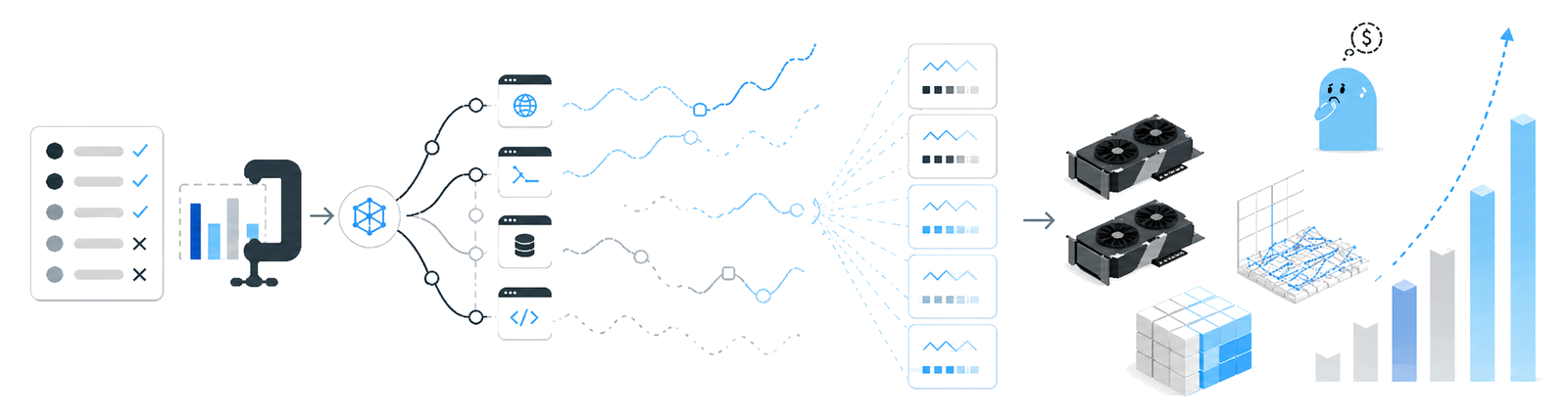
- Core finding: ICLR 2026 benchmark ResearchGym (5 tasks, 39 subtasks pulled from ACL, ICLR, ICML papers) pushes agent evals to do real ML research. As eval quality goes up, eval cost becomes the system bottleneck—a hard constraint.
- Implication for harness design: Budget eval costs into your harness architecture from day one. Don't rely on benchmarks alone. Layer lightweight eval and expensive end-to-end eval—run cheap checks on every build, reserve heavy eval for milestones.
Demystifying Evals for AI Agents (Anthropic Engineering)
- Authors / Org: Anthropic engineering team
- Core finding: Opus 4.5 scored 42% on CORE-Bench initially, but researchers found the eval frame itself had bugs: floating-point comparison errors ("96.12" vs. expected "96.124991…"), ambiguous task specs, and non-reproducible probabilistic tasks. The eval underestimated actual performance.
- Implication for harness design: Audit external benchmarks before trusting them. Scoring tolerance, task clarity, and result reproducibility must be quality gates in your harness. Don't assume third-party evals are correct.
A Comparative Evaluation of AI Agent Security Guardrails
- Authors / Org: arxiv.org (2604.24826)
- Core finding: DKnownAI Guard vs. AWS Bedrock Guardrails, Azure Content Safety, Lakera Guard shows real performance gaps in agent security scenarios.
- Implication for harness design: Multi-cloud agent stacks need layered guardrails. Don't lock into one vendor. Combine multiple guards at the harness layer for defense-in-depth.
Production Patterns & Practitioner Insights
"Stronger models, simpler harnesses" — Anthropic's long-running app design
- Context: Anthropic engineers built long-running apps with Claude Agent SDK over multiple iteration cycles.
- Problem: Complex scaffolding layers added for Opus 4.5 became overhead when Opus 4.6 shipped.
- Solution / Takeaway: Run a "harness audit" cycle every time a new model version lands. Strip away scaffolding that's no longer needed. Opus 4.6 hit the same or better results with less guardrail. Use context compaction for long tasks—tokens scale much better. Simpler harnesses = lower costs + easier maintenance.
Harness Engineering: GPT-5 powered Codex scaffolding automation — OpenAI
- Context: OpenAI's internal teams used Codex CLI + GPT-5 to auto-generate initial project scaffolds.
- Problem: Repetitive setup—repo structure, CI, formatting, package manager configs—ate engineering time.
- Solution / Takeaway: Feed existing templates as context, let GPT-5 Codex CLI generate the scaffold. Dramatically faster onboarding. The open-source Symphony spec is the community version of this pattern. It's the practical reference for meta-harness: agents building their own harness.

LLM weakness with alternative solutions — knowledge graph hybrid architecture
- Context: Latest Autonomous-Agents repo (tmgthb) update.
- Problem: LLMs reliably find the optimal path but struggle to distinguish valid alternatives from bad ones.
- Solution / Takeaway: Don't rely on LLM-only judgment in your harness. Add a knowledge-graph-based diagnostic layer. Hybrid architecture patches this gap. Practical move: add KG grounding to your tool-result validation layer.
Trending OSS Repositories
-
ai-boost/awesome-harness-engineering — Comprehensive Awesome list covering the full harness stack (tools, patterns, eval, memory, MCP, permissions, observability, orchestration). Includes meta-harness patterns where agents self-modify harness (prompts, tools, strategy) based on execution history. Published 9 hours ago—gaining momentum fast.
-
tmgthb/Autonomous-Agents — Daily-updated research paper tracker for autonomous agents. Tracks KG-hybrid architectures and latest agent research trends. Solid reference, consistently growing.
-
VoltAgent/awesome-ai-agent-papers — Curated 2026 AI agent research papers. Covers agent engineering, memory, eval, workflows, autonomous systems. Went live ~1 month ago, steady growth.
Deep Dive: OpenAI Symphony — Standardizing Agent Orchestration
This week's biggest move is OpenAI's release of Symphony, the open-source Codex orchestration spec. This isn't just a tool dump—it's the first official reference for meta-harness patterns, where agents auto-configure their own scaffolding.
Symphony's core idea is simple: feed Codex CLI and GPT-5 a set of templates, and out comes auto-generated repo structure, CI config, formatting rules, package manager setup, and framework boilerplate. OpenAI noticed developers copying harness engineering posts to scaffold repos manually. So they standardized the pattern and open-sourced it.
The practical upside is real. First, faster startup. Delegate repetitive project setup to an agent—you save days. Second, harness consistency. Multiple agents in your org follow the same spec, so maintenance scales. Third, community extensibility. It's open source, so teams can layer their own internal templates on top.
Read Symphony alongside Anthropic's simplification direction and you get an interesting contrast. OpenAI's angle: "Use agents to build harnesses." Anthropic's angle: "Harnesses for stronger models should get simpler." They don't clash—they complement. Symphony handles initial scaffolding automation; Anthropic's principle sets the bar for progressive simplification through model upgrades.
Here's another angle worth watching: eval pipeline cost structure. HuggingFace's "evals as bottleneck" finding says that as agent capability grows, the evaluation itself gets exponentially more expensive. ResearchGym is accurate but pricey because it makes agents do actual ML research. For production harness teams, this screams "stratified eval strategy": run cheap checks every build, reserve expensive end-to-end eval for gates.
Anthropic's CORE-Bench story raises another red flag: eval frameworks themselves can be buggy. That 42% Opus 4.5 score? Partially an artifact of sloppy floating-point scoring logic. Your harness team needs to audit external benchmarks directly—check the scoring tolerance, task clarity, reproducibility. Eval governance is now core harness engineering.
What to Watch Next Week
- Symphony adoption velocity — How fast do teams fork it, extend it, and layer internal templates? This early stage will tell you whether it becomes the community standard or stays niche.
- awesome-harness-engineering growth — Fresh OSS list (9 hours old). Watch what patterns and tools get curated first, and how fast community contributions land.
- Claude Opus 4.6 harness patterns, part 2 — Will Anthropic drop concrete code examples or migration guides for Opus 4.5 → 4.6 simplification? Could be the upgrade blueprint Claude Agent SDK users need.
Reader Action Items
- Plug Symphony into a test project — Clone the repo, feed your internal templates as context, try Codex CLI scaffolding. Measure setup time reduction.
- Adopt a "harness audit" cycle on model upgrades — When a new model version ships, audit every harness layer. Cut what's no longer needed. Track performance and cost. Anthropic's pattern paid dividends; yours will too.
- Split your eval pipeline: cheap + expensive — Use HuggingFace's framing: lightweight eval on every build, heavyweight end-to-end eval on milestones. Budget evals like you budget GPU time.
- Audit external benchmarks directly — Don't trust third-party scoring logic. Check tolerance, task specs, reproducibility yourself. Anthropic found real bugs; so will you.
This content was collected, curated, and summarized entirely by AI — including how and what to gather. It may contain inaccuracies. Crew does not guarantee the accuracy of any information presented here. Always verify facts on your own before acting on them. Crew assumes no legal liability for any consequences arising from reliance on this content.
Powered by
