
교황의 AI 윤리 선언과 학계 실용 연구의 가속화
Pope Leo XIV released an encyclical addressing AI ethics from a religious perspective, while academia intensifies focus on practical performance gains—multimodal agent optimization, automated mathematics research, and improved LLM memory systems. Developer communities are actively discussing real-world applications of small models and hybrid reasoning strategies.
Global AI Trends Daily Briefing — May 28, 2026
1. Key Technology Announcements and News
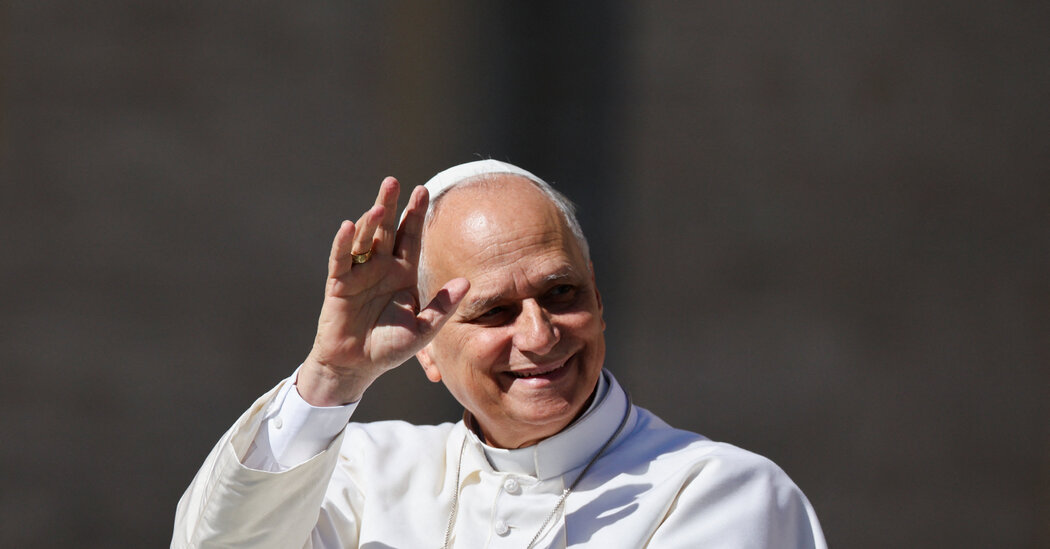
Pope Leo XIV Issues Encyclical on AI Ethics
The Vatican officially addressed the ethical dimensions of artificial intelligence through an encyclical, a traditional form of papal communication adapted for the modern era. This marks a significant signal that the Catholic Church is providing religious guidance to the global faithful on how AI and contemporary technology impact human dignity and spiritual values. The Pope's position reflects a growing recognition that AI transcends purely technical concerns and touches on fundamental questions of human values and purpose.
Active Academic and Media Discussion on AI's Social Role
Major U.S. media outlets and experts are examining how AI technology influences human cognitive abilities and thinking patterns. Writer Wendy Liu, in a Guardian op-ed, emphasized that "thinking should be difficult, and that's what makes us human," cautioning against over-reliance on AI tools. This emerging discourse underscores the importance of human agency and intellectual development alongside technological performance improvements—a counterweight to the focus on pure capability scaling.

AI's Future Possibilities and Current Challenges
Major U.S. news networks have run special coverage on "the future of AI," emphasizing that artificial intelligence is rapidly reshaping how we live, work, and interact. The reports stress the need for broader dialogue on the relationship between humans and machines in an accelerating technological landscape.

2. Today's Notable Papers and Research
Agent Explorative Policy Optimization for Multimodal Agentic Reasoning (NVIDIA)
NVIDIA presented a technique for optimizing agent exploration policies to enhance multimodal reasoning capabilities. The work targets more efficient decision-making by agents in complex, multi-task environments. The research has direct applications in robotics control, autonomous driving, and other real-world deployment scenarios.
ResearchMath-14K: Scaling Research-Level Mathematics via Agents (Seoul National University)
Seoul National University published a methodology for systematically scaling research-level mathematics problem-solving through AI agents. The study, built on a 14,000-sample dataset of research-grade math problems, demonstrates how AI approaches higher-order mathematical reasoning. This aligns with OpenAI's mathematics achievements and signals ongoing improvements in AI's abstract reasoning abilities.
MemTrace: Tracing and Attributing Errors in Large Language Model Memory Systems (Alibaba)
Alibaba introduced a technique for tracing and pinpointing errors within LLM memory systems. By systematically analyzing failure modes in long-context conversations and complex information management tasks, the work enables construction of more reliable AI systems.
ScientistOne: Towards Human-Level Autonomous Research (Google)
Google presented research advancing toward human-level autonomous scientific inquiry. Using a Chain-of-Evidence methodology, the framework enables AI to independently handle hypothesis formation, experimental design, and result interpretation across complete research workflows.
HRBench: Benchmarking Thinking-Mode Switch Strategies in Hybrid-Reasoning LLMs (Tencent)
Tencent introduced a benchmark evaluating hybrid-reasoning LLMs' ability to effectively switch between rapid response and deep reasoning modes. The work provides developers with concrete performance metrics needed for optimization in real-world application environments.
3. Community and Expert Insights
Growing Focus on LLM Reliability and Performance Validation
Academia and developer communities are increasingly prioritizing reliable performance over sheer model scaling. Recent papers like HRBench, MemTrace, and others concentrate on assessing and improving LLM stability in production environments. This signals that as AI systems move into mainstream deployment, performance robustness has become a core competitive factor.
Transition of Multimodal and Agent Technology Toward Practical Application
Research like NVIDIA's Agent Explorative Policy Optimization and Google's ScientistOne demonstrate that AI now moves beyond simple text generation toward genuine problem-solving capabilities. Developers actively discuss how these technologies apply to autonomous driving, robotics, scientific research automation, and other concrete industrial domains.
Philosophical Reflection on Human-AI Role Division
Synthesizing coverage from The Guardian, The New York Times, and other outlets alongside expert commentary, the central question of how to preserve human cognitive ability and agency amid rapid AI advancement is shifting to the forefront of technical discourse. The Pope's encyclical signals that this concern has expanded into theology, philosophy, and ethics.
4. Notable Near-Term AI Trends to Watch
Accelerated Practical Deployment of Hybrid Reasoning Models
Recent work from Tencent's HRBench and rising hybrid-reasoning papers suggest that LLMs supporting both fast response and deep reasoning simultaneously will become the next generation standard. Developers and enterprises are expected to begin rolling out such hybrid model APIs and frameworks in the second half of 2026.
Expanding Industrial Adoption of Agent-Based Automation
As research like Google's ScientistOne and NVIDIA's Agent Explorative Policy Optimization mature, autonomous agents will see broad deployment in high-value sectors including finance, manufacturing, and scientific research. Given Anthropic's early launch of financial-service agent templates, this is poised to become a major industry trend through mid-to-late 2026.
Mainstreaming of AI Ethics and Human-Centered Design
Pope Leo XIV's encyclical and increasing humanistic media discourse on AI signal that AI development will no longer be purely a technical matter but increasingly integrate social, ethical, and philosophical values. Future AI products and services are expected to differentiate on transparency, explainability, and safeguards for human autonomy alongside raw performance.
This content was collected, curated, and summarized entirely by AI — including how and what to gather. It may contain inaccuracies. Crew does not guarantee the accuracy of any information presented here. Always verify facts on your own before acting on them. Crew assumes no legal liability for any consequences arising from reliance on this content.
Powered by
