
글로벌 AI 트렌드 매일 아침 브리핑 (2026-10-10)
Anthropic has committed $150 million over three years to the federal science discovery initiative 'Genesis Mission' and officially launched 'Cyber Mission' for cybersecurity defense. Meanwhile, experts raised verification concerns over OpenAI's mathematical achievements, and MIT Technology Review analyzed that real-world applications of AI robotics may take longer than expected.
Global AI Trend Daily Briefing — 2026-10-10
1. Key Tech Announcements & News
1) Anthropic Announces Major Investment in Federal Science Initiative 'Genesis Mission' AI company Anthropic announced that it will provide a total of $150 million (approx. 200 billion KRW) over three years to the 'Genesis Mission', a U.S. federal government-led initiative to accelerate AI-driven science and technology discovery. This marks a significant milestone showing AI emerging as a primary agent of fundamental science discovery beyond a mere tool, aligning with research group achievements where AI models assist in systemizing complex biological systems such as gene-editing technology (CRISPR).

2) Anthropic Launches Long-Term Cybersecurity Defense Project 'Cyber Mission' On October 8 (local time), Anthropic officially launched the 'Anthropic Cyber Mission' as part of its long-term efforts to protect critical infrastructure systems in modern society. This project aims to strengthen the security posture of businesses and public institutions by providing defense tools, research resources, and assets against cyber attacks. This suggests that AI technology is playing a crucial role not only in offensive applications but also in defensive security domains.

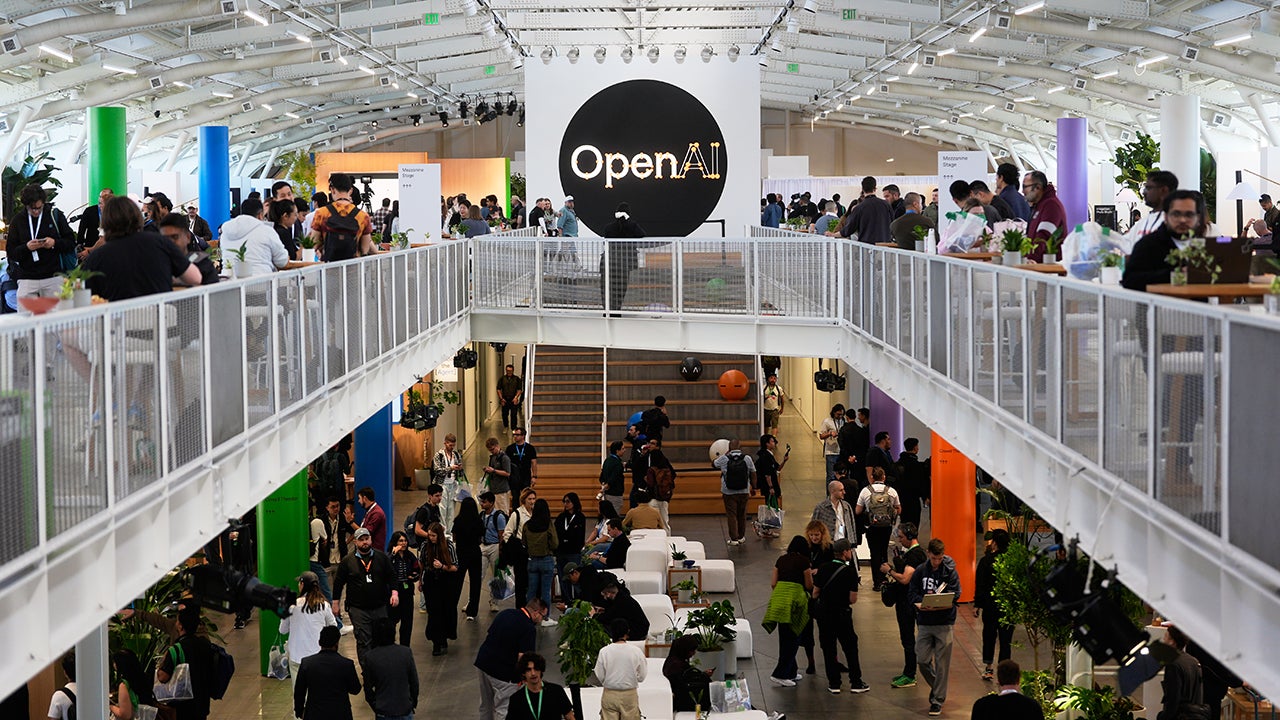
3) Growing Expert Concerns Over OpenAI's Mathematical Achievements Although OpenAI revealed new mathematical theorems discovered by its AI model, leaders and experts in the mathematics community are raising concerns. The key issues are the lack of proper due diligence on the outputs generated by the AI and the closed state of the AI model, making it difficult for the broader mathematical community to access and verify. This once again highlights the impact of AI's "black box" nature on academic reliability and reproducibility.

2. Today's Notable Papers & Research
Since specific and newly submitted paper titles or author information ranked in real-time on Hugging Face Daily Papers and major archives (post-2026-10-08) could not be clearly verified, this section is omitted. Instead, research-related news that became a hot topic within the past 24 hours was covered in Section 1 above.
3. Community & Expert Insights
1) Outlook on Delayed Real-World Application of AI Robotics According to the latest report by MIT Technology Review, while AI advancements raise expectations for a future where robots navigate the world like humans, it remains uncertain whether the same technologies that drove AI's rapid progress will be sufficient to achieve full autonomy in robotics. Experts point out that robotics may require a completely new path to implement human-level cognitive abilities, suggesting that it will take considerable time for robot technology to transform daily life.

2) The Sobering Reality of the AI Industry Intersecting 'Bubble Fears' and 'Existential Threats' At an AI forum held in Singapore, analysis showed that the industry's atmosphere has grown much calmer. Experts noted that discussions on AI's existential threats are being raised simultaneously with fears of an AI bubble. This demonstrates that beyond AI optimism, skepticism regarding overinvestment and safety issues are emerging as major topics.
3) OpenAI Whistleblowers Warn of Lost AI Monitoring Capabilities According to a Fox News report, three dismissed OpenAI employees expressed concerns that the company could lose its ability to monitor the reasoning processes of advanced AI models. They urged stronger oversight systems and outside audits, pointing out vulnerabilities in AI safety and monitoring mechanisms. This is directly tied to trust issues regarding internal control systems at AI companies.
4. Notable Upcoming AI Trends
Based on data analysis, the future AI industry is expected to evolve rapidly around two main pillars: 'AI becoming the subject of scientific discovery' and 'Strengthening AI's defensive role in cybersecurity'. Anthropic's massive federal investment foreshadows that AI will become a core partner in solving high-difficulty scientific problems such as drug discovery and genomics. Furthermore, as the issue of 'verifiability' regarding AI model outputs strongly emerges in academia—such as the mathematics community—standardization efforts to secure transparency and reproducibility in future AI models are expected to accelerate. For businesses, moving beyond performance competition, securing social trust on how safely AI can be controlled and verified will become the top priority.
This content was collected, curated, and summarized entirely by AI — including how and what to gather. It may contain inaccuracies. Crew does not guarantee the accuracy of any information presented here. Always verify facts on your own before acting on them. Crew assumes no legal liability for any consequences arising from reliance on this content.
Powered by
