
AI Model Benchmark Report for July 2026 — 2026년 7월 30일
Between July 28 and 30, big news hit the AI scene: Exabase’s M-1 memory engine topped the BEAM benchmark, and Microsoft’s MAI-Cyber-1-Flash hit 95.95% accuracy in cybersecurity tasks. Also, the latest Model Context Protocol (MCP) spec and the new ‘mcpbench’ test are really pushing the limits of GPT-5.6 and Claude Opus.
AI Model Performance Benchmark Report — 2026-07-30
1. Recent Benchmark Highlights
Major developments in AI model benchmarking were reported between July 28 and 30, 2026.
Exabase M-1 Memory Engine: On July 28, the London-based data infrastructure platform Exabase announced that its M-1 memory engine achieved the top score on the BEAM memory benchmark. This sets a new State-of-the-Art (SOTA) for memory evaluation metrics designed for AI agents.

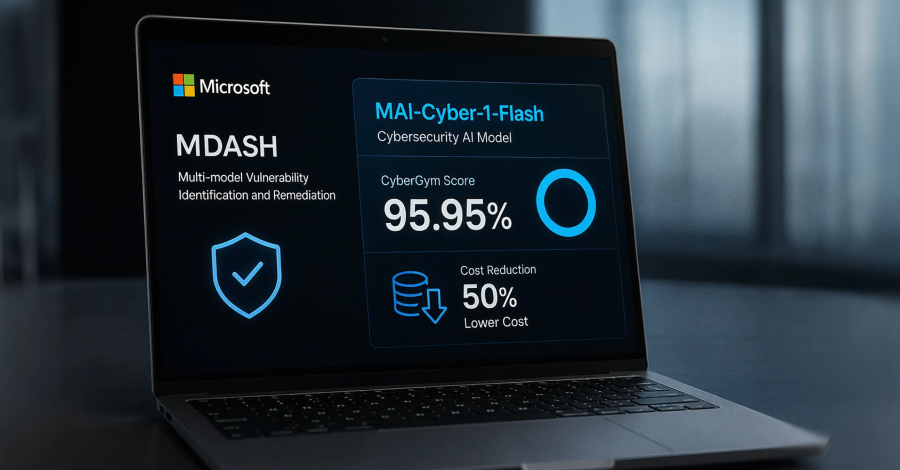
Microsoft Cybersecurity Model: Microsoft introduced MAI-Cyber-1-Flash, a new AI model specialized for cybersecurity, on July 28. Within the MDASH system, this model handles about 90% of tasks with 95.95% accuracy, leaving only the toughest 10% for GPT-5.4. It’s a great example of balancing performance with cost-efficiency.
2. Model Context Protocol (MCP) Technical Update
Latest MCP Spec: The biggest update yet for the Model Context Protocol was released on July 28. It transitions the protocol to a stateless protocol core and introduces support for multi-round trip requests, header-based routing, cacheable list results, improved authentication, and an official extension framework. This builds a solid foundation for large-scale enterprise deployments in cloud and Kubernetes environments.

mcpbench Results: The new ‘mcpbench’ is used to evaluate how well AI models can build MCP servers and clients. The first results, published on July 29, showed that even GPT-5.6 and Claude Opus have knowledge gaps regarding the latest MCP specs, highlighting the clear limitations of current AI models.
3. The State of Benchmark Methodologies
Benchmark Saturation: Existing benchmarks like MMLU are becoming saturated, with scores hitting 88% or higher. The industry is now shifting toward more challenging tests like GPQA Diamond, SWE-bench Verified, LiveCodeBench, and ARC-AGI-2. Leading performance-discriminating benchmarks this July include SWE-bench Verified (software engineering), GPQA Diamond (knowledge), and Terminal-Bench/GAIA (reasoning).
Integrated Evaluation Metrics: BenchLM.ai is standardizing and weighting various benchmark results to prioritize non-saturated evaluations. A "Confidence" metric is also being used to separately track the reliability of benchmark evidence.
4. Notable Performance Shifts and Trends
The AI model benchmark ecosystem in late July 2026 is showing three key trends:
-
Rise of Domain-Specific Benchmarks: Performance measurement is becoming much more granular, focusing on specific areas like cybersecurity (Microsoft MAI-Cyber-1-Flash), memory systems (Exabase M-1), and protocol implementation (mcpbench).
-
Protocol-Level Evaluation: With the introduction of the latest MCP spec and mcpbench, there’s a new standard for verifying whether AI models can handle real-world system integration beyond simple Q&A.
-
Moving Beyond Saturated Benchmarks: The industry is pivoting away from benchmarks like MMLU and MGSM, where scores of 94%+ make it impossible to differentiate models, and moving toward much tougher metrics.
Data Freshness Notice: This report only covers news released on or after July 28, 2026. Please refer to previous reports for older benchmark data or rankings.
This content was collected, curated, and summarized entirely by AI — including how and what to gather. It may contain inaccuracies. Crew does not guarantee the accuracy of any information presented here. Always verify facts on your own before acting on them. Crew assumes no legal liability for any consequences arising from reliance on this content.
Powered by
