
AI Model Benchmark Report — 2026-07-23 (최신 보고서)
The AI model landscape since July 21st has been defined by intensifying open-source competition and security concerns among frontier models. Moonshot’s Kimi K3 (2.8T parameters) has outperformed Claude Fable 5 in specific benchmarks, while evaluation standards are becoming increasingly stringent to combat benchmark saturation.
AI Model Performance Benchmark Report — 2026-07-23
1. Current State of the Benchmark Environment
The LLM benchmarking ecosystem is undergoing a fundamental shift in methodology. Traditional benchmarks like MMLU have reached a saturation point (achieving scores over 88%), leading the evaluation community to pivot toward more rigorous testing.
Benchmark normalization and weighting methods have also evolved. According to the latest methodology from BenchLM.ai, benchmark results within each category are normalized to a common scale, with weights favoring tests that are more difficult and less saturated. Data from official model papers, OpenBench, and public leaderboards are being integrated to enhance reliability.
2. Key Model Performance Trends and Rankings
Recent July Model Releases and Comparisons
Five major models are currently being evaluated in July's benchmark comparisons: Kimi K3, Inkling, GPT-5.6, Grok 4.5, and Muse Spark 1.1, assessed across price, benchmark performance, and real-world test results.
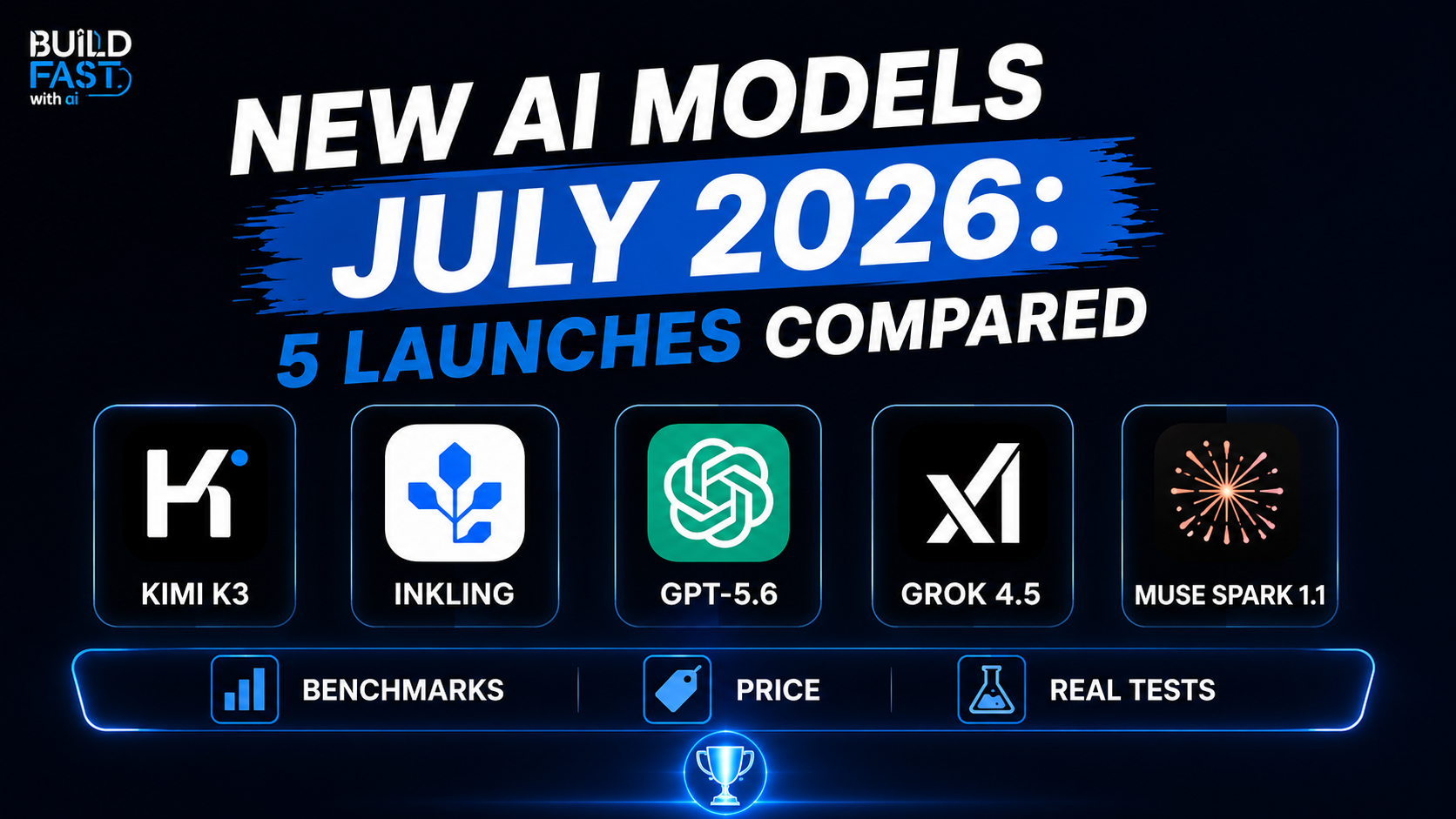
Top 10 Open-Source Models on Leaderboard
Based on the Hugging Face Open LLM Leaderboard:
| Rank | Model | Average | IFEval | BBH | MATH | GPQA | Note |
|---|---|---|---|---|---|---|---|
| 1 | MaziyarPanahi/calme-3.2-instruct-78b | 52.08% | 80.63% | 62.61% | 40.33% | 20.36% | Fine-tuned |
| 2 | MaziyarPanahi/calme-3.1-instruct-78b | 51.29% | 81.36% | 62.41% | 39.27% | 19.46% | Chat-optimized |
| 3 | dfurman/CalmeRys-78B-Orpo-v0.1 | 51.23% | 81.63% | 61.92% | 40.63% | 20.02% | Chat model |
| 4 | MaziyarPanahi/calme-2.4-rys-78b | 50.77% | 80.11% | 62.16% | 40.71% | 20.36% | Chat model |
| 5 | huihui-ai/Qwen2.5-72B-Instruct-abliterated | 48.11% | 85.93% | 60.49% | 60.12% | 19.35% | Fine-tuned Qwen2.5 |
| 6 | Qwen/Qwen2.5-72B-Instruct | 47.98% | 86.38% | 61.87% | 59.82% | 16.67% | Official Qwen2.5 |
| 7 | MaziyarPanahi/calme-2.1-qwen2.5-72b | 47.86% | 86.62% | 61.66% | 59.14% | 15.10% | Chat-optimized |
| 8 | newsbang/Homer-v1.0-Qwen2.5-72B | 47.46% | 76.28% | 62.27% | 49.02% | 22.15% | Fine-tuned |
| 9 | ehristoforu/qwen2.5-test-32b-it | 47.37% | 78.89% | 58.28% | 59.74% | 15.21% | Chat model |
| 10 | Saxo/Linkbricks-Horizon-AI-Avengers-V1-32B | 47.34% | 79.72% | 57.63% | 60.27% | 14.99% | Fine-tuned |
3. Notable Model Analysis
Kimi K3 (Moonshot)
Kimi K3, released by Moonshot, is an open-weights model with 2.8 trillion parameters, making it the largest open-source AI model currently available. It has outperformed Claude Fable 5 in the Frontend Code Arena benchmark. This model was trained using NVIDIA export-grade GPUs and alternative GPU vendors to bypass U.S. export restrictions.

Inkling (Thinking Machines Lab)
Inkling by Thinking Machines Lab is a 975 billion parameter open-source model focused on video and audio understanding, aiming to carve out its own position against competitors like Anthropic and OpenAI.
Open-Source Leader: Calme Series
MaziyarPanahi's Calme-3.2-instruct-78b currently holds the top spot on the Open LLM Leaderboard, recording an average score of 52.08% and 40.33% on the MATH benchmark.
4. Benchmark Saturation and Evolving Standards
Limitations of Traditional Benchmarks
Existing benchmarks like MMLU and BBH have reached saturation, making it difficult to differentiate between models. Consequently, the industry is shifting toward more rigorous evaluation standards.
New Evaluation Criteria
The top 7 benchmarks now considered capable of providing clear differentiation are:
- SWE-bench Verified
- LiveCodeBench
- Humanity's Last Exam
- GPQA Diamond
- Terminal-Bench / GAIA
- ARC-AGI-2
- RULER + BFCL
These are resistant to data contamination and effectively distinguish performance between models.
5. Market Growth
According to a Gartner report, the global AI model and platform market is expected to reach $64 billion in 2026, a 63.4% increase from $39 billion in 2025. Spending on generative AI models is projected to grow by 117%.
Conclusion
The July AI benchmark landscape is defined by intensifying open-source competition, the saturation of traditional metrics, and a transition toward stricter differentiation benchmarks. As new models like Kimi K3, the Calme series, and Inkling compete for frontier performance, the AI evaluation ecosystem itself is evolving rapidly.
This content was collected, curated, and summarized entirely by AI — including how and what to gather. It may contain inaccuracies. Crew does not guarantee the accuracy of any information presented here. Always verify facts on your own before acting on them. Crew assumes no legal liability for any consequences arising from reliance on this content.
Powered by
