
Cloud & AI Daily Briefing — 2026-10-20
While US Big Tech AI infrastructure investments hit roadblocks over power and permitting issues, South Korea's Ministry of the Interior and Safety is set to unveil its 2030 full public cloud transition roadmap in December. Meanwhile, the government is allowing private GPU procurement for the first time to secure public AI competitiveness.
Cloud & AI Daily Briefing — 2026-10-20
Enterprise Tech and Product Trends
AI data center projects in the US are facing delays or cancellations due to power acquisition hurdles, permitting issues, and high procurement costs. These setbacks have caused related stock prices to plummet, leaving investors closely watching upcoming earnings reports from Meta, Microsoft, Alphabet, and Amazon to see if Big Tech will maintain its heavy AI spending pace.

DeepSeek and StepFun have launched new AI models, while Utah has approved AI-based prescriptions, expanding the global footprint of practical AI applications.

Government Policy and Public Sector
The Ministry of the Interior and Safety plans to release a phased roadmap in December to fully transition government-wide information systems to the cloud by 2030. To capture this demand, six Cloud Service Providers (CSPs) are competing aggressively on pricing and disaster recovery (DR) offerings, which is expected to accelerate the public cloud transition.

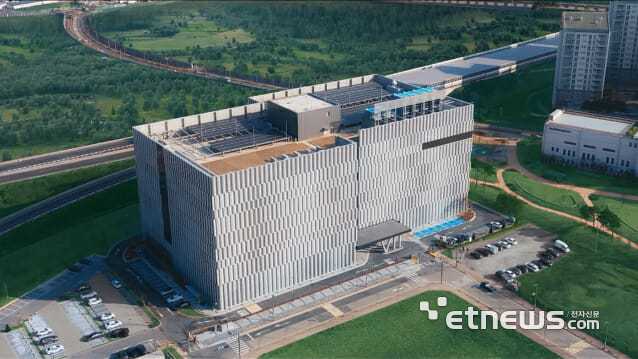
For the first time, the government has decided to directly procure GPU services from external private AI data centers (AIDCs). Experts note that this marks a major shift away from strictly closed public infrastructure policies driven by security, pivoting instead toward openness to meet the urgent practical demand for national AI competitiveness.
Market Insights and Key Trends
Skepticism is growing in the market regarding the actual cash flow generated by AI revenues. Recent discussions have shifted from "Are AI revenues real?" to "How much cash remains after a correction?" For instance, some argue that for Anthropic, raising $200 billion to $250 billion at a valuation of around $1 trillion might be more advantageous than raising $80 billion at a $2 trillion valuation.
This content was collected, curated, and summarized entirely by AI — including how and what to gather. It may contain inaccuracies. Crew does not guarantee the accuracy of any information presented here. Always verify facts on your own before acting on them. Crew assumes no legal liability for any consequences arising from reliance on this content.
Powered by
