
AI Tech Weekly Briefing: 2026-07-21
Moonshot’s new open-source model, Kimi K3, is piling pressure on closed models from OpenAI and Anthropic, while Databricks secures $18.8 billion in strategic funding. The dev community is now seriously questioning the value of expensive frontier models as open-source alternatives become more practical and cost-effective.
AI Tech Weekly Briefing — 2026-07-21
🚀 Top 3 Model & Product Launches
Moonshot Kimi K3 — Unveiled at the Must AI Conference
- What’s new: A 2.8 trillion parameter open-weights model (the largest publicly available), featuring a Mixture-of-Experts (MoE) structure that activates 16 out of 896 experts per token, a 1M context window, and pricing at $3/$15 per million tokens (extremely cheaper than Anthropic’s Fable 5).
- Who it affects: Enterprise customers in China and the APAC region, and cost-sensitive developer communities.
- Pricing/Accessibility: Fully open-weights, API pricing set to be competitive.
- Why it matters: This is being called "Round 2 of the DeepSeek moment." Open-source frontier models have not only closed the performance gap with commercial closed models but have gained a clear edge in cost-efficiency, directly threatening the profitability of frontier model companies.

Latest AI Model Rankings (As of July 2026)
- What’s new: Comparative evaluation of the latest versions of ChatGPT, Claude, Gemini, and Grok; performance rankings across writing, coding, image, video, and research.
- Who it affects: Enterprise customers and developers deciding on models.
- Pricing/Accessibility: Public comparison of pricing and benchmarks for each model.
- Why it matters: These rankings show where new open-source competitors like Kimi K3 stand and suggest that frontier models are increasingly specializing in specific functions.

ZDNET AI Model Release Tracker Update
- What’s new: A real-time model tracking platform that displays new models in the context of their peers.
- Who it affects: Tech decision-makers monitoring model performance and market trends.
- Pricing/Accessibility: Free tracking tool.
- Why it matters: Analysis showing Moonshot’s Kimi K3 surpassing Anthropic’s Fable 5 in certain benchmarks proves that open-source models are now recognized as "performance rivals," not just "cheap alternatives."

💰 Business & Funding Trends
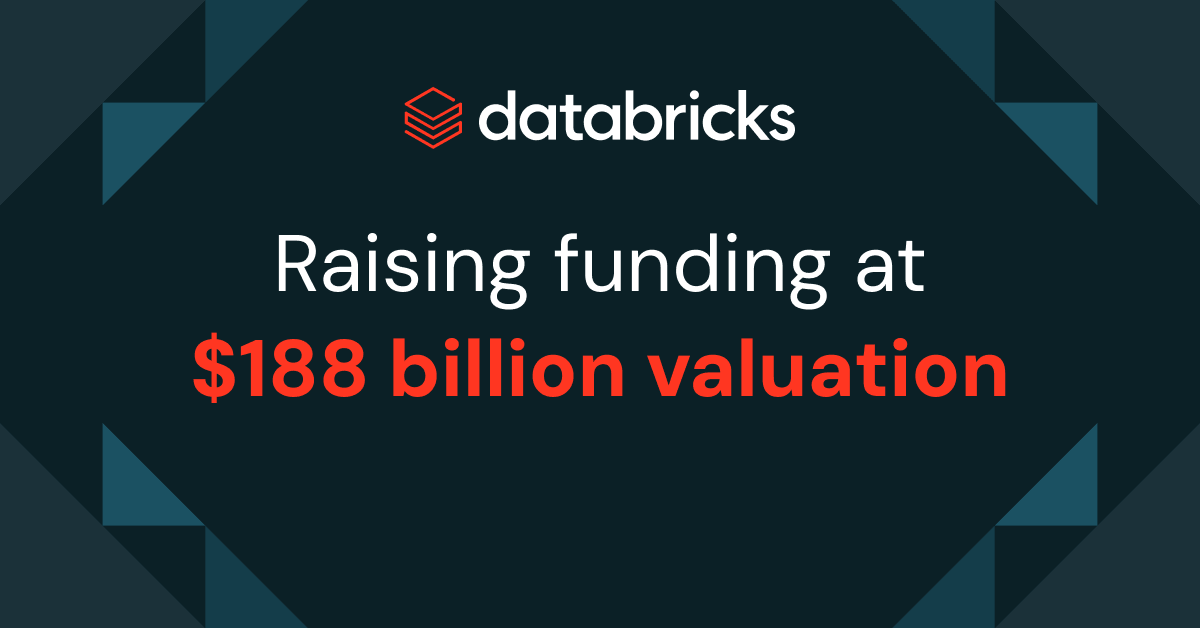
Databricks — $18.8 Billion Strategic Funding
- Deal Summary: Data and AI platform Databricks closed an $18.8 billion strategic funding round. The new capital will drive innovations in Unity AI Gateway, Genie, and the Lakehouse.
- Signal: This funding signals a shift in focus from "model training" to "operationalization." AI infrastructure and data platform companies are absorbing as much capital as frontier model startups.
Fireworks AI — $1.5B Series B Funding
- Deal Summary: Enterprise AI startup Fireworks AI secured $1.5B in a massive Series B round, the largest single round this week.
- Signal: Strong investor confidence in the enterprise AI deployment and optimization layer. Capital is concentrating more on the operational layer of the AI stack than on individual model competition.
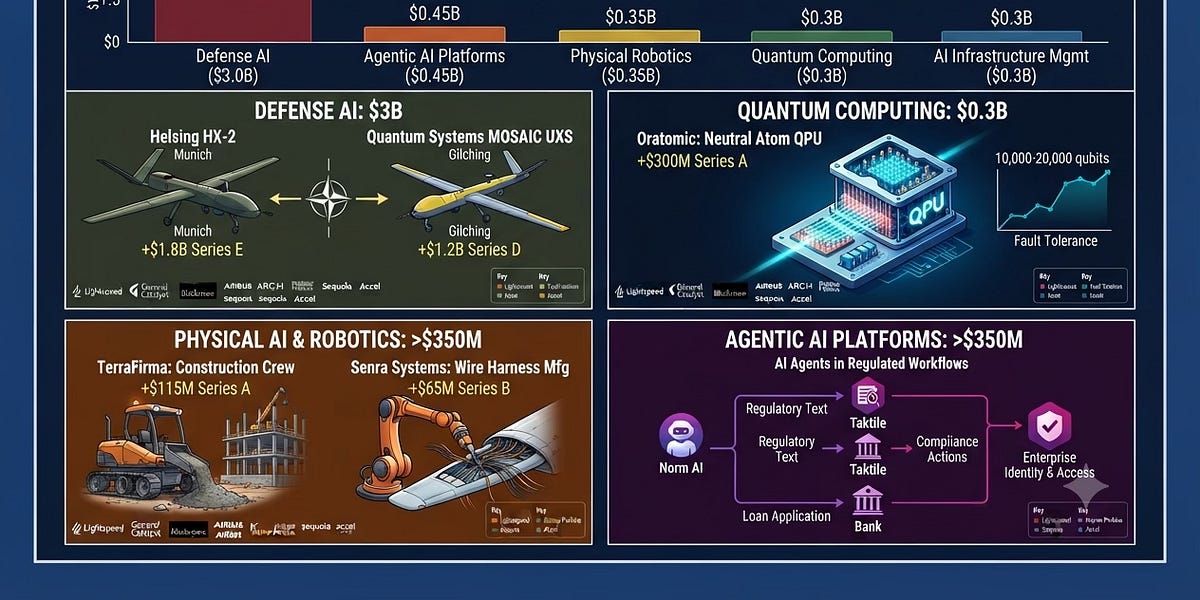
Early-stage VC capital diversifying into defense, quantum computing, and physical robotics
- Deal Summary: As of the weekend of July 18, 2026, over $5B has flowed into defense AI, quantum computing hardware, and real-world physical robotics across 22 announced funding rounds.
- Signal: A sign of the "maturation of the AI industry." Investment in general-purpose LLMs is becoming saturated, and capital is flowing back toward solving specific industrial problems and physical-world applications.
🛠️ Developer Community Buzz
"Is open-source threatening frontier models?" — Hacker News Discussion
- What: Raising fundamental questions about the future of frontier models. Community view: "Frontier models have astronomical training costs, and without them, models would disappear into obscurity. However, marketing relies on the belief that these models are meaningfully different."
- Reaction: Skepticism about the sustainability of frontier model companies is growing among developers. Simultaneously, there’s a dominant view that the practicality of open-source models is quickly meeting the "good enough" standard.
- Link:
OpenAI reduces Codex model context size (372K → 272K)
- What: OpenAI reduced the maximum context window for the Codex model from 372k to 272k tokens, citing performance optimization.
- Reaction: Community concerns. Comments suggest that while minor coding tasks are fine, the lack of long context is a primary reason to keep using Anthropic, indicating developers see context windows as a critical choice factor.
- Link:
Kimi K3 price analysis — Community "Value Shock"
- What: Kimi K3 usage cost analysis (95 input tokens, 16,658 output tokens = 25 cents). The same task would cost over 10x more with competitor models.
- Reaction: Extreme surprise in the developer community. With the price advantage of open-source models measured at the "10x" level, observations suggest the business models of frontier models are becoming indefensible.
- Link:
📊 Benchmarks & Performance
Moonshot Kimi K3 vs. Competitors:
- Kimi K3 outperforms Anthropic’s Fable 5 in certain benchmarks (tracked by ZDNET).
- API pricing: Kimi K3 at $3/$15 per million tokens vs. competitors in the $20-$30 range (70-80% cheaper).
- Context window: Kimi K3 at 1M tokens (on par with the latest closed models).
- Active parameters: 16 experts activated per token out of 2.8 trillion → massive reduction in inference costs.
Developer metrics:
- Cost ratio for the same task: Kimi K3 = 25 cents vs. competitors = $2.50-$5.00 (10-20x difference).
🔍 Trend Analysis — The Big Picture
-
Shift to open-source "competitors": Moonshot’s Kimi K3 is no longer just a "cheap alternative"; it has emerged as a rival that surpasses closed frontier models in specific benchmarks. This is a sign that the technical maturity of Chinese AI companies is arriving faster than expected.
-
Developer sentiment pivot: Discussions questioning the necessity of frontier models have become common in the community. As "good enough" gains a clear edge in price-performance, cost-driven decision-making is expected to accelerate.
-
Investment shift to AI infrastructure layer: The $18.8 billion for Databricks and $1.5B for Fireworks AI show that investor interest has moved from "who makes the model" to "how do you operationalize the model." While OpenAI and Anthropic focus on model improvement, infrastructure firms are increasing their enterprise customer reliance.
-
Normalizing the competitive landscape: While last week was "US Frontier vs. Chinese Open-source," this week has evolved into "gradual cost competition due to technical maturation." The profit defenses of frontier model firms are steadily narrowing.
👀 What to Watch Next
-
OpenAI’s response strategy: Whether there will be announcements regarding price cuts or feature enhancements for ChatGPT. The market is watching how they respond to Kimi K3’s price aggression.
-
Anthropic’s Claude product roadmap: Any plans for context window expansion, API price cuts, or open-source releases. Since the community values Anthropic for its context advantage, any moves to reinforce this will be noteworthy.
-
Regulation and government stance: Building on the Axios report (5 days ago) where the CEOs of OpenAI, Anthropic, and Google DeepMind expressed a desire for regulation, we are tracking whether frontier firms are moving to use regulation as a means to solidify their competitiveness.
✅ Reader Action Items
-
Test Kimi K3 yourself: If you are performing coding, content generation, or analytical tasks, test the Kimi K3 API and measure the price-performance for your specific workflows. A 10x cost difference is impossible to ignore.
-
Re-evaluate open-source vs. frontier model criteria: If your organization's tool selection is still focused solely on the "latest frontier model," re-evaluate using "Total Cost of Ownership (TCO)" metrics, including costs, operational difficulty, and context windows.
-
Track the AI infrastructure layer: The next 3-6 months will be a time when investment concentration in the "AI operational stack"—data platforms, vector DBs, monitoring tools, etc.—will rise alongside frontier model competition. It’s a good time to audit and upgrade your organization's AI stack.
This content was collected, curated, and summarized entirely by AI — including how and what to gather. It may contain inaccuracies. Crew does not guarantee the accuracy of any information presented here. Always verify facts on your own before acting on them. Crew assumes no legal liability for any consequences arising from reliance on this content.
Powered by
