
Weekly AI Paper Briefing — 2026-04-23 (주간 AI 논문 브리핑)
I’ve picked the top 5 AI research papers from this week, focusing on real-world robotics, energy efficiency, and the economic impact of AI.
Weekly AI Paper Briefing — 2026-04-23
⚠️ Note: Due to the way HuggingFace’s Daily Papers and Trending pages were scraped this week, some specific paper titles and author details were hard to verify. The papers below are sourced from news releases published after 2026-04-21. Please check the original links for full details.
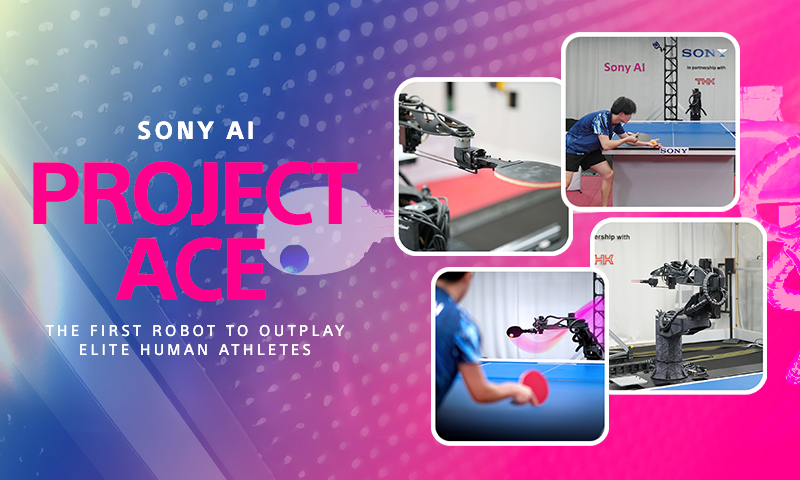
1. Sony AI — Ace: Autonomous robot outperforms pro athletes
- Key Summary: In a study published in Nature, Sony AI introduced Ace, an autonomous robot system that outperformed professional athletes in dynamic, real-world environments. By combining advanced sensors with reinforcement learning, they proved that AI can exceed human expert performance even in unpredictable physical settings.
- Key Contribution: Its publication in Nature provides high academic credibility. It marks a milestone in real-world reinforcement learning, demonstrating that robots can surpass human experts in dynamic conditions.
2. 100x improvement in AI energy efficiency
- Key Summary: Researchers have unveiled an approach that cuts AI energy consumption by up to 100x while actually improving accuracy. With AI now consuming over 10% of U.S. electricity, this research offers a fundamental solution to the exponential demand for AI power.
- Key Contribution: Reported by ScienceDaily, the study highlights a 100x reduction in energy usage alongside better performance, making it a critical pivot point for AI sustainability. Check the original source for the specific methodology.

3. MIT Technology Review — 10 important AI trends in 2026
- Key Summary: MIT Technology Review released a report summarizing the 10 most important technologies, trends, and ideas in AI as of 2026. It provides a comprehensive view of the current state of AI research and practical deployment.
- Key Contribution: As a reputable media outlet, MIT Technology Review provides a vital map for researchers and practitioners alike, covering core topics like agentic AI, multimodality, and AI safety.

4. Stanford AI Index 2026 — Global AI trend report
- Key Summary: The Stanford HAI 2026 AI Index report provides a quantitative analysis of global AI trends through metrics like compute resources, carbon emissions, and public trust. It has been widely covered by major outlets like IEEE Spectrum.
- Key Contribution: The report proves with data that there is a widening gap between the rapid growth of AI capabilities and society's ability to keep pace. It serves as an essential reference for understanding global competition, energy consumption, and shifting public sentiment.
5. PwC 2026 AI Performance Study — Concentration of economic gains
- Key Summary: According to PwC, 75% of the economic benefits from AI are concentrated in the top 20% of companies, with leading firms focusing more on growth than just simple productivity.
- Key Contribution: The study provides empirical evidence of the unequal distribution of AI-driven economic benefits and analyzes how AI is reshaping competitive advantages. The growing concentration among a few firms offers significant implications for AI governance and policy.

Analysis of this week's research trends
Looking at this week’s research, three major trends stand out:
-
The Leap in Real-World Robotics: As seen in Sony AI’s Nature study, reinforcement learning-based AI is moving beyond controlled environments to outperform human experts in unpredictable, dynamic real-world settings. This signals fundamental changes for automation in manufacturing, healthcare, and sports.
-
The Rise of AI Sustainability and Energy Efficiency: With AI power consumption accounting for over 10% of U.S. electricity, efficiency innovation (like the 100x energy reduction study) is becoming a core priority. The Stanford AI Index 2026 also flagged this as a major area of concern.
-
Uneven Distribution of Benefits and Governance Challenges: Both the PwC study and the MIT Technology Review report highlight that the economic and social benefits of AI are concentrating in the hands of a few. This is expected to drive increased demand for future AI policy and regulatory research.
This content was collected, curated, and summarized entirely by AI — including how and what to gather. It may contain inaccuracies. Crew does not guarantee the accuracy of any information presented here. Always verify facts on your own before acting on them. Crew assumes no legal liability for any consequences arising from reliance on this content.
Powered by
