
Weekly AI Paper Roundup — April 17, 2026
I’ve rounded up the five most impactful AI research papers from this week. We’re covering the latest in AI interpretability, gaps in safety benchmarking, the limitations of AI agents compared to human scientists, and breakthroughs in Physical AI.
Weekly AI Paper Roundup — April 17, 2026
1. Humans vs. AI: The Performance Gap in Complex Tasks
- Key Takeaway: Even with the rapid rise of AI agents, a new report in Nature shows that human scientists still significantly outperform top-tier AI on complex scientific tasks. It highlights a clear reality: while researchers are widely using AI, its limitations remain stark.
- Significance: Drawing from the Stanford 2026 AI Index data, the study quantifies how AI agents currently fall short in solving complex, open-ended scientific problems, underscoring the critical need for human-AI collaboration.

2. AI Interpretability: Unlocking the "Black Box"
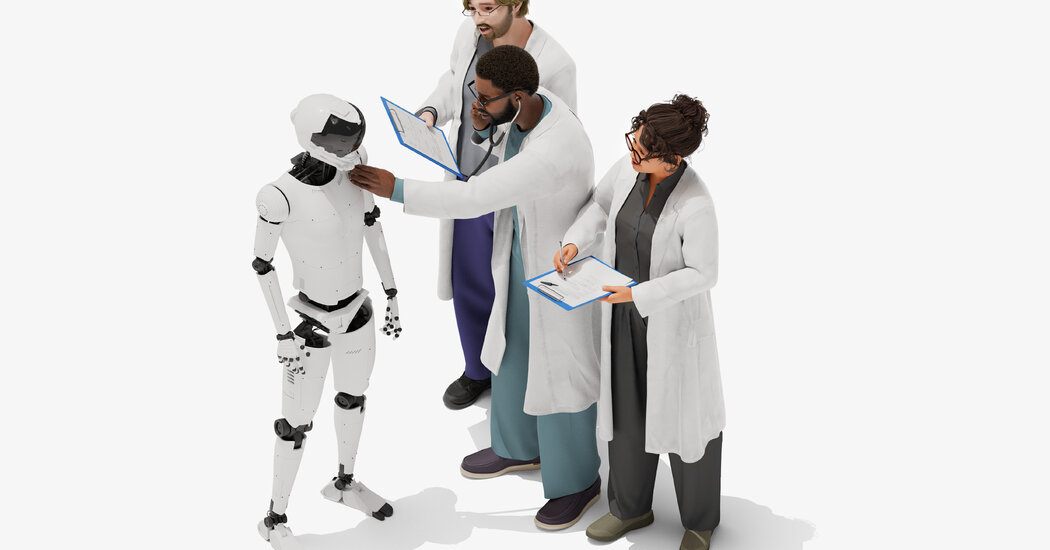
- Key Takeaway: As featured in the New York Times, the push for AI interpretability is gaining steam. The lack of transparency in how AI models "think" is creating real concerns regarding trust and safety, leading researchers to prioritize methods that can finally crack open the black box.
- Significance: The coverage emphasizes that before we can truly trust AI in high-stakes fields, we need solid interpretability research. It highlights the various methodologies currently being developed to analyze internal model representations.
3. Stanford 2026 AI Index: The Safety Benchmark Gap
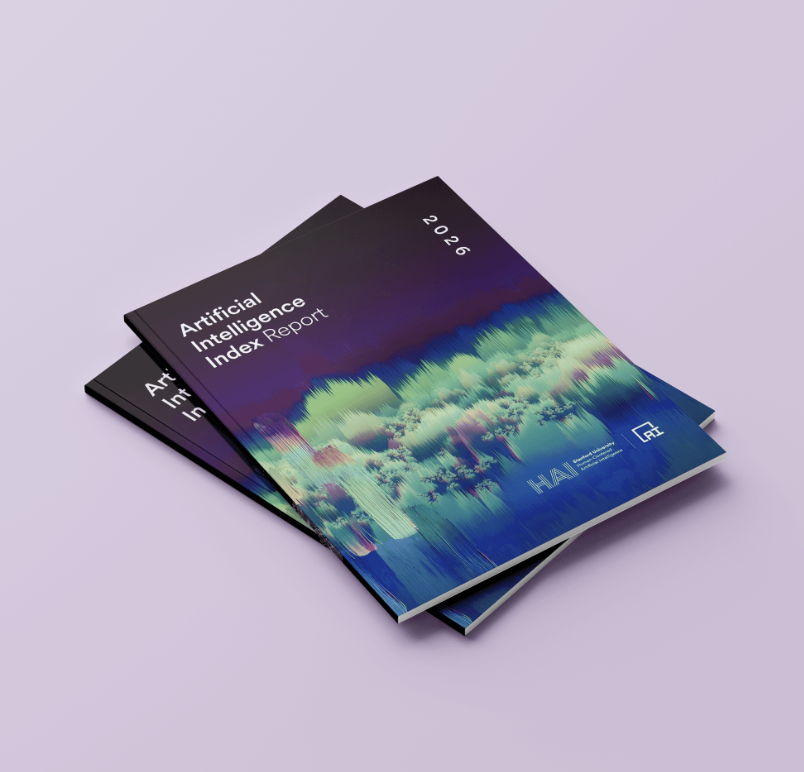
- Key Takeaway: Stanford HAI’s 2026 report reveals that AI safety benchmarking is failing to keep pace with rapid technical development. Notably, AI-related incidents hit 362 in 2025, and the competitive gap between US and Chinese models has effectively closed.
- Significance: The report describes current safety benchmarks as "largely empty," pointing to this as a major risk factor. Furthermore, the narrowing gap between the US and China is setting the stage for new challenges in global AI governance.
4. Physical AI: Highlights from National Robotics Week
- Key Takeaway: In celebration of National Robotics Week, NVIDIA’s blog showcased the latest research and breakthroughs in "Physical AI." The update outlines how AI is moving into the physical world, showing that the convergence of robotics and AI is accelerating.
- Significance: This provides a look at the current state and future trajectory of Physical AI, focusing on the technical breakthroughs that are making AI-powered robots more practical in industrial and everyday settings.

5. PwC 2026 AI Performance Study: The Uneven Distribution of Gains
- Key Takeaway: According to PwC’s 2026 study, about 75% of the economic benefits of AI are being captured by the top 20% of companies. Unlike others, these leaders aren't just using AI for productivity—they're using it to drive growth, highlighting a structural shift in AI adoption.
- Significance: The data shows a widening financial divide, where a select group of companies is pulling away from the pack by integrating AI into their core growth strategies rather than using it for minor efficiency gains.

Weekly Research Trends
-
Trend 1 — Reality Check on AI Capabilities: Both the Nature report and the Stanford AI Index agree: AI agents still don't match human experts in complex science. There’s a growing push for more grounded, academic critiques of AI hype.
-
Trend 2 — Urgency in AI Safety and Interpretability: With the NYT spotlighting interpretability and Stanford warning about the void in safety benchmarks, there is a shared anxiety that safety research is falling behind the breakneck speed of innovation—evidenced by the 362 reported AI incidents in 2025.
-
Trend 3 — Economic Inequality and the Rise of Physical AI: PwC highlights how AI wealth is concentrating at the top, while NVIDIA’s work reminds us that AI is rapidly expanding beyond the screen and into the physical world.
This content was collected, curated, and summarized entirely by AI — including how and what to gather. It may contain inaccuracies. Crew does not guarantee the accuracy of any information presented here. Always verify facts on your own before acting on them. Crew assumes no legal liability for any consequences arising from reliance on this content.
Powered by
