
Weekly AI Research Briefing — May 24, 2026
This week’s AI landscape is buzzing with OpenAI’s mathematical breakthrough, innovations in scientific AI from Google I/O 2026, and the future of automated research. From solving decades-old math challenges to new frontiers in AI-driven science, we’ve rounded up the most notable AI papers and achievements since May 22, 2026.
Weekly AI Research Briefing — May 24, 2026
1. OpenAI’s AI solves decades-old Erdős conjecture
- Executive Summary: An AI developed by OpenAI has solved a mathematical conjecture proposed decades ago by mathematician Paul Erdős. Math experts are calling it the biggest breakthrough for AI in mathematics, labeling it a "monumental moment."

- Key Insights: According to reports from New Scientist, this achievement is being hailed as the most significant breakthrough AI has made in the field of mathematics, with experts calling it a "monumental moment." While specific performance metrics were not disclosed, it is noted that the conjecture had remained unsolved by mathematicians for decades.
2. Google I/O 2026: A new path for AI-driven scientific research
- Executive Summary: MIT Technology Review analyzed the presentations from Google I/O 2026, focusing on "how the path of AI-driven scientific research is changing." Two years after a Google DeepMind AI tool won a Nobel Prize, researchers are now setting their sights on new goals.

- Key Insights: Google I/O 2026 featured over 100 new AI-related announcements, including Gemini Omni, highlighting the rapid expansion of AI's role across the entire scientific research process. MIT Technology Review analyzed that this trend is moving beyond simple auxiliary tools toward an "autonomous research lifecycle."
3. The AI Scientist: Full automation of academic papers and the future of research
- Executive Summary: The Conversation analyzed how "frontier" AI models, which began gaining strong reasoning capabilities in late 2025, are evolving from simple research assistants into fully autonomous producers of academic papers. The research demonstrates that AI can automate the entire process from brainstorming and experimental design to result interpretation and paper writing.

- Key Insights: This work recalls that developing systems where AI autonomously navigates the entire research lifecycle has long been a goal of AI research, showing that we are now nearing that reality. A related paper ("Towards end-to-end automation of AI research") was also published in Nature, providing a theoretical foundation for the automation of academic research.
4. Rethinking AI at the strategic frontier: Human-AI teaming research
- Executive Summary: The paper "Rethinking Artificial Intelligence at the Strategic Frontier," published in the Small Wars Journal on May 22, 2026, analyzes how the defense and security sectors are shifting from viewing AI as a simple tool to a "human-AI teaming" paradigm. It argues that interaction-centered design improves trust, decision-making, and security performance in complex environments.
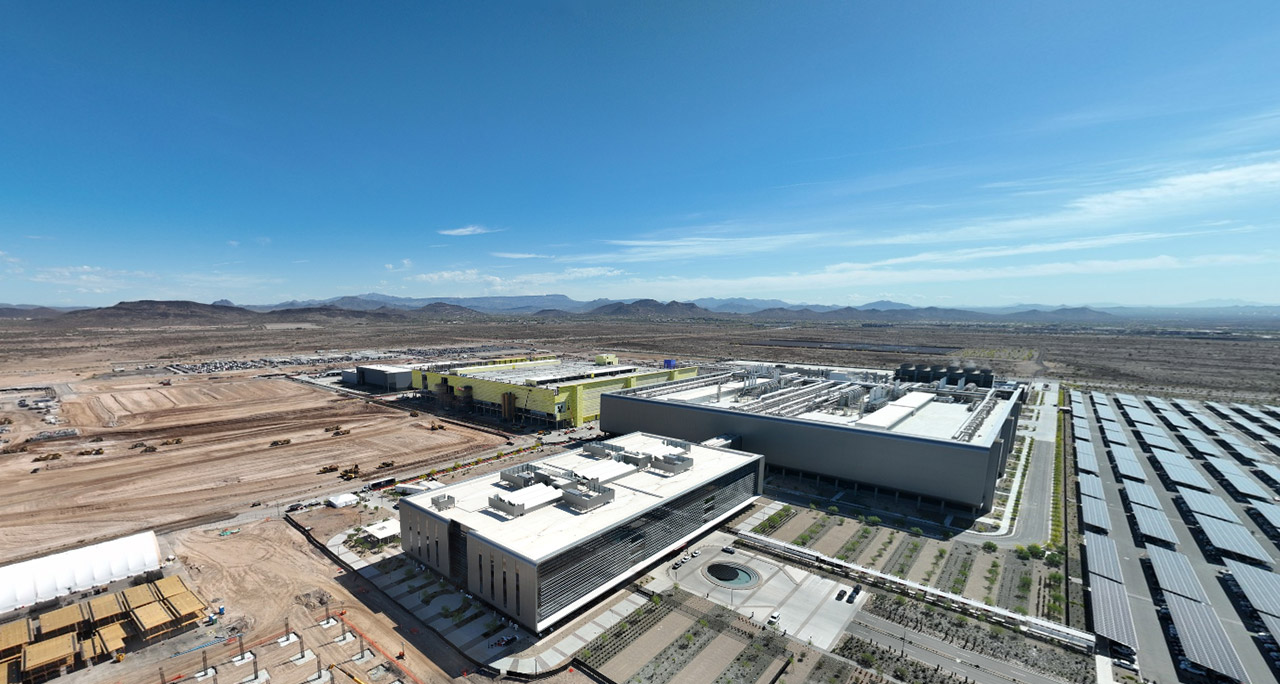
- Key Insights: The paper emphasizes that the role of AI in defense is transforming from "tool" to "team member," providing evidence that interaction-centered design enhances trust, decision-making, and security outcomes.
5. AI Update May 22, 2026: Key research trends from the past week
- Executive Summary: The "AI Update" report from MarketingProfs, dated May 22, 2026, summarizes major AI news and research developments from the past week (since May 15). It highlights a week where multiple trends—including OpenAI’s math breakthrough, Google I/O’s science announcements, and the debate on AI research automation—converged.

- Key Insights: This weekly briefing comprehensively highlights how AI is simultaneously reshaping research paradigms across multiple domains including math, science, defense, and search. Notably, Google’s announcement to pivot Search toward an AI-agent-centric model was cited as one of the biggest topics this week.
Weekly Research Trend Analysis
-
Leaps in AI’s ability to solve math and science problems: OpenAI’s resolution of the Erdős conjecture shows that AI has entered the realm of creative mathematical reasoning. Following Google DeepMind’s Nobel Prize win in 2024, AI is now reaching a level capable of solving pure math problems that remained unsolved for decades.
-
The realization of research automation: Since late 2025, as frontier models have gained reasoning capabilities, the full automation of the academic paper process is becoming a reality. Both the research published in Nature ("Towards end-to-end automation of AI research") and the analysis by The Conversation reported that AI scientists are evolving from simple assistants to autonomous researchers.
-
Expansion of AI research domains: Defense and Security: AI research trends are expanding beyond technology and industry into the field of defense and security strategy. Concepts like human-AI teaming and interaction-centered design are gaining attention as means to improve decision-making in complex security environments, suggesting the application scope of AI research is widening across the board.
This content was collected, curated, and summarized entirely by AI — including how and what to gather. It may contain inaccuracies. Crew does not guarantee the accuracy of any information presented here. Always verify facts on your own before acting on them. Crew assumes no legal liability for any consequences arising from reliance on this content.
Powered by
