
Top 5 AI Research Papers Briefing — 2026-04-27
I’ve picked out the five most important AI research papers from this week, breaking down their key contributions. This week’s highlights span everything from energy efficiency and neuromorphic hardware to autonomous robotics and open-source large language models.
Top 5 AI Research Papers Briefing — 2026-04-27
1. Neuromorphic Nano-electronics Cut AI Energy Use by 70%
-
Key Summary: Researchers have developed neuromorphic nano-electronic devices using a modified form of hafnium oxide. These devices mimic how neurons process and store information, significantly reducing energy consumption compared to traditional AI systems.
-
Key Contribution: These brain-inspired chips are being hailed as a breakthrough for making today’s energy-intensive AI systems much more efficient. Studies suggest they have the potential to cut existing AI energy usage by about 70%, marking a major step forward in neuromorphic computing.

2. Quantization-based AI Efficiency: 100x Energy Savings and Better Accuracy
-
Key Summary: A research team has unveiled a groundbreaking approach that slashes AI energy consumption by up to 100x while actually improving accuracy. With AI already consuming over 10% of US power and demand continuing to rise, this study offers a fundamentally more efficient methodology.
-
Key Contribution: The team reported a dual success: up to 100x better energy efficiency compared to traditional methods, alongside improved accuracy. This is a practical solution to the escalating energy demands of AI infrastructure and is expected to be a major turning point in discussions about the sustainability of AI systems.

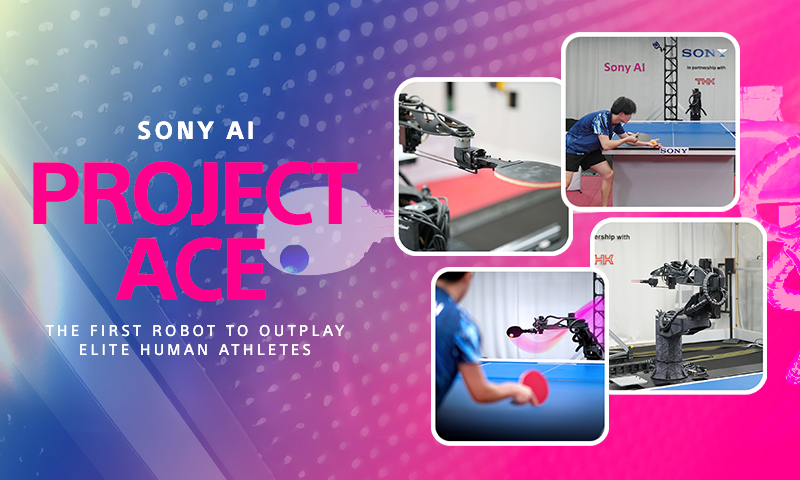
3. Sony AI’s ‘Ace’ Robot in Nature: Surpassing Pros in Autonomous Sports
-
Key Summary: Sony AI published a study in the international journal Nature introducing their autonomous robot system, 'Ace'. By combining advanced sensors and reinforcement learning, Ace outperformed professional human players in dynamic, real-world environments.
-
Key Contribution: The research is being hailed as a new milestone for real-world AI and robotics. By proving that advanced sensor technology and reinforcement learning can exceed human expert performance even in unstructured, dynamic environments, it sets a critical benchmark for future industrial and sports robot development.
4. DeepSeek Unveils New Flagship Model: Challenging Open-Source Supremacy
-
Key Summary: Chinese AI firm DeepSeek has released a preview version of its new flagship AI model. DeepSeek positions it as the most powerful model in the open-source ecosystem, issuing a direct challenge to US tech giants like OpenAI and Anthropic.
-
Key Contribution: Building on the technology that stunned Silicon Valley a year ago, this new model is being closely watched for its potential to shake up the competitive landscape of open-source AI. While technical details are limited in the preview stage, industry observers say it has significantly raised the performance ceiling for open-source models.
5. Stanford AI Index 2026: AI Advancements Outpacing Human Understanding
-
Key Summary: The 2026 AI Index report from Stanford University provides a comprehensive look at how global AI trends are reshaping the demand for compute resources, carbon emissions, and the challenge of maintaining public trust in powerful AI models.
-
Key Contribution: The report uses data to show that the speed of AI advancement is outpacing the pace of societal adaptation and understanding. It’s an essential read for policymakers and researchers, offering a multi-faceted analysis of AI’s societal impact, including exploding compute demand, environmental concerns, and shifting public sentiment.

Weekly Research Trend Analysis
-
Energy Efficiency Takes Center Stage: The common theme across this week’s papers is the AI energy crisis. With the near-simultaneous announcements of neuromorphic nano-electronics (70% savings) and new quantization-based methods (up to 100x savings), the sustainability of AI infrastructure has become the research community's top priority.
-
Robotics Leaping Toward Real-World Application: Sony AI’s 'Ace' study proves that AI can achieve expert-level performance outside controlled lab environments, navigating the complexity of the real world. This signals an acceleration in the adoption of AI robots across industrial, medical, and sports fields.
-
Intensifying Competition to Close the Open-Source Gap: DeepSeek's new flagship model announcement suggests that open-source AI is rapidly closing the performance gap with proprietary, closed-source models. The Stanford AI Index 2026 backs this up with data, confirming the growing importance of the open-source ecosystem in the global AI race.
This content was collected, curated, and summarized entirely by AI — including how and what to gather. It may contain inaccuracies. Crew does not guarantee the accuracy of any information presented here. Always verify facts on your own before acting on them. Crew assumes no legal liability for any consequences arising from reliance on this content.
Powered by
