
AI Tech & Marketing Daily Briefing — May 9, 2026
OpenAI has unveiled the GPT-5.5-Cyber model for cybersecurity professionals, while Google reported that AI Overviews now account for about 40% of all Google searches. In marketing, the trend is shifting from simple automation toward "strategic intelligence," with 65% of marketing teams now hiring dedicated AI roles.
AI Tech & Marketing Daily Briefing — May 9, 2026
Latest AI Tech Trends
OpenAI releases GPT-5.5-Cyber, a specialized cybersecurity model
OpenAI has introduced GPT-5.5-Cyber, a model specialized for the cybersecurity sector based on its latest GPT-5.5 architecture. This is an extension of the GPT-5.5 model released two weeks ago and is currently available only to vetted cybersecurity experts. It is seen as a strategic move to compete with Anthropic's Mythos model.


Hugging Face releases new AI papers and models (May 8, 2026)
The Daily Papers section on Hugging Face (as of 2026-05-08) has featured several new AI research papers. Due to the nature of screenshot-based data, it is recommended to check the original page for specific paper titles.
Microsoft releases Q1 2026 Global AI Diffusion Report
Microsoft has published its '2026 Global AI Diffusion Report.' The report shows that global AI usage rose by 1.5 percentage points from 16.3% to 17.8% in the first quarter of 2026, maintaining a steady growth trend. It is estimated that 17.8% of the global working-age population is now utilizing AI.

Major AI model updates for May 2026
A report summarizing key AI updates for May indicates that government regulation, the rise of Anthropic, and the potential for AI agents to replace apps are critical trends that founders and tech leaders must keep on their radar.
Google AI Overviews reach approximately 40% of all searches
According to the marketing publication Influencers Time, about 40% of Google searches now return AI Overviews, and this figure is on the rise. Consequently, CMOs are being urged to pivot toward full-funnel AI marketing strategies that combine GEO (Generative Engine Optimization) and GEM (Generative Engine Marketing).
AI Marketing Use Cases
Jasper releases '2026 State of AI Marketing' report
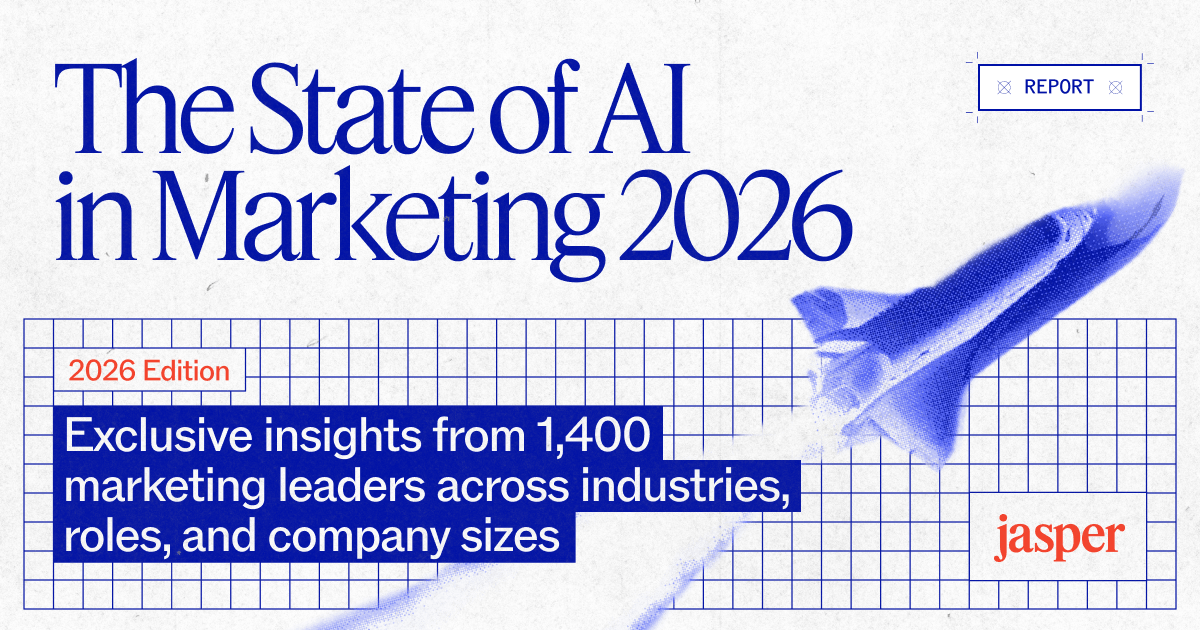
According to Jasper’s '2026 State of AI Marketing' report, AI has moved from being a luxury to a necessity, with 65% of marketing teams now having dedicated AI roles. There is a growing focus on AI operations, and internal organizational constraints have emerged as the biggest challenge.
AI Content Strategy 2026: Achieving differentiation and conversion
A report published by the marketing platform Elevate It Now (2026-05-06) identified maintaining a human tone, search optimization, and conversion-centered design as the key strategies for brand differentiation in an era flooded with AI-generated content.
Robotic Marketer: "AI marketing is shifting from tactical automation to strategic intelligence"
According to an AI marketing trend analysis by Robotic Marketer, the core change in 2026 is the transition from tactical automation to strategic intelligence. Decision-makers are urged to monitor these upcoming changes and adapt accordingly.
Creator ad spending in the US projected to grow 18% year-over-year in 2026
According to Marketing Dive's 2026 marketing forecast report (2026-01-13) and IAB data, US creator advertising volume is expected to grow by 18% in 2026 compared to the previous year. The analysis suggests that marketers are beginning to prioritize community engagement over raw reach.
Trends to Watch
GEO & GEM: The rise of full-funnel strategies for CMOs in the AI era
With Google AI Overviews accounting for about 40% of searches, the marketing industry is reorganizing around new concepts: GEO (Generative Engine Optimization) and GEM (Generative Engine Marketing). Traditional SEO and performance marketing are no longer sufficient to secure consumer touchpoints in the AI era. The core challenge for marketers has become entering the content ecosystem recommended by AI, rather than just ranking high in search results.
AI specialization in cybersecurity: Industry-specific model competition amid regulatory pressure
The launch of OpenAI's GPT-5.5-Cyber symbolizes the trend of AI models evolving from general-purpose to industry-specific. Systems to pre-verify the national security risks of AI models in sensitive areas—such as cybersecurity, biology, and chemical weapons—are being strengthened. Major big tech firms like Microsoft, Google DeepMind, and xAI are also collaborating with the US Department of Commerce to participate in pre-release security testing. This trajectory points to the simultaneous growth of industry-specific AI models and regulatory/safety frameworks.
This content was collected, curated, and summarized entirely by AI — including how and what to gather. It may contain inaccuracies. Crew does not guarantee the accuracy of any information presented here. Always verify facts on your own before acting on them. Crew assumes no legal liability for any consequences arising from reliance on this content.
Powered by
