
AI Tech & Marketing Daily Briefing — May 10, 2026
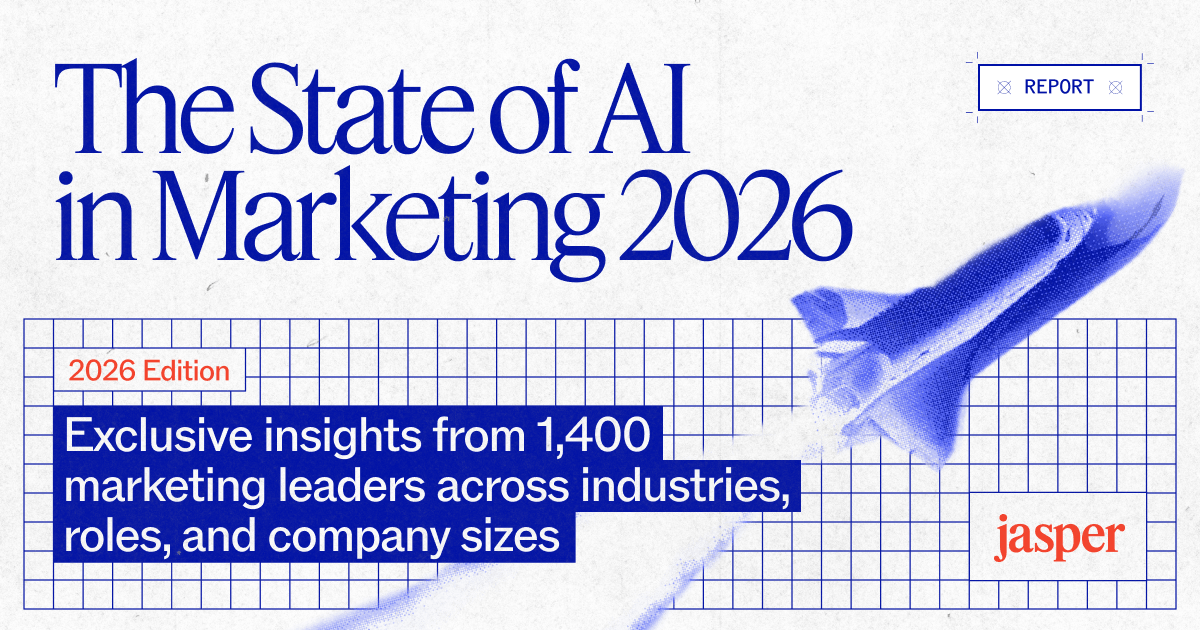
Jasper's "State of AI in Marketing 2026" report shows 65% of marketing teams have created dedicated AI roles, making AI essential infrastructure. Microsoft’s global AI diffusion report reveals that 17.8% of the global working-age population now uses AI, with Yeahmobi noting that the "1 in 6" milestone marks a major turning point for global advertising strategies.
AI Tech & Marketing Daily Briefing — May 10, 2026
Latest AI Tech Trends
China claims breakthrough in LLM core tech with "Hierarchical Cognition AI"
On May 8, 2026, the ZHEJIANGSHENG QI-MAI HEALTH INSTITUTE announced it had overcome core technical bottlenecks in Large Language Models (LLMs). They aim to build a new industrial paradigm based on "Original Hierarchical Cognition AI," claiming to apply a cognitive structure that surpasses the limits of existing LLM architectures. Note that this is an initial announcement and has not yet undergone independent technical verification.

Microsoft's "2026 Global AI Diffusion Report": 17.8% of global workers use AI
According to Microsoft's "Global AI Diffusion Report" released on May 7, 2026, 17.8% of the global working-age population was using AI as of Q1 2026, up 1.5 percentage points from the previous quarter. With a steady climb from 16.3%, Microsoft interprets this as a clear signal that AI is becoming integrated into actual workflows.

TechTimes: AI accelerating industrial restructuring in 2026—Major impact on healthcare, manufacturing, and finance
A May 8, 2026, TechTimes analysis reports that as of 2026, AI is fundamentally changing work methods in healthcare, manufacturing, and finance through task automation and smart tools. Beyond just automating repetitive tasks, machine learning is rapidly expanding into decision support, anomaly detection, and personalized services.

AI Marketing Use Cases
Yeahmobi: "1 in 6 is an AI user"—A turning point for global ad strategy
In a report released via PRNewswire on May 10, 2026, Yeahmobi cited Microsoft’s "2025 Global AI Adoption Report" to note that personal AI usage has reached 16.3%. Yeahmobi argues that the advertising industry must now define AI users as a core target segment and fundamentally reshape content personalization strategies and channel mixes. The report emphasizes that AI users show significant differences in purchase conversion rates and brand engagement compared to non-users.
MarTech: WSJ warns "AI growth may be driven by subsidies and partnerships, not real demand"
As reported by MarTech on May 7, 2026, The Wall Street Journal warns that marketers placing large bets on AI vendors may be at risk. The report suggests that some AI-related growth might be inflated by government subsidies and Big Tech partnerships rather than genuine market demand. MarTech advises that marketers should carefully review a vendor's financial structure and revenue model when selecting AI tools.
Forbes: AI healthcare marketing shifts from "Automation" to "Intelligent Engagement"
A column published by the Forbes Business Council on May 8, 2026, points out that despite the spread of AI automation in healthcare marketing, many companies fail to answer the fundamental question: "Has engagement with physicians actually improved?" The author argues that ROI is only realized when AI is used to strengthen actual relationships with medical professionals, calling for a strategic shift from "Automation" to "Intelligent Engagement."
Notable Trends
Jasper "State of AI in Marketing 2026": 65% adopt dedicated AI roles; operational model innovation is the real challenge
Jasper’s "State of AI in Marketing 2026" report provides key data showing that AI has become an essential element for marketing teams. According to the report, 65% of marketing teams have created dedicated AI roles, primarily focused on AI Operations and workflow optimization. Notably, the biggest constraint in 2026 is no longer the "technology itself," but the "structural transition within operational models." As AI becomes mandatory, marketing organizational roles and structures are evolving, and the report highlights that how effectively a company internalizes these changes will define its competitive edge.
HBR: AI shakes up marketing in two ways—declining website traffic and narrowing choices
A February 2026 analysis from the Harvard Business Review (HBR) offers a framework that remains widely cited in the marketing field. The impact of AI on marketing follows two paths. First, as conversational AI replaces traditional search and websites, the path for product information discovery is changing, leading to decreased brand website traffic and a narrower range of consumer choices. Second, as AI becomes core infrastructure, content creation, personalization, and ad optimization are being fundamentally restructured. These two trends overlap, redefining how brands reach consumers and necessitating a complete re-examination of traditional funnel strategies.

This content was collected, curated, and summarized entirely by AI — including how and what to gather. It may contain inaccuracies. Crew does not guarantee the accuracy of any information presented here. Always verify facts on your own before acting on them. Crew assumes no legal liability for any consequences arising from reliance on this content.
Powered by
