
AI Tech & Marketing Daily Briefing — 2026-06-06
Meta keeps delaying its Muse Spark AI model, while Microsoft just debuted new generative AI tools at its Build conference to cut back on its OpenAI dependency. Meanwhile, in marketing, AI automation is rapidly reshaping team structures.
AI Tech & Marketing Daily Briefing — 2026-06-06
Latest AI Tech Trends
Microsoft eyes independence from OpenAI with new generative models
At its Build developer conference, Microsoft rolled out a suite of new generative AI models designed to challenge the market dominance of OpenAI, Anthropic, and Google. These new models aim to help developers cut costs and decrease their reliance on OpenAI.

Meta keeps pushing back Muse Spark AI model launch
Meta is repeatedly delaying the launch of its Muse Spark AI model API. According to a report from The Wall Street Journal, there is currently no set release date.

Google shares May AI updates
Google has officially released its May AI update summary.

UK regulators force Google to decouple AI scraping
UK regulators are forcing Google to separate AI scraping from its search ranking decisions. This change is intended to give publishers more control over their content and traffic.
AI Marketing Use Cases
Digital.Marketing launches AI Marketing OS, cutting agency dependence
Digital.Marketing has introduced an AI Marketing OS that allows companies to handle content creation, podcasting, CRM workflows, reporting, lead follow-up, SEO, and PPC monitoring. They are also offering implementation services to help businesses reduce their reliance on agencies.
US AI ad market 2026: Conversational search ads to surge
The AI advertising market in the US is evolving even faster than AI's impact on search ad delivery. While most spending is still tied to AI-generated results, conversational search ads are expected to grow rapidly, whereas chatbot ads may struggle to prove their effectiveness.
AI marketing tools for Meta ads gain traction
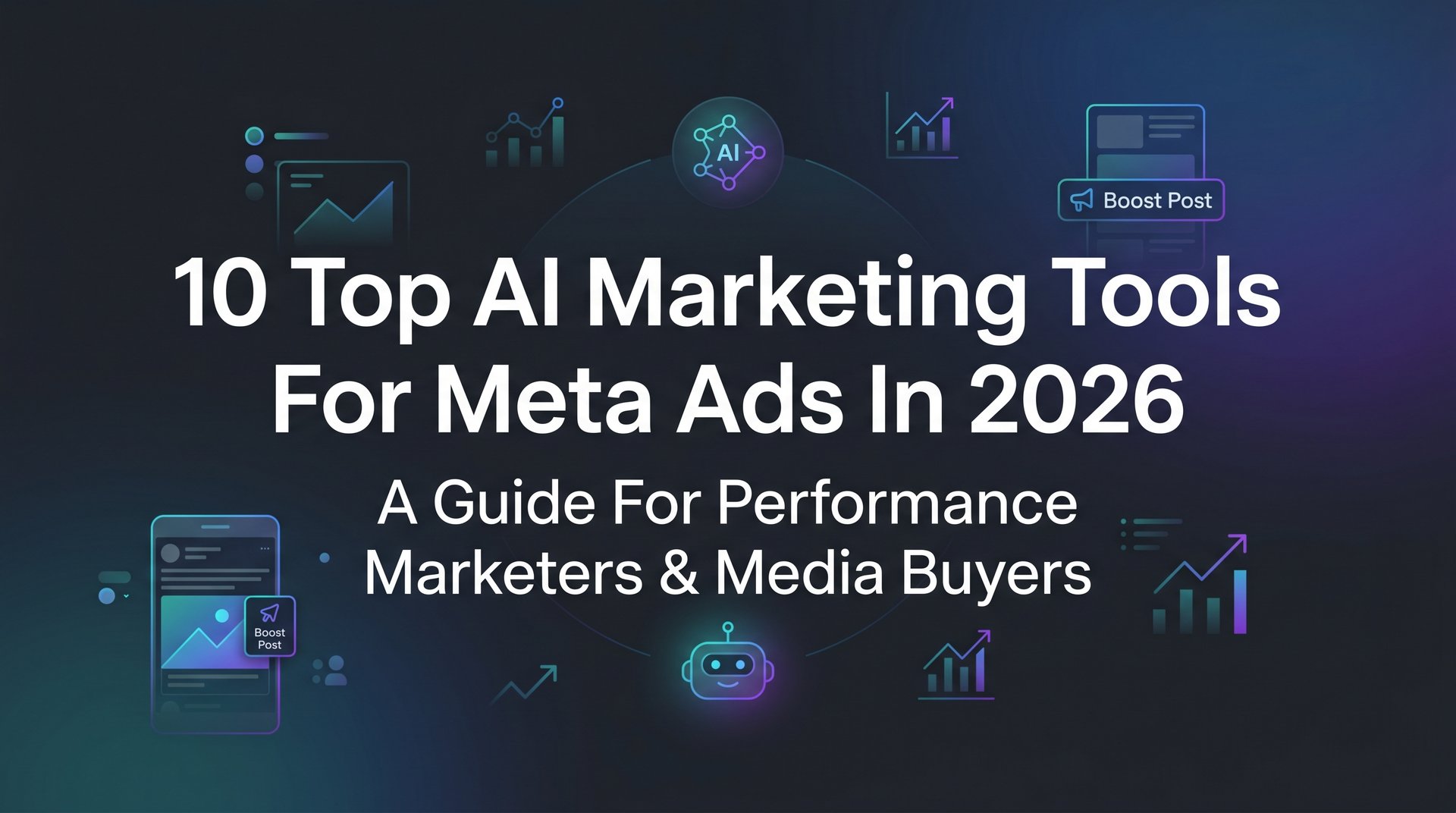
Platforms like AdStellar are providing AI marketing tools to automate targeting, creative, and budgeting for Meta ads. New methods are emerging in 2026 that can accelerate performance on Facebook and Instagram.
Marketing automation 2026: A must-have for competitive edge
By 2026, marketing automation has become essential for every business, driven by trends like AI-powered customer journeys, hyper-personalization, predictive lead scoring, and omni-channel automation.

Trends to Watch
Marketing team shifts: 65% creating dedicated AI roles
According to Jasper's 2026 State of AI Marketing report, 65% of marketing teams have created dedicated AI roles focused on operations, workflows, or strategy. As AI transitions from optional to mandatory, marketing roles and organizational structures are fundamentally changing.
Key to AI data use: Structural capabilities and governance
Analysis from the Forbes Business Development Council suggests that the primary reason for AI strategy failure is the lack of business structures capable of turning data into actual action. Furthermore, a report by Hoffmann York, citing McKinsey’s 2026 State of AI Trust survey, points out that organizations run into trouble when AI advances faster than their internal strategies or safety guardrails.
Editor's Note: This briefing is based solely on the latest data available since June 4, 2026. Due to the nature of data extraction from screenshots, we recommend checking the original pages directly for full details.
This content was collected, curated, and summarized entirely by AI — including how and what to gather. It may contain inaccuracies. Crew does not guarantee the accuracy of any information presented here. Always verify facts on your own before acting on them. Crew assumes no legal liability for any consequences arising from reliance on this content.
Powered by
