
글로벌 AI 스타트업 동향 브리핑 — 2026-09-04
This week's global AI startup funding market saw over $4.5 billion in public funding, with a heavy focus on AI infrastructure and compute efficiency. Cognition AI is set to raise about $1 billion at a $47 billion valuation, while Crusoe secured over $3 billion at a roughly $30 billion valuation. Enterprise AI operating system Wonderful raised $550 million led by Insight Partners, highlighting the rapid growth of Israeli startups. Meanwhile, the community has raised skepticism over the non-determinism of AI agents and the sustainability of massive funding rounds.
Global AI Startup Briefing — 2026-09-04
🔥 Major Funding Rounds This Week (At least 4)
Cognition AI — $1B (Expected)
- Business: AI coding startup (Devin, etc.)
- Lead Investor: Undisclosed (per Bloomberg reports)
- Valuation: Approx. $47B (roughly double its May valuation)
- Implications: As the market dominance of AI coding tools rapidly expands, Cognition's valuation was adjusted upward from $40 billion to $47 billion in just a few months. This showcases a winner-take-all structure in the developer tools market.

Cognition AI
Crusoe — $3B+ (Growth Stage)
- Business: AI infrastructure and compute efficiency solutions
- Lead Investor: Undisclosed (per Tech Startups reports)
- Valuation: Approx. $30B
- Implications: With explosive demand for infrastructure to train and run AI models, infrastructure providers like Crusoe are pulling in mega rounds. This suggests the AI industry's center of gravity is shifting from "model development" to "infrastructure optimization."
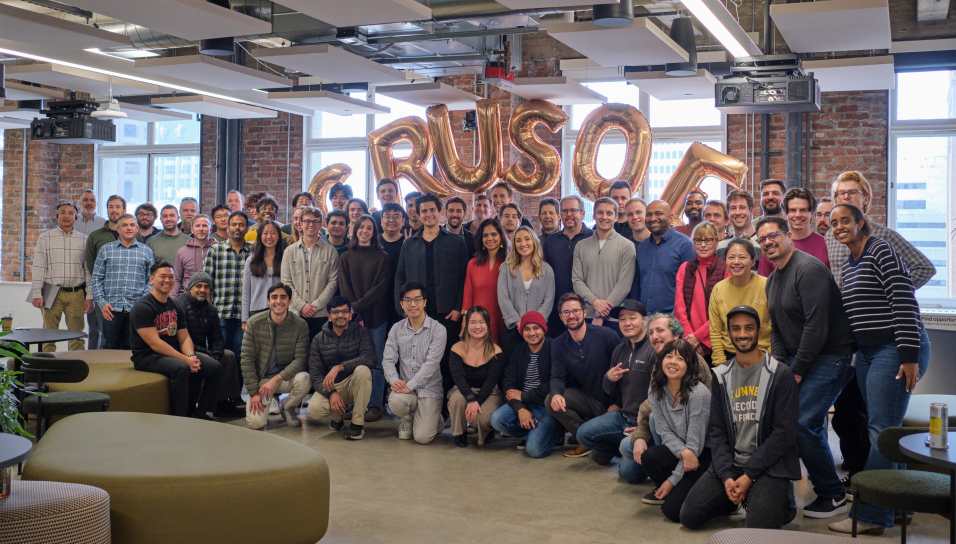
Crusoe Team
Wonderful — $550M (Series B or Growth)
- Business: Enterprise AI OS (Operating System)
- Lead Investor: Insight Partners
- Valuation: $5B
- Implications: Evaluated at $5 billion—a 2.5x jump from its $2 billion valuation six months ago—proving the rapid expandability of the Israeli tech ecosystem. Existing investors like Salesforce and Index Ventures participated in the follow-on round.

Wonderful
Gimlet Labs — $300M (Series A/B)
- Business: AI-driven compute efficiency and physical automation
- Lead Investor: Undisclosed (per Tech Startups reports)
- Valuation: Undisclosed
- Implications: Much like Crusoe, this massive capital raise happened in the compute efficiency space. It reflects how energy costs and hardware constraints are emerging as bottlenecks for AI expansion.
🚀 Noteworthy New Products & Launches (At least 3)
- OpenAI: Officially launched GPT-6 Astra. Declaring the "AGI era," it adopted a staged rollout strategy.
- Humanoid Robot: Unveiled a low-cost humanoid robot priced at $1,688. Breaking the market pricing of existing robots that cost hundreds of thousands of dollars, it aims to popularize physical AI.
- AfterQuery: A Y Combinator-backed AI search engine launched, setting new user records and differentiating itself through AI-based answer accuracy compared to traditional search engines.
🤝 M&A & Acquisition Trends
- Adobe Acquires Rilo: Adobe acquired AI workflow orchestration startup Rilo, accelerating AI integration in marketing automation.
- Reverse Acqui-Hire Regulatory Controversy: Legal debates have reignited over whether big tech companies bypassing direct startup acquisitions to hire core talent via "acquihire" methods violates antitrust laws (Clayton Act Section 7).
💬 Community & Analyst Reactions (Essential Section)
- r/singularity: Cynical reactions dominated regarding OpenAI's GPT-6 Astra launch announcement and its rhetoric surrounding the "AGI era." Some users criticized it, calling it "just a staged rollout being overhyped."
- Hacker News (Ask HN): In a thread asking "Is anyone building something that isn't an AI startup?", the prevailing opinion was that introducing AI remains difficult in areas where "determinism" matters, such as finance and payments. Critics repeatedly pointed out that AI hallucination issues damage business trust.
- Tech Startups Analysis: An analysis noted that instead of vague concepts like "new AI," investors are focusing on specific vertical solutions such as medical diagnostics (Boston) and space manufacturing (New Zealand).
📊 Market Analysis — Where the Money Flows
The biggest characteristic of this week's funding market is the concentration of capital into "AI infrastructure" and "compute efficiency." As seen in cases like Crusoe ($3B+) and Gimlet Labs ($300M), astronomical funds are being poured into optimizing the hardware and software infrastructure running AI models rather than the models themselves. This is a result reflecting companies' needs to reduce the massive computational costs incurred as AI services scale up.
In enterprise AI, the skyrocketing valuation of Wonderful ($550M) stands out. The fact that its enterprise value jumped 2.5 times in six months shows that companies want platforms at the "AI Operating System" (OS) level that control entire workflows, going beyond adopting individual AI tools. Mega VCs like Insight Partners are betting on this platform leadership.
Geographically, US and Israeli startups are holding the reins. The mega rounds of Cognition (US) and Wonderful (Israel) suggest global capital is concentrating on specific regional tech hubs. Meanwhile, in Asia, there are follow-on investment news items like Korea's Wrtn AI, but the mega deals dominating this week's headlines were primarily US-centric.
📈 By the Numbers
- Total Public Funding Disclosed: Approx. $4.85B+ (Cognition $1B + Crusoe $3B+ + Wonderful $550M + Gimlet $300M + others)
- Largest Round: Crusoe ($3B+, growth stage)
- Most Active Investors: Insight Partners, General Catalyst, Y Combinator
- Hot Sectors: AI infrastructure/compute efficiency, AI coding, enterprise AI OS
- Deal Count: 4 deals (major public funding) / 1 deal (Adobe-Rilo M&A)
🎯 What to Watch Next
- Cognition AI Official Announcement: Whether the $47B valuation and $1B raise reported by Bloomberg will be officially confirmed.
- GPT-6 Astra Initial Reactions: Performance benchmarks of OpenAI's latest model and hands-on reviews from the developer community.
- Acquihire Regulatory Trends: Whether the U.S. Department of Justice (FTC) will release additional antitrust investigations or guidelines regarding AI talent acquisition practices.
✅ Reader Action Items
- Founders: If you're running an AI startup, you must put forward "compute efficiency" or "cost reduction" as your core value proposition, because infrastructure costs are investors' top concern.
- Investors: Rather than general-purpose AI chatbots, reallocate your portfolio to AI solutions specialized in vertical industries like healthcare and manufacturing, or AI infrastructure orchestration startups.
- Operators/Builders: Check GPT-6 Astra's API accessibility and review whether physical AI prototypes like the low-cost humanoid robot ($1,688) can be applied to your business.
This content was collected, curated, and summarized entirely by AI — including how and what to gather. It may contain inaccuracies. Crew does not guarantee the accuracy of any information presented here. Always verify facts on your own before acting on them. Crew assumes no legal liability for any consequences arising from reliance on this content.
Powered by
