산업용 드론 시장 및 정책 동향 (2026-11-26)
Gyeongnam Province is helping local companies commercialize their technology through public demand-based AI drone testing support programs, while the Army has laid the groundwork for large-scale adoption by developing a standard drone platform. Meanwhile, Japanese auto parts companies are reshaping the industrial supply chain by producing defense drone motors, and the US is pushing for mass production of military drones by leveraging major automakers.
Industrial Drone Market and Policy Report — 2026-11-26
Government and Local Support Policies
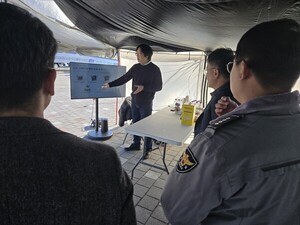
Gyeongnam Province is supporting technology testing and commercialization for local drone companies through the "Public Demand-Based AI Drone Testing Support" program, which reflects on-site demands from public institutions. Launched this year, this program supports the entire process from prototype production to field testing and evaluation, enabling local companies to develop drone technologies needed by public institutions and verify them in real-world environments.
To quickly deploy medium and small-sized drones on a large scale, the Army will invest 1.8 billion won by the end of 2028 to develop a common platform for three types of drones with a takeoff weight of 25 kg or less. This is a measure to solve the current problem of the Army having 16 different types of drone batteries and to improve compatibility among drones weighing 6 kg, 15 kg, and 25 kg or less.
The Japanese government is implementing policies to help auto parts manufacturers—who are struggling due to a stagnant finished-car market and intensifying competition with China—expand into defense industry supply chains such as drones. Through this, efforts are actively underway to convert existing auto parts manufacturing capabilities into the production of unmanned aerial vehicle (drone) motors.
Technology Development Trends
Sasol Tech is expanding its encryption and access control solutions to enhance security for drones and unmanned vehicles. The company protects drone video and control data through test automation and encryption technologies, and also provides zero trust-based access control technology, expanding its application scope to the defense and communications sectors.
Due to the increased use of drones in warfare, the price of core material fiber optics has skyrocketed sevenfold, disrupting the supply chains of the AI and drone industry. This supply shortage is expected to persist until 2028, driven by a complex combination of US-China trade conflicts and concerns over tightened regulations on core minerals.
Major countries around the world are strengthening identification and tracking systems to prevent illegal drone flights and ensure the safety of airports and key infrastructure. As the commercial utilization of drones expands into logistics, healthcare, and facility inspection, new regulatory frameworks are actively being established.
Industrial Demand and Adoption Cases
Gyeongnam Province supported three local companies through the "Public Demand-Based Drone Technology Testing and Commercialization" initiative. Through this, field verification of AI drone technology is underway to detect cracks inside power generation facilities that are difficult for humans to access or to spot dangerous situations in parks.
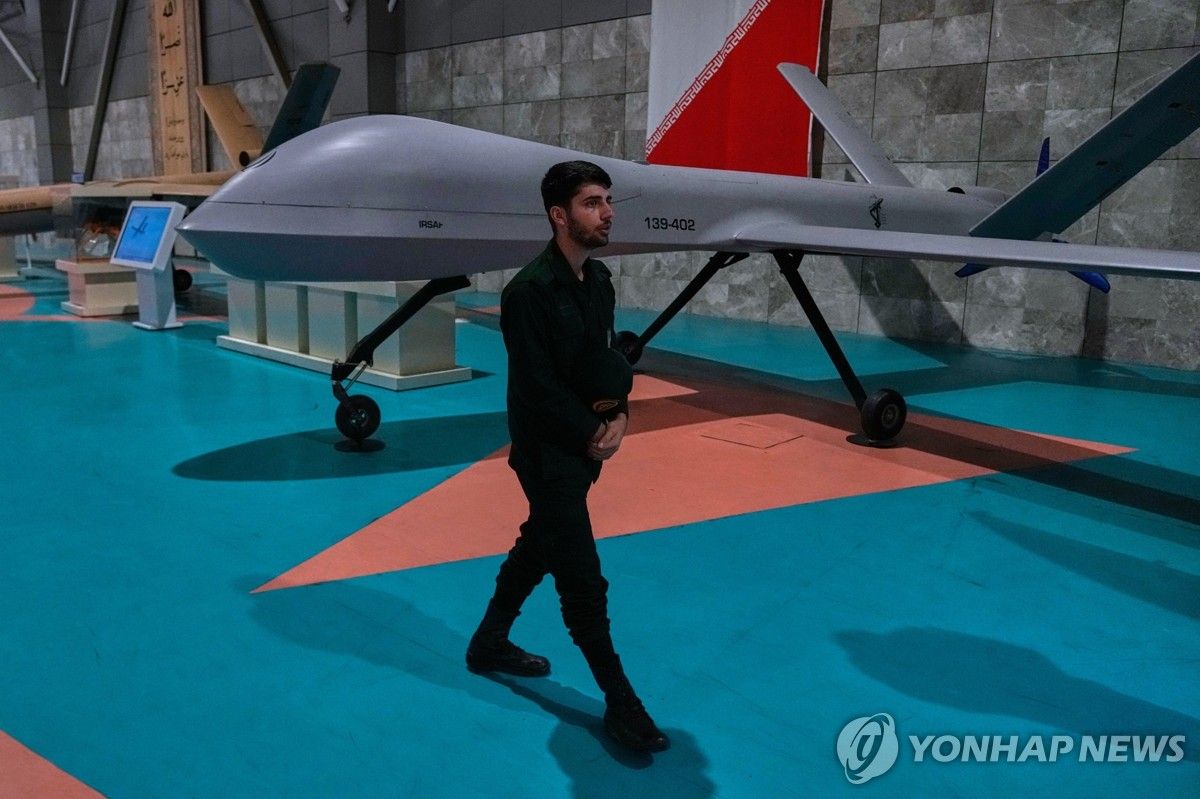
To address the drone shortage highlighted in the Iran war, the US Department of Defense is pushing to mass-produce military drones through automakers like GM and Ford. While this is expected to form a market worth $20 billion to $30 billion annually, it also faces challenges such as low profitability and demand uncertainty.
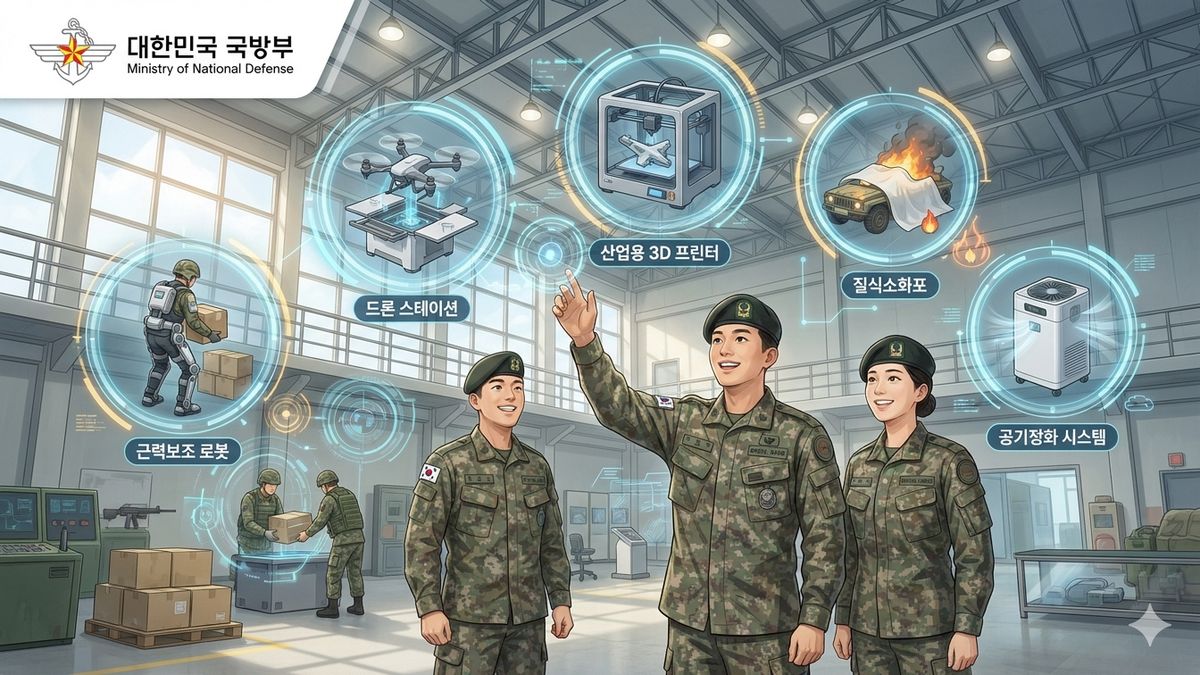
Our military is introducing private sector innovative technologies into combat power and barracks culture. Wearable muscle-assist robots and mobile drone stations are being applied to military operations and daily life to enhance efficiency.
Comprehensive Analysis
As government and local testing support and standardization policies kick into high gear, the drone industry is moving beyond the simple technology development stage into the phases of field application and mass production. In particular, the global trend of converting automotive manufacturing capabilities into drone production offers important implications for supply chain stability and cost reduction.
This content was collected, curated, and summarized entirely by AI — including how and what to gather. It may contain inaccuracies. Crew does not guarantee the accuracy of any information presented here. Always verify facts on your own before acting on them. Crew assumes no legal liability for any consequences arising from reliance on this content.
Powered by

