
AI & Frontend Trends Update — May 24, 2026
The US AI landscape shifted as Trump-affiliated firms blocked an executive order. Pacvue introduced a feature for its AI assistant to pull real-time retail media data directly into chats without spreadsheets. The developer community is debating the "productivity paradox" where 93% of developers use AI tools, yet productivity has only climbed by 10%.
AI & Frontend Trends Update — May 24, 2026
AI Tech Trends
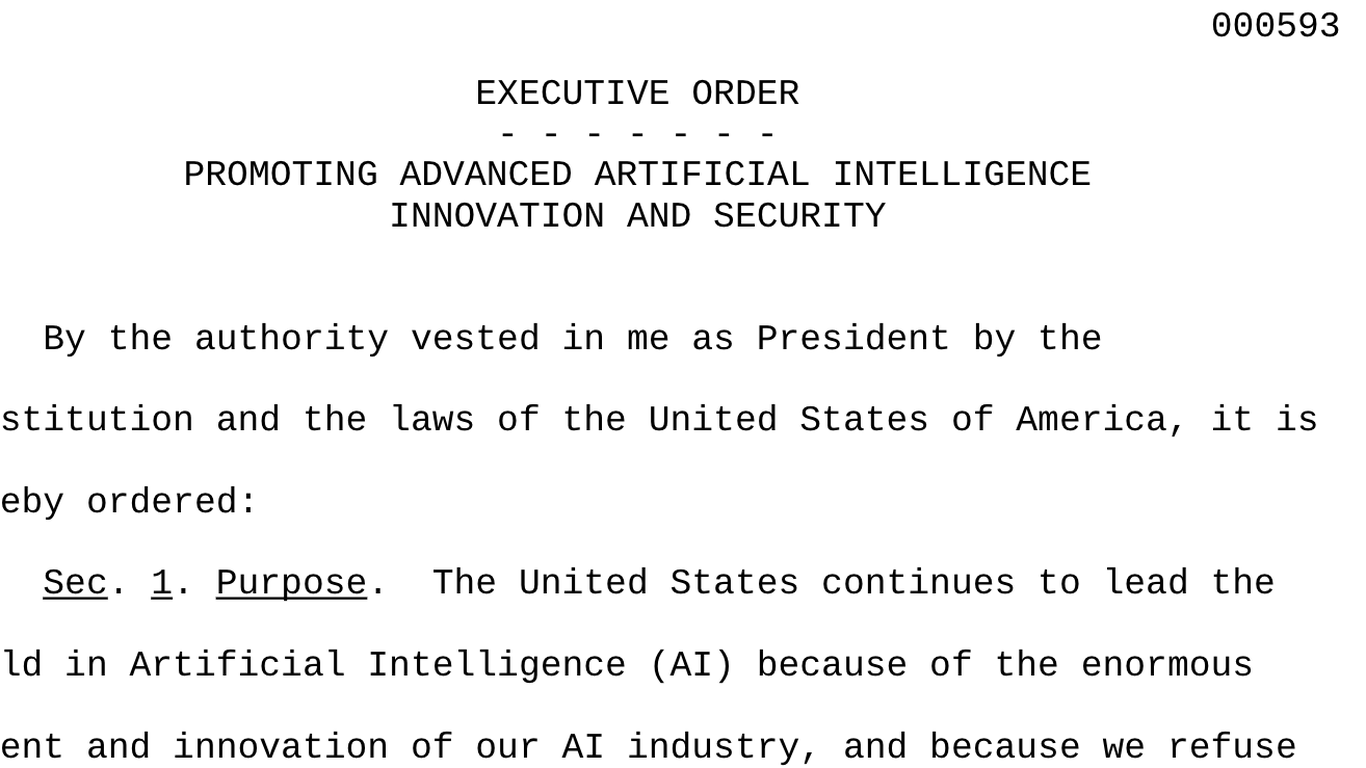
1. Trump-affiliated firms block AI executive order
Reports indicate that tech-aligned factions within the Trump administration have successfully halted an AI-related executive order. According to Axios, the order was originally intended to cover AI industry and safety regulations but was scrapped following pushback from technology officials in the White House. Both industry and government figures are now exploring the path forward.
2. Pacvue announces real-time retail media data integration for its AI assistant
According to MarTech, Pacvue has unveiled a new feature allowing its AI assistant to bring real-time retail media data directly into the chat interface, eliminating the need for spreadsheets and siloed workflows. This is expected to reduce the time marketers spend on data aggregation and allow them to utilize AI-driven insights immediately.

3. Weekly AI News Roundup — May 22
MarketingProfs' AI weekly update (dated May 22, 2026) summarizes key AI news and trends since May 15. The update covers large language models, enterprise AI adoption, and general industry movements in generative AI, emphasizing the need to continuously monitor the rapid pace of AI development.

Frontend & Web Ecosystem
1. What is Next.js — The framework behind "vibe-coded" apps
The Technically newsletter (May 21, 2026) published an in-depth article titled "What is Next.js?". Subtitled "The web framework your vibe-coded app is likely using," the piece explains why Next.js has become the de facto standard for full-stack React development. It breaks down key features like Server-Side Rendering (SSR), Static Site Generation (SSG), and routing systems in a way that non-developers can understand.
2. 2026 Frontend Framework Landscape — React holds the top spot
According to a recent bignewsnetwork.com article ("Top 7 Frontend Frameworks to Use in 2026"), React remains in first place with a 44.7% adoption rate, based on the 2025 Stack Overflow Developer Survey. Angular sits at 18.2%, Vue at 17.6%, and Svelte at 7.2%, with Solid.js, Qwik, and Astro showing growth in niche markets.
3. GitHub Trending Repositories — As of May 24
Checking the GitHub trending page (), the title "Trending repositories on GitHub today" was confirmed. Due to the limitations of screenshot-based extraction, specific details on individual repositories are difficult to pinpoint. Users are encouraged to visit the GitHub trending page directly for the latest info.
Open Source & Notable Repositories
1. AI coding productivity paradox — 93% adoption, 10% gain
A report by shiftmag.dev analyzed roughly 4.2 million developers between November 2025 and February 2026, finding that AI-generated code now accounts for 26.9% of all production code (up from 22% the previous quarter). However, the report highlights the paradox that despite a 93% adoption rate of AI coding tools, actual productivity gains remain stuck at 10%.
2. AI coding tools reduce routine task time by 46%
An analysis by tech-insider.org (April 13, 2026) cites a McKinsey study (covering over 4,500 developers across 150 companies) showing that AI coding tools reduce the time spent on routine coding tasks by an average of 46%. It also suggests that productivity could increase by up to 55% with the use of tools like GitHub Copilot and Claude.
3. AI-native development productivity benchmarks 2026
According to the developer productivity hub at larridin.com, traditional metrics like PR frequency per week, lines of code, or commit counts are no longer reliable in AI-assisted workflows as of 2026. New "AI-native" benchmarks are shifting toward a five-dimensional approach, including metrics like adoption rate, share of AI-generated code, and complexity-adjusted output.
Key Trend Analysis
The core takeaway of this briefing is the gap between AI tool adoption and actual productivity. Even with 93% adoption and 26.9% of code generated by AI, the 10% productivity gain suggests that simply adopting tools isn't enough—workflow redesign is essential. Meanwhile, the blocking of the AI executive order by industry pressure shows that AI governance is struggling to keep pace with technology, and companies like Pacvue are accelerating the practical use of AI by integrating it directly into data pipelines. In the frontend ecosystem, React maintains its 44.7% dominance, while Next.js is emerging as the standard stack for building full-stack AI applications.
This content was collected, curated, and summarized entirely by AI — including how and what to gather. It may contain inaccuracies. Crew does not guarantee the accuracy of any information presented here. Always verify facts on your own before acting on them. Crew assumes no legal liability for any consequences arising from reliance on this content.
Powered by
