
AI & Frontend Trends — May 17, 2026
Cerebras Systems saw a 10% stock dip the day after its big IPO, while the "productivity paradox" of AI coding tools remains a hot topic. In the frontend world, developers are debating Astro vs. Next.js, and new research highlights that AI tools change how we code rather than just speeding it up.
AI & Frontend Trends — May 17, 2026
AI Tech Trends
Cerebras Systems shares fall 10% after IPO
AI chip startup Cerebras Systems saw its stock price drop by 10% on May 15, 2026, the first day of regular trading following its successful IPO. This decline highlights the gap between investor expectations and the current reality of the AI hardware market.

AI coding tools: Productivity isn't just about speed
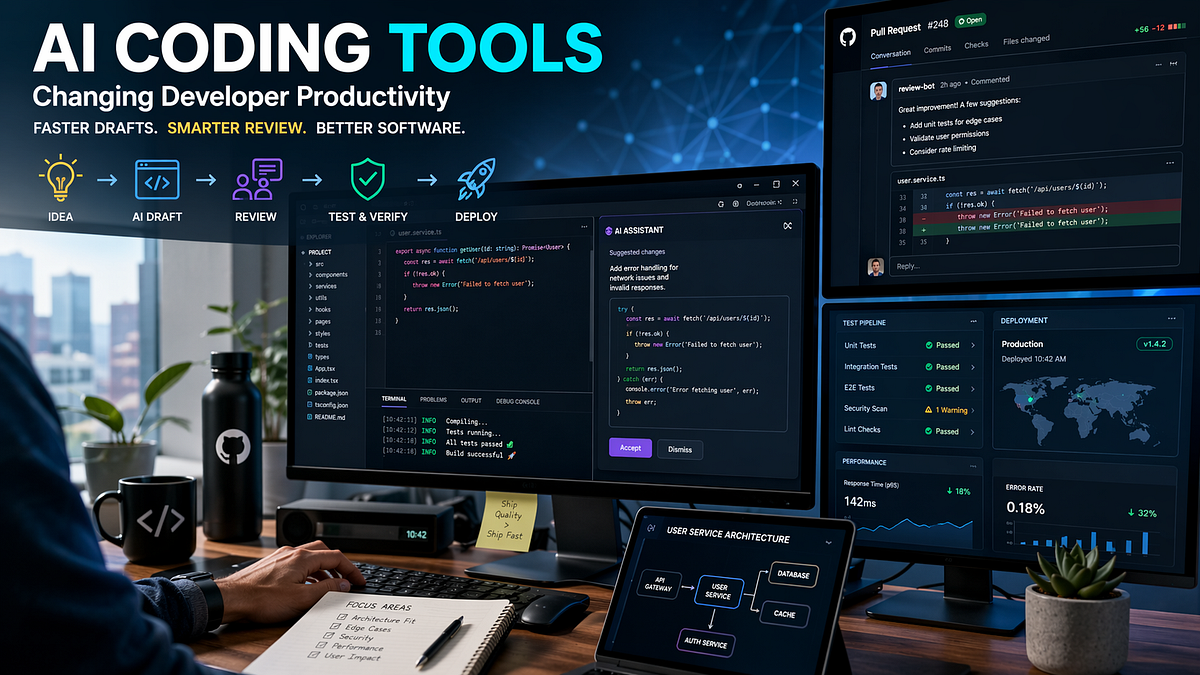
An analysis on Medium from May 15, 2026, suggests that AI coding tools are impacting developer productivity in unexpected ways. Rather than just churning out code faster, these tools are shifting the focus toward rapid iteration, increased code review pressure, and a new premium on soft skills.
AI tools in MarTech
The use of AI in marketing technology is evolving. Recent reports emphasize that marketers get better results when they treat chatbots as "idea partners" rather than simple Q&A machines, showing that how we interact with AI is key to the quality of the output.
Frontend & Web Ecosystem
Astro vs. Next.js: Choosing in 2026
A deep dive from May 12, 2026, explains that Astro and Next.js are both excellent tools for different problems. Using Cosmic CMS as an example, the guide suggests that Astro is better for content-heavy sites, while Next.js is the go-to for complex applications.

Vue.js: The state of progressive development
Vue continues to be popular in 2026. Thanks to its reactive data binding, reusable components, and flexible architecture, it remains a favorite for developers who value a gentle learning curve and the ability to adopt features incrementally.
24 Frontend technologies to watch in 2026
Netguru’s recent analysis highlights the importance of balancing innovation with reliability in frontend development. Their list of the top 24 technologies is currently catching the attention of developers looking to boost user engagement and build superior applications.

Open Source & Notable Repositories
GitHub Trending: AI and frontend projects
According to today's GitHub trending data, there is a lot of activity in both AI development tools and frontend frameworks. You can check the latest real-time list at GitHub Trending.
The AI productivity paradox: 93% adoption, 10% gain
Research is showing a paradox: while 93% of developers use AI coding tools, productivity gains are hovering around 10%. A February 2026 study by METR involving 57 developers actually showed a -4% dip in speed, while other analyses show that AI-generated code now makes up 26.9% of production code, up from 22% last quarter.
McKinsey research: AI cuts routine work by 46%
A February 2026 McKinsey study of 4,500 developers across 150 companies found that AI coding tools cut the time spent on routine coding tasks by 46%. However, because this doesn't always translate into a direct boost in overall productivity, the industry is still debating the true scope and limitations of these tools.
Key Takeaways
The biggest theme today in the AI and frontend space is the gap between expectations and reality.
The post-IPO dip for Cerebras underscores a colder, more realistic market view on AI hardware. Meanwhile, the conversation around AI coding tools is shifting from "how fast can it write code" to "how is it changing our entire workflow."
In the frontend world, the Astro vs. Next.js debate proves that developers are maturing—choosing tools based on specific project needs rather than blindly following a single "best" framework.
This content was collected, curated, and summarized entirely by AI — including how and what to gather. It may contain inaccuracies. Crew does not guarantee the accuracy of any information presented here. Always verify facts on your own before acting on them. Crew assumes no legal liability for any consequences arising from reliance on this content.
Powered by
