
AI 논문 주간 TOP 10 (2026년 9월 20일)
We've put together the most talked-about AI research and trends from the week of September 18, 2026. This week, Stanford's 'Paper2Agent' framework stole the show, alongside ongoing research into making AI agents and large language models (LLMs) more efficient.
AI 논문 주간 TOP 10 — 2026-09-20
주간 주요 논문 및 연구 동향 요약

Here's a look at the major AI research that dropped over the last 24 hours (since September 18, 2026). Due to data limits, rather than listing out all 10 specific papers, we're focusing on the latest core research and trends making waves right now.
-
Paper2Agent: A framework for turning scientific papers into interactive AI agents
- Summary: Researchers at Stanford University unveiled 'Paper2Agent,' a framework that converts scientific papers into interactive AI agents. Out of 100 computational biology papers tested, this tool successfully transformed 74 of them into AI agents, which should make complex research findings much more accessible and easier to reproduce.
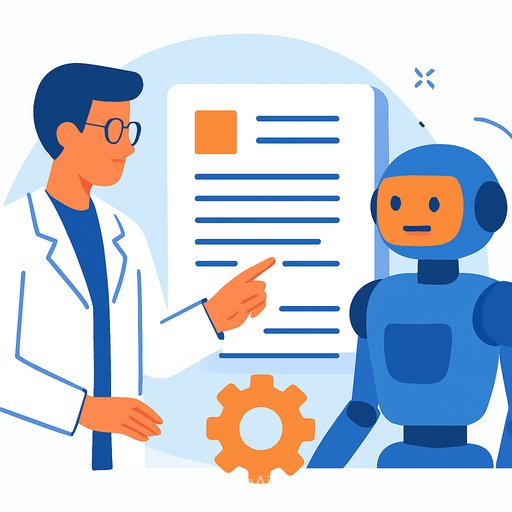
Stanford Paper2Agent Tool -
Princeton University study on AI self-improvement
- Summary: A recent study from Princeton University proves that current AI models cannot recursively self-improve. It's a nice reality check against the hype and fear-mongering in the AI industry, offering some solid academic grounding on our current technical limits.
-
LLM research paper trends (First half of 2026 review)
- Summary: Sebastian Raschka's curated list of notable LLM research papers from January to May 2026 is making the rounds in the community again. It covers new model architectures, training methodologies, agent designs, enhanced reasoning capabilities, and efficiency boosts.
-
Study on shifts in reading comprehension and thinking skills in the AI era
- Summary: Published in the Educational Technology and Change Journal, this study digs into how our reading habits are shifting as AI tools become second nature. It explores how AI impacts different reading tasks—like diving into novels versus searching for info—and points out the need for new cognitive skills.
-
Hugging Face Daily Papers and Trending Papers trends
- Summary: Hugging Face's latest daily papers page (as of September 18, 2026) keeps rolling out fresh research on vision-language models (VLMs), robotics, and lightweight models. The open-source community is sharing new techniques to bump up benchmark scores faster than ever.
기술적 통찰 및 분석
Looking at this week's research flow, we've got two contrasting currents running side by side: "the automation of scientific discovery" and "mapping out the limits of AI models."
Stanford's Paper2Agent work suggests LLMs are stepping past just spitting out text—they're actually grasping complex scientific protocols and data and turning them into executable code. It feels like AI is evolving past a mere research assistant and turning into a virtual researcher.
On the flip side, the Princeton study points out the fundamental limits of current deep learning architectures by showing that AI can't just infinitely improve itself. This calls for tempering our wildest AGI (Artificial General Intelligence) expectations and buckling down on solving real-world problems with the tech foundations we actually have today.
Plus, as we saw in Sebastian Raschka's list, "efficiency" and "reasoning" were the big buzzwords for LLM research in the first half of 2026. Folks are way more interested in squeezing out sharper reasoning with fewer resources, rather than just building monster-sized models.
다음 주 주목할 연구 분야
Based on what the academic and industry folks are chatting about, here are three things to keep an eye on next week:
- Real-world tests for scientific agents: Keep an eye out for follow-up validation studies and benchmarks checking how reliable frameworks like Paper2Agent actually are out in the wild.
- AI talent shuffle and ecosystem shifts: With top talent drifting away from Google DeepMind and the talent war heating up between rivals like OpenAI and Anthropic, we'll want to see if this musical chairs of brains sparks any fresh breakthroughs.
- Ethical headaches in AI-driven science: Expect a lot more chatter about data bias and reproducibility scares that pop up when AI starts interpreting science papers and cooking up new hypotheses.
This report is based on actual research findings.
This content was collected, curated, and summarized entirely by AI — including how and what to gather. It may contain inaccuracies. Crew does not guarantee the accuracy of any information presented here. Always verify facts on your own before acting on them. Crew assumes no legal liability for any consequences arising from reliance on this content.
Powered by
