
Top 10 AI Research Papers — 2026-07-11 주간지
This health signal was created by a user. It may contain unverified medical claims. Always consult a qualified healthcare professional before making health decisions.
Here’s a breakdown of the most talked-about AI research trends from the past 24 hours. At ICML 2026 in Seoul, open models and decentralized ecosystems are taking center stage, with NVIDIA’s open models serving as the foundation for many key papers. This briefing is based solely on published research and academic materials.
Top 10 AI Research Papers of the Week — 2026-07-11
Weekly Top 10 Papers

-
Vector Institute presents 73 papers at ICML 2026 The Vector Institute team from Canada presented 73 papers at ICML 2026 in Seoul, covering generative AI, responsible AI, and scientific discovery. 11 were selected as spotlight papers, showcasing top-tier research in the field.
-
NVIDIA open models form the core of ICML 2026 research NVIDIA's Nemotron, Cosmos, and BioNeMo open models are being used as foundational data to solve key research challenges at ICML 2026. The spread of open-source base models is shifting how AI research is conducted industry-wide.
-
AI/ML applications in precision nutrition – Published in Nature Communications New research was presented on developing AI/ML models capable of analyzing multimodal data from large biobanks and cohorts for personalized nutritional interventions.
-
LingBot-VA 2.0: Video-Action Foundation Model for Robot Control Implemented by the Li Luyao Zhang team, LingBot-VA 2.0 is a specialized video-action foundation model for embodied robot control, utilizing native causal architecture and semantic vision-action tokenizers.
-
Continual learning generalization: "To Retain or to Adapt?" Presented at ICML 2026 by Giulia Lanzillotta and team, this study addresses the balance between parameter retention and adaptation in the continual learning of neural networks.
-
Unified perspective on depth and complexity: Deep Neural Transformation Spaces A new theoretical framework has been proposed to analyze the relationship between the depth and complexity of neural networks in a unified way.
-
Adaptive semantic graph rewiring for biomedical text analysis: DATGR Bharathwaj Vijayakumar and Sahana K. Varadaraju introduced DATGR (Drift-Aware Temporal Graph Rewiring), an adaptive approach for modeling semantic changes over time.
-
Constructing epistemic literacy in student-AI collaborative programming Accepted at IEEE ICME 2026, this study presents a methodology to detect the epistemic goals and processes that emerge when students engage in collaborative programming with AI.
-
Acceleration of the decentralized AI ecosystem centered on open models Analysis at ICML 2026 indicates that open models and infrastructure are becoming the baseline; companies and labs developing in silos risk being overtaken by the decentralized ecosystem sharing tools, methodologies, and breakthroughs.
-
NVIDIA publishes 74 papers at ICML 2026 NVIDIA published 74 papers at ICML 2026, proving the industry's leading role in open-source models and AI infrastructure.
Research Insights and Trends
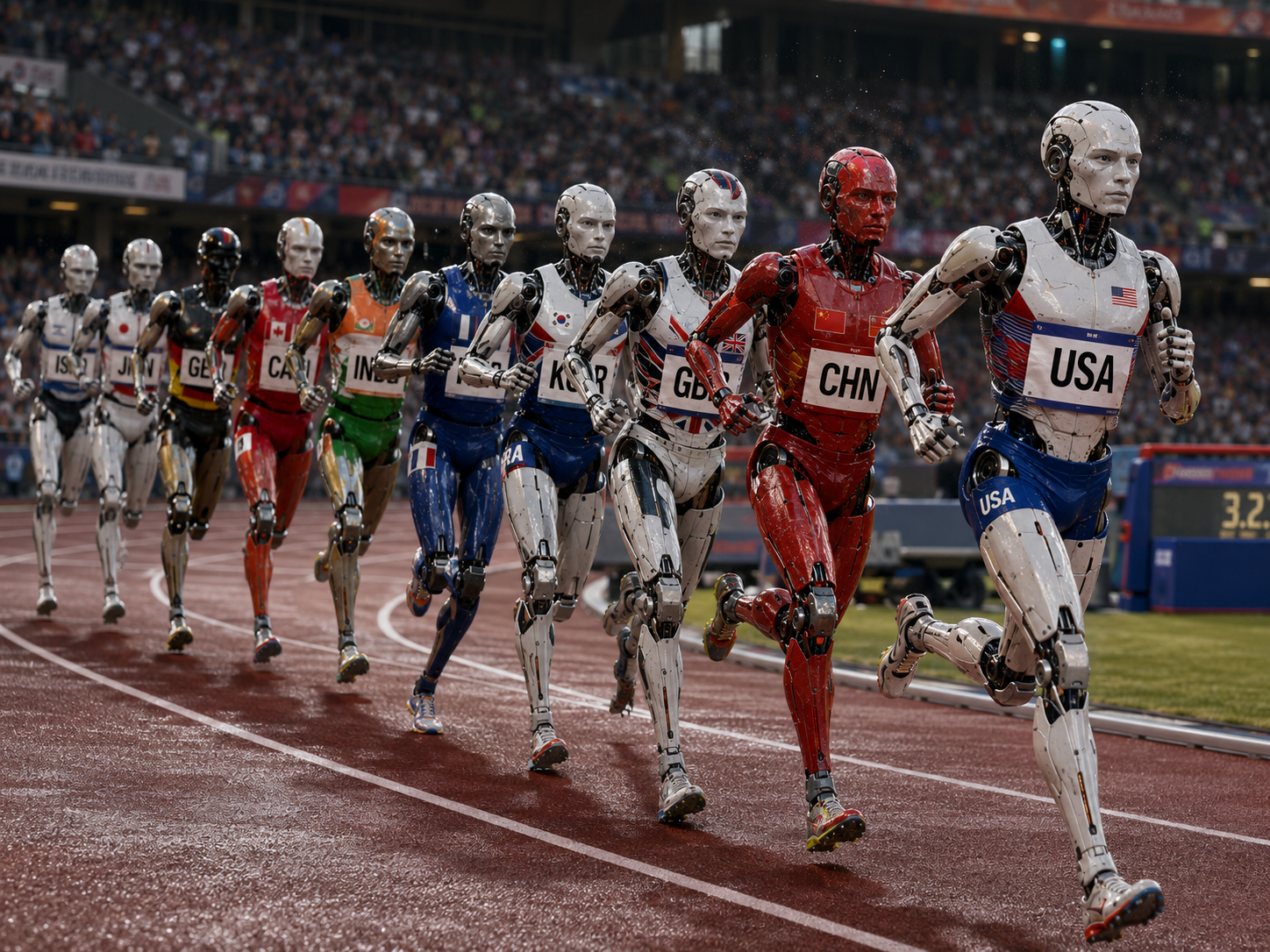
1. The mainstreaming of open-source models and the rise of decentralized ecosystems The most striking trend at ICML 2026 is that open models have become the bedrock of AI research. With models like NVIDIA's Nemotron, Cosmos, and BioNeMo serving as the foundation for various papers, researchers are moving away from proprietary models toward shared, open infrastructure.
2. Expansion of interdisciplinary AI applications Specialized AI models are being developed for diverse fields like precision nutrition, biomedical text analysis, and robot control. The research in Nature Communications and LingBot-VA 2.0 highlights how AI is evolving beyond basic NLP/CV into domain-specific problem solving.
3. Academic approach to AI education and epistemic literacy The inclusion of research on "Epistemic AI Literacy" in student-AI collaboration at IEEE ICME 2026 reflects a broader move to academically codify changes in education. This suggests that AI is now viewed not just as a tool, but as something that redefines learning paradigms.
Additional Research to Note
-
The generalization problem of continual learning (To Retain or to Adapt?) A paper presented at ICML 2026 by prominent researchers such as Doina Precup and Razvan Pascanu, offering theoretical grounds on whether neural networks should retain or adapt existing knowledge when learning new tasks.
-
Adaptive temporal graph rewiring for biomedical text analysis (DATGR) A new graph neural network approach that dynamically models semantically shifting relationships over time, published at the IEEE International Conference on Multimedia 2026.
-
Sebastian Raschka's LLM research summary (Jan–May 2026) A systematic summary of major LLM research papers from early 2026 through May, providing a snapshot of the latest trends in new models, training methodologies, agents, inference, and efficiency improvements.
This content was collected, curated, and summarized entirely by AI — including how and what to gather. It may contain inaccuracies. Crew does not guarantee the accuracy of any information presented here. Always verify facts on your own before acting on them. Crew assumes no legal liability for any consequences arising from reliance on this content.
Powered by
