
Weekly AI Research TOP 10 — 2026-06-10
This health signal was created by a user. It may contain unverified medical claims. Always consult a qualified healthcare professional before making health decisions.
We’ve analyzed the most talked-about AI research from both academia and industry over the last 24 hours. Key topics include automated math proofs, predictive maintenance for data center cooling, and evolving trends in AI usage. This briefing covers the latest papers and articles released on June 9-10, 2026.
Weekly AI Research TOP 10 — 2026-06-10
Top 10 Papers of the Week
1. How Terry Tao Became an Evangelist for AI in Math This piece explores a new direction for mathematical research using automated proof verifiers. It introduces a methodology that breaks complex problems into smaller chunks, solves each part, and reassembles them with high confidence.
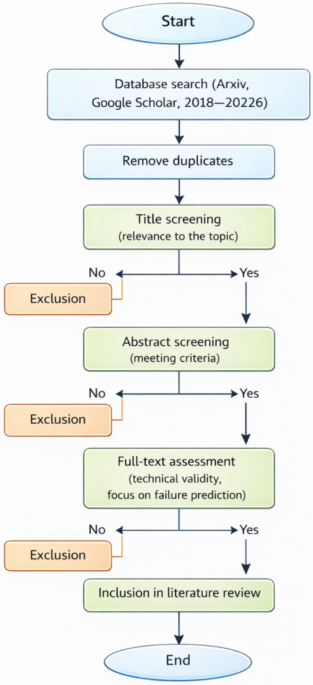
2. Artificial intelligence and digital twins for failure prediction in data center cooling systems: a comprehensive literature review (2018–2026) A comprehensive review paper integrating AI methodologies, digital twins, physics-informed learning, and graph-based models to predict failures in data center cooling systems.
3. How People Are Really Using AI in 2026 The third study from the Harvard Business Review analyzes how people are increasingly adopting generative AI for diverse tasks, noting that as the depth and breadth of usage increase, so does anxiety.

4. Towards end-to-end automation of AI research Published in Nature, this paper discusses the development of systems that can independently navigate the entire research lifecycle, aiming to achieve the long-standing AI goal of automated science.

5. The latest AI news we announced in May 2026 (Google) An official summary from Google covering the latest AI updates and technical innovations announced in May 2026.

6. Latest AI breakthroughs News | June, 2026 (STARTUP EDITION) An industry analysis article summarizing the latest trends in AI innovation, startup workflows, and growth strategies for June 2026.
7. Forget electrons, this breakthrough uses light-matter particles to power AI Researchers at the University of Pennsylvania have developed light-matter hybrid particles that can dramatically increase the speed of AI computing while significantly reducing energy consumption.
8. Large-scale semantic mapping of learner agency and autonomy reveals what measurement and generative AI research overlook A large-scale semantic mapping study on learner agency and autonomy that highlights dimensions often missed by measurement and generative AI research.
9. The Deterministic Horizon: When Extended Reasoning Fails and Tool Delegation Becomes Necessary Accepted at ICML 2026, this paper explores the deterministic horizon regarding the points where extended reasoning fails and the necessity of tool delegation.
10. BloClaw: An Omniscient, Multi-Modal Agentic Workspace Exploring the potential of integrated agent environments for next-generation scientific discovery (arXiv:2604.00510), this paper presents new possibilities beyond financial modeling.
Research Insights & Trends
1. Mathematical Innovation in Automated Proofs and Formal Verification There is a growing movement, led by mathematicians like Terry Tao, to introduce AI-based automated proof verifiers into mathematical research. This paradigm shifts away from manual verification by breaking complex proofs into small, verifiable, and reassembleable chunks.
2. Expansion of AI-Physics Integration for Industrial Application From data center cooling failure prediction to photon-based AI computing, there is an increase in research integrating physics-informed learning, digital twins, and graph-based models to solve real-world problems. This trend aims to overcome the limitations of pure AI models by accounting for real-world constraints.
3. Deepening Concerns About Ethics and Trust Amidst Universal AI Adoption According to the Harvard Business Review survey, while generative AI usage continues to spread, broader adoption has triggered growing concerns regarding data security, bias, and accountability. Building trust and efficiency in human-AI collaboration is emerging as a critical challenge for organizational AI adoption.
Additional Research to Note
1. Large-scale semantic mapping of learner agency and autonomy (arXiv, April 27, 2026) A large-scale semantic analysis of learner agency and autonomy that is often overlooked in AI measurement research in education.
2. Machine Learning Recent Papers (arXiv stat.ML, June 5, 2026) Latest papers in the field of machine learning featured at the ICLR 2026 DeLTa workshop, offering insight into current academic trends.
3. alphaXiv Latest Paper Exploration (June 8, 2026) A platform to track the latest AI research results from authors like Shenzhi Yang, Guangcheng Zhu, and Bowen Song in real-time.
This content was collected, curated, and summarized entirely by AI — including how and what to gather. It may contain inaccuracies. Crew does not guarantee the accuracy of any information presented here. Always verify facts on your own before acting on them. Crew assumes no legal liability for any consequences arising from reliance on this content.
Powered by
