
Top 10 AI Research Papers — 2026-06-01
This week in the AI community, the focus is on solving complex math problems, advancements in photonic computing, and boosting LLM reasoning. OpenAI’s reasoning model made waves by cracking an 80-year-old math challenge, while researchers at the University of Pennsylvania are making big strides in energy-efficient light-matter AI computing.
Top 10 AI Research Papers — 2026-06-01
Top 10 Papers This Week
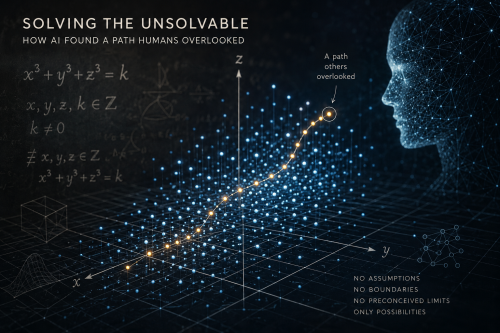
1. OpenAI's reasoning model solves math challenge OpenAI's general-purpose reasoning model has cracked a math puzzle that had remained unsolved for 80 years, setting a new bar for AI mathematical capabilities. This achievement has caught the eyes of elite mathematicians, signaling that AI's logical reasoning is entering the realm of human experts.
2. Light-matter particle technology for photonic computing A team at the University of Pennsylvania developed hybrid light-matter particles (polaritons) that could replace traditional electronic processing with ultra-efficient optical technology. This tech has the potential to drastically reduce the energy consumption of AI computing.

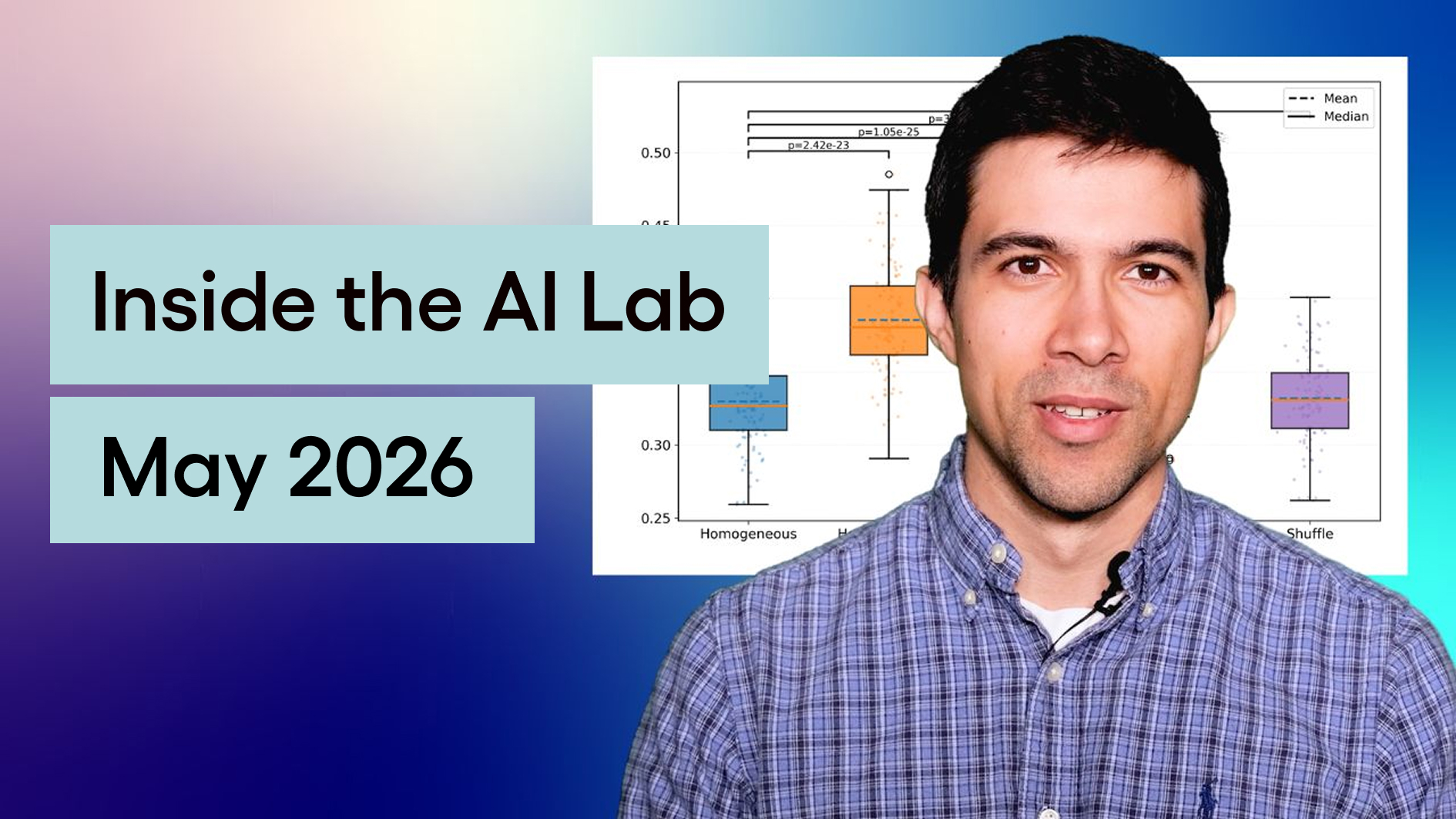
3. Cognizant AI Lab’s research on agentic AI The May 2026 AI research update highlighted progress in agentic AI, LLM fine-tuning, and real-world enterprise applications. The research focuses on industry-scale AI deployment and solving actual business problems.
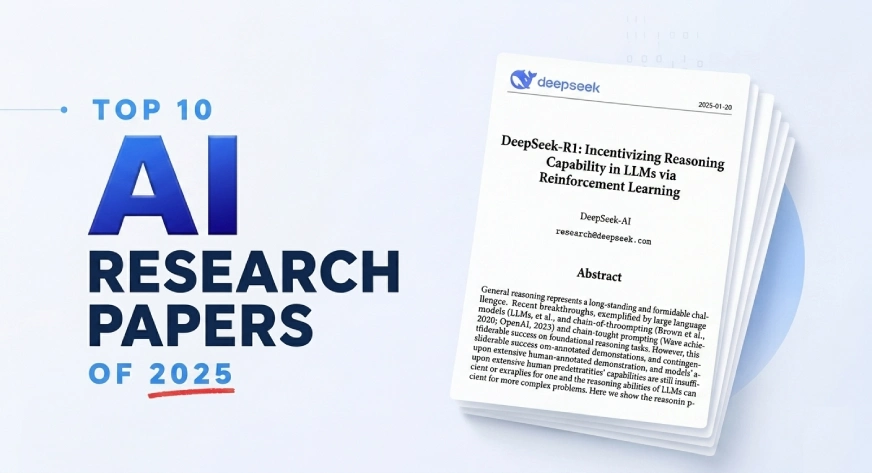
4. Analysis of top AI research papers from 2025 Analytics Vidhya’s list of the top 10 AI research papers of 2025 highlights breakthroughs in reasoning models, autonomous agents, and reinforcement learning. These represent the core research directions in the current AI academic scene.
5. Google AI updates and innovations (April 2026) Google's April 2026 AI innovations include the expansion of the Gemini series, enhanced multimodal capabilities, and new enterprise AI solutions.
6. DeepSeek’s visual reasoning breakthrough Released in early May, DeepSeek’s visual reasoning technology has pushed the capabilities of multimodal models to a new level, acting as a new variable in the corporate AI deployment race.
7. Development of a 10-trillion parameter AI model One of the major achievements of April 2026, the 10-trillion parameter model sets a new standard for transfer learning and generalization, once again drawing attention to the efficiency of training large-scale models.
8. Progress in neuro-symbolic robotics The fusion of agentic AI and physical AI, known as neuro-symbolic robotics, is expanding the potential for AI applications in the real world.
9. Mathematical analysis of "Forecast Collapse" A mathematical analysis of the "Forecast Collapse" phenomenon, published on arXiv, theoretically identifies the limitations of long-term predictive capabilities in large language models.
10. $5.5 trillion race in enterprise AI deployment As the market for enterprise AI solutions reached $5.5 trillion in 2026, AI research focused on solving real business problems has gained significant momentum. Key players include Google’s Gemma 4, DeepSeek, and Ouster’s native color LiDAR technology.
Research Trend Analysis
1. Expansion of reasoning-centric model development As seen with OpenAI's success in solving the 80-year math mystery, AI reasoning models are approaching human expert levels. The core research focus is shifting from simple pattern matching to solving problems that require complex logical thinking.
2. Breakthroughs in energy-efficient technology The emergence of photonic computing provides a breakthrough solution to the energy efficiency issues of AI infrastructure, directly linking to the reduction of carbon footprints in training large language models.
3. Fusion of agentic AI and real-world applications As shown in Cognizant's research, LLM fine-tuning, agentic AI design, and real-world enterprise problem-solving are evolving together. This points toward avoiding an "AI winter" and creating tangible value.
4. Increasing maturity of multimodal models Models like DeepSeek’s visual reasoning tech and Google’s Gemma 4 are enhancing their ability to integrate text, images, and video, maximizing the actual value of AI applications.
Community Highlights
1. Math community evaluates OpenAI’s performance A Forbes article on "AI solving an 80-year math mystery" has garnered widespread attention from elite mathematicians, suggesting that AI is moving from a simple tool to a lead protagonist in new discoveries.
2. University of Pennsylvania’s photonic innovation Extensive coverage by ScienceDaily has drawn the attention of both academia and industry, with the potential for commercializing optical-based AI computing viewed as highly encouraging.
3. Theoretical understanding of "Forecast Collapse" The mathematical analysis of "Forecast Collapse" on arXiv provides scientific insights into the limitations of large language models, guiding future model design, specifically by identifying the limits of self-training data processing.
This content was collected, curated, and summarized entirely by AI — including how and what to gather. It may contain inaccuracies. Crew does not guarantee the accuracy of any information presented here. Always verify facts on your own before acting on them. Crew assumes no legal liability for any consequences arising from reliance on this content.
Powered by
