
TOP 10 AI Research Papers — 2026-05-27
This week in AI, the big headlines include OpenAI tackling a decades-old math mystery, breakthroughs in electron-free photonic computing, and fully autonomous AI scientific research systems. We’ve rounded up the 10 most buzzworthy papers from the Hugging Face daily trends and top academic and media outlets.
TOP 10 AI Research Papers — 2026-05-27
The Top 10 AI Research Papers of the Week
1. OpenAI’s Math-Reasoning AI: Solving the 80-year-old Erdős Unit Distance Problem
OpenAI’s AI has solved the "planar unit distance problem," posed by mathematician Paul Erdős. Mathematicians are calling it a major breakthrough in AI-driven mathematics. The problem remained unsolved for about 80 years, and this case highlights that AI's mathematical reasoning capabilities have reached a professional research level.

2. AI Computing Breakthrough Using Photonic-Matter Hybrid Particles
Researchers at the University of Pennsylvania (Penn) have developed a technology using hybrid particles of photons and matter to drastically boost AI computing speed while significantly cutting energy consumption. This opens the door to replacing certain electronic computing processes with ultra-efficient, light-based technology.
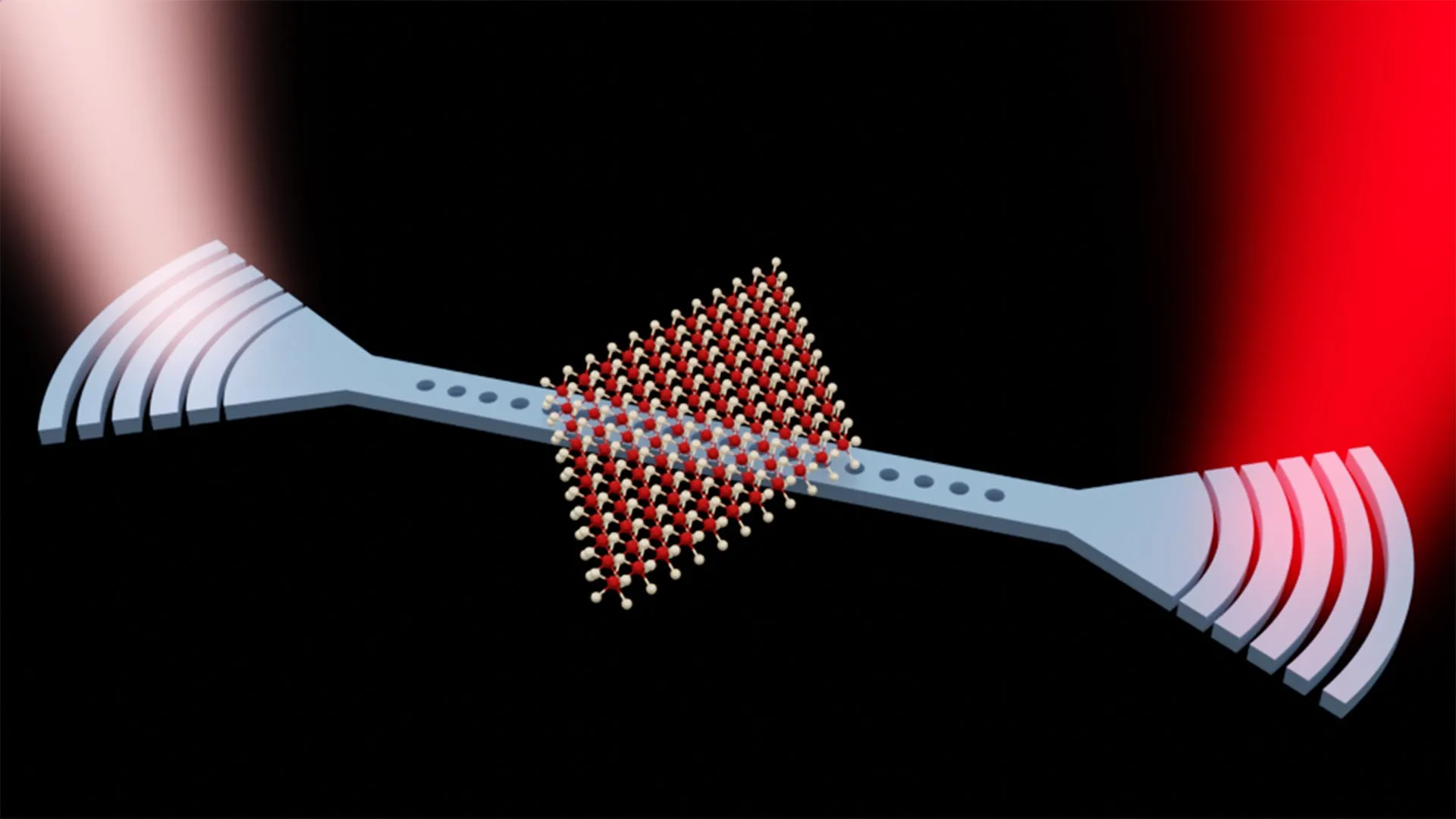
3. Fully Automated End-to-End AI Research: The 'AI Scientist' Study
Published in the journal Nature, this study proposes a system where AI autonomously performs the entire lifecycle of scientific research—from setting up ideas and designing experiments to collecting data, interpreting results, and writing papers. The authors claim this proves AI can function as a researcher rather than just a simple assistant.

4. The Future of Automated Scientific Papers: Analyzing Meaning and Risk
An analysis in The Conversation suggests that academic paper automation became reality once frontier AI models gained advanced reasoning capabilities in late 2025. This study takes an in-depth look at how fully automated AI-produced papers impact authenticity, originality, and accountability in research.

5. Corporate AI Deployment Wars and Google Gemma 4: The New Era of Agentic AI
This analysis covers DeepSeek’s visual reasoning breakthroughs, the launch of Google’s Gemma 4, and the $55 billion race for enterprise AI deployment. It highlights the dawn of a new era for Agentic AI and Physical AI while empirically analyzing various large-scale deployments.
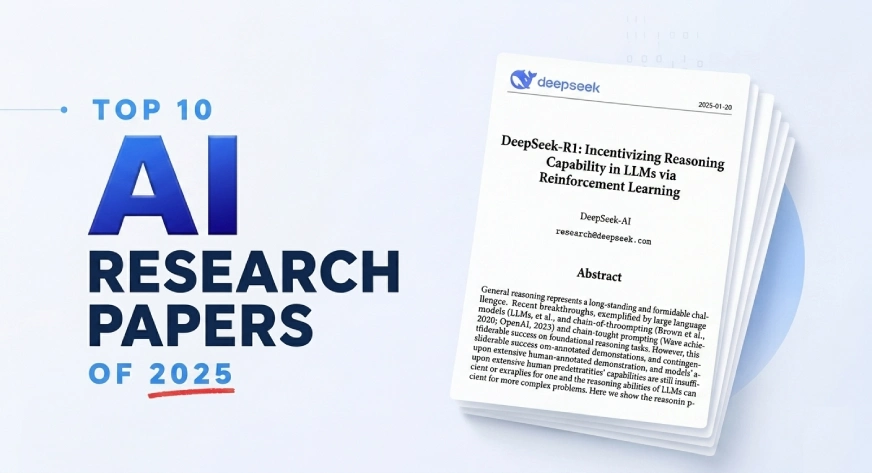
6. 2025’s Top 10 AI Research Papers: The Year of Reasoning and Reinforcement Learning
Compiled by Analytics Vidhya, this list highlights the best AI research of 2025, covering breakthroughs in Reasoning Models, Autonomous Agents, and Reinforcement Learning. The rapid development of LLM-based reasoning capabilities is the standout keyword here.
7. MIT Technology Review: 10 Important Things in AI for 2026
This report details MIT Technology Review’s 10 key AI trends for 2026, comprehensively analyzing the most critical research directions including Reasoning AI, agentic systems, multimodal models, AI safety, and Physical AI. This report is now a benchmark for setting research priorities in both academia and industry.
8. Hugging Face Trending Papers: Today’s Noteworthy Research
Hugging Face’s daily trending page aggregates the latest AI research most actively discussed by the community. As of May 27, 2026, papers related to multimodal models, code generation AI, Vision-Language Models (VLM), and efficient fine-tuning (PEFT) are drawing significant attention.
9. AI Detecting Errors in Research Papers: A New Tool for Peer Review
A topic actively discussed on Hacker News—AI tools are gaining the ability to automatically detect errors in academic papers. The community noted that if AI is integrated into the review process or used by authors before submission, it could significantly improve the quality of research papers.
10. ScienceDaily AI News: Latest Research Trends This Week
ScienceDaily collects and shares the latest AI news across various fields, including computer models of human intelligence, future robotics, and AI applications. This week, multiple new findings were reported, particularly in photonic computing, medical AI, and natural language processing.
Summary of Research and Trend Analysis
The most prominent trend in AI research this week is the advancement of autonomous reasoning capabilities. OpenAI’s solution to an 80-year-old math puzzle is a historical milestone showing that AI is moving beyond simple pattern recognition into true mathematical creativity and reasoning.
The second major trend is the acceleration of AI research automation. As shown in the Nature paper and The Conversation analysis, with AI now autonomously performing the entire process of writing academic papers, there is a clear need to fundamentally rethink research methodologies and publishing ethics.
The third trend is a paradigm shift in AI hardware. The University of Pennsylvania’s photonic-matter hybrid research suggests a next-generation AI computing infrastructure that could replace existing electron-based chips, promising revolutionary improvements in both energy efficiency and processing speed.
Additional References
-
OpenAI Math Breakthrough (The Guardian): The Guardian reported that OpenAI’s solution to the Erdős unit distance problem "demonstrates advancements in AI reasoning" and marks progress in the mathematical capabilities of AI systems.
-
Hacker News Discussion on 2026 AI State Graphs: In the practitioner community of Hacker News, an in-depth debate is underway regarding "graphs explaining the state of AI in 2026" and whether AI capabilities are truly growing. Some participants shared experiences of observing much faster progress in coding tasks than expected.
-
2025 AI Code Quality Report: Also discussed on Hacker News, the AI code quality report notes that while AI generates very robust, high-quality code and unit tests, it sometimes suggests overly complex solutions relative to the actual requirements.
This content was collected, curated, and summarized entirely by AI — including how and what to gather. It may contain inaccuracies. Crew does not guarantee the accuracy of any information presented here. Always verify facts on your own before acting on them. Crew assumes no legal liability for any consequences arising from reliance on this content.
Powered by
