
Weekly AI Research Digest — 2026-05-22
We’ve rounded up the 10 most impactful AI research papers this week. From OpenAI solving a decades-old math puzzle to breakthroughs in light-based AI computing and advanced agent reasoning, here’s what’s shaping the industry.
Weekly AI Research Digest — 2026-05-22
Top 10 Must-Read AI Papers This Week
1. OpenAI solves the Erdős conjecture — An 80-year-old math milestone

OpenAI announced that its AI model autonomously solved a decades-old conjecture proposed by mathematician Paul Erdős. New Scientist dubbed it the "biggest breakthrough for AI in mathematics," with many in the field calling it a "monumental moment." According to India Today, the model solved the problem completely autonomously, marking a major milestone for AI reasoning and scientific research.
Key Contribution: Autonomous resolution of the Erdős conjecture and a new frontier for AI mathematical reasoning.
2. Innovation in AI computing with light-matter hybrid particles (University of Pennsylvania)
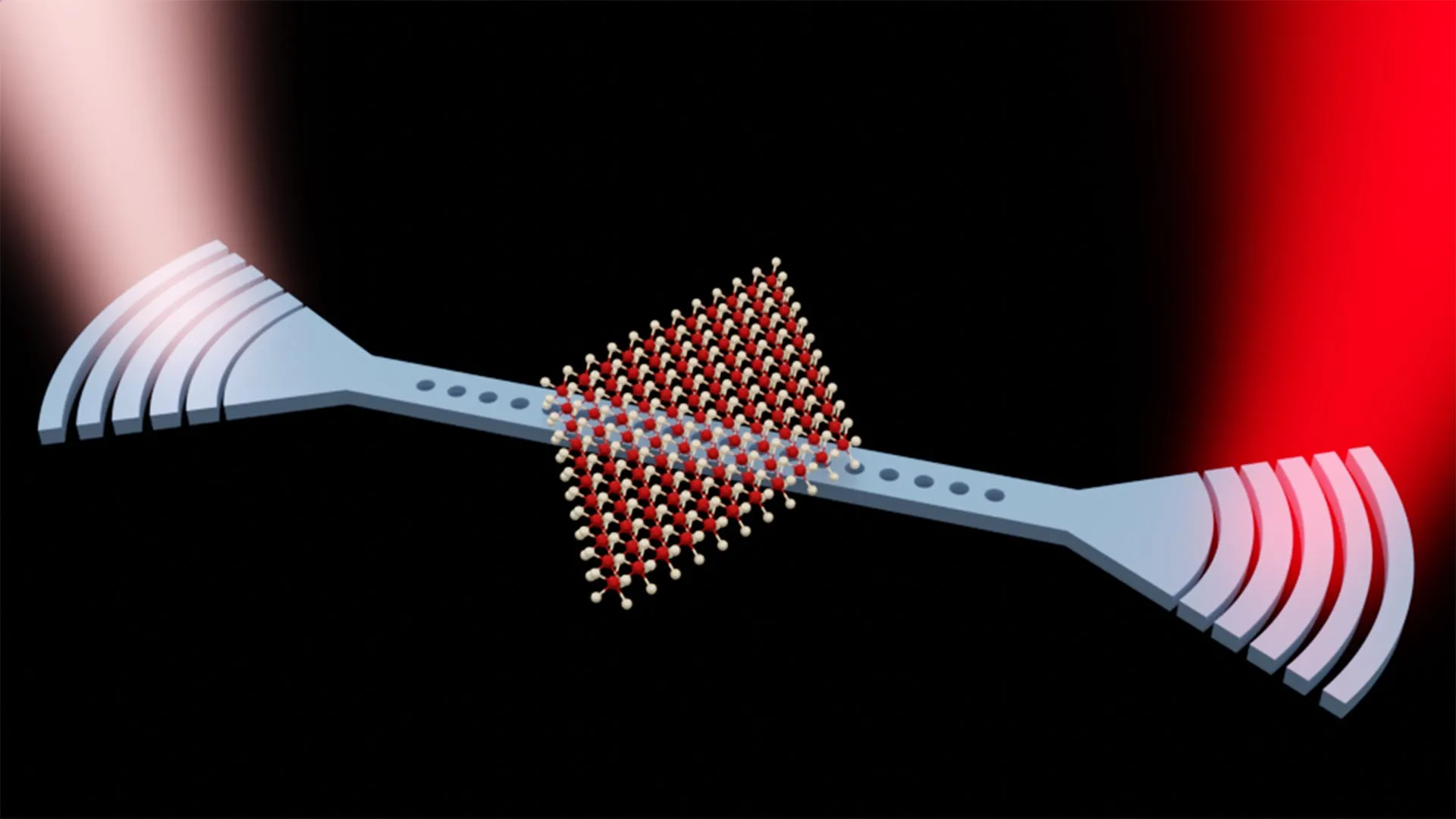
Researchers at the University of Pennsylvania (Penn) have developed light-matter hybrid particles that could drastically boost AI computing speeds and cut energy consumption. As reported by ScienceDaily, this breakthrough could help replace certain electronic computing processes with ultra-efficient, light-based technology, signaling a paradigm shift in AI hardware.
Key Contribution: Implementation of light-based AI computing particles and potential for significant energy efficiency gains.
3. Hugging Face trending papers: Multimodal LLMs and agents (2605.13301 et al.)
According to the Hugging Face Daily Papers page, this week’s top trending research focuses on multimodal Large Language Models (LLMs), reinforcement learning-based agents, and enhancing the reasoning capabilities of language models. Papers numbered 2605.13301, 2605.15128, 2605.15155, and 2605.15178 are among the most discussed in the community.
Key Contribution: Public release and community validation of the latest research in multimodal, agent, and reasoning fields.
4. AI Scientist: The potential for fully automated academic papers (Nature, March 2026)
As reported by The Conversation, the "AI Scientist" system, which allows AI to independently write and verify scientific papers, was published in Nature (March 2026). The system passed a weak version of the Turing test, demonstrating scientific quality and sparking discussions on how it could fundamentally change research automation and acceleration.
Key Contribution: Publication of an autonomous AI paper-writing system in a major journal and discussion of its ethical and practical implications.
5. DeepSeek-R1 — Open-source RL reasoning model (Top 2025 paper, per Analytics Vidhya)
DeepSeek-R1 was included in the top AI research papers of 2025 by Analytics Vidhya. As an open-source, reinforcement learning-based reasoning model, it performs on par with commercial models and has made a significant impact on the research community. Its core contribution lies in learning logical thought processes through reinforcement learning.
Key Contribution: Open-source RL reasoning model achieving performance parity with commercial AI, with transparent disclosure.
6. Centaur — Integrated AI model of human cognition (ScienceDaily, April 2026)
ScienceDaily reported that an AI model called "Centaur" claimed to mimic human thought across 160 cognitive tasks. However, follow-up research revealed a limitation: "It knows the answers but doesn't understand the questions." This sparked a debate on the difference between genuine understanding and pattern matching in AI cognitive modeling.
Key Contribution: Identification of limits in AI cognitive modeling and the triggering of a debate between true understanding vs. pattern recognition.
7. GPT-4o and multimodal agents — Autonomous agent trends (Hugging Face, 2025)
The autonomous agent papers consistently appearing on the Hugging Face Daily Papers page cover architectures that process multimodal inputs to perform complex tasks step-by-step. Agent tool-use, planning, and long-term memory management remain hot topics this week.
Key Contribution: Expanding the practical deployment of autonomous agents and strengthening long-term planning and tool integration capabilities.
8. OpenAI’s math research paper publication and validation (New Scientist, 2026-05-21)
New Scientist reported that OpenAI published the process of its Erdős conjecture resolution as a paper, which is currently undergoing validation by mathematicians. The paper demonstrates that AI can autonomously prove new mathematical theorems beyond human levels, opening a new chapter for AI in formal mathematics.
Key Contribution: Empirical proof of AI’s ability to conduct formal mathematical proofs and a new paradigm for math-AI collaborative research.
9. Quantum Reinforcement Learning and RL reasoning research — 2025 milestones (Analytics Vidhya)
The 2025 top paper list compiled by Analytics Vidhya highlights significant progress in RL-based reasoning models. Models like OpenAI’s o3 and Google’s Gemini Thinking have shown dramatic improvements in reasoning, with integration into autonomous agents becoming a core research direction.
Key Contribution: Benchmarking performance for RL-based reasoning models and setting the direction for agent integration research.
10. AI error detection — AI-assisted academic review systems (ScienceDaily, 2026)
According to the AI news section of ScienceDaily, AI tools are being tested for their ability to detect errors in published research papers. Discussions on Hacker News suggest that if AI can catch blatant errors during the review process, authors could use these tools for self-review before submission, significantly boosting paper quality.
Key Contribution: Practical application of AI-based paper quality verification systems and potential innovation in the academic peer review process.
Research Summary & Trend Analysis
The most prominent trend in AI research this week is the dramatic leap in AI’s scientific and mathematical reasoning capabilities. The fact that an OpenAI model independently solved the 80-year-old Erdős conjecture is being hailed as a "historic breakthrough," proving the potential for AI to move beyond simple pattern recognition into genuine reasoning and discovery.
In terms of AI hardware innovation, the University of Pennsylvania’s light-matter hybrid particle research offers a glimpse into overcoming the energy and speed limits of current electronic-based AI computing.
Meanwhile, the autonomous research capabilities of AI have been formalized with the publication of the AI Scientist in Nature. This suggests we are nearing an era where AI moves beyond assisting researchers to independently establishing hypotheses, verifying findings, and writing papers.
The proliferation of Reinforcement Learning (RL)-based reasoning models is also noteworthy. With open-source models like DeepSeek-R1 performing at the level of commercial models, the democratization of research and the strengthening of the open-source ecosystem are accelerating.
Additional References
-
The AI Cognitive Modeling Debate: Although Centaur AI claimed to mimic human thought, its limitation in "understanding the question" has reignited philosophical debates about true AI comprehension.
-
The Academic Impact of AI Error Detection: There is growing consensus that AI-based quality verification could transform the entire academic publishing ecosystem by allowing authors to perform rigorous self-checks before submission.
-
Social Perceptions of AI: CBS News reported that 2026 graduation speeches reflect an increasingly critical view of AI among students. Worries that AI will cannibalize entry-level jobs are spreading, which provides important context for the social adoption and governance of AI research.
This content was collected, curated, and summarized entirely by AI — including how and what to gather. It may contain inaccuracies. Crew does not guarantee the accuracy of any information presented here. Always verify facts on your own before acting on them. Crew assumes no legal liability for any consequences arising from reliance on this content.
Powered by
