
AI 논문 주간 TOP 10 — 과학 자동화 시대 선언
This week's AI research landscape is dominated by three major themes: **autonomous AI-driven scientific research systems**, **breakthroughs in mathematical reasoning**, and **photonic computing innovations for AI hardware**. Drawing from Hugging Face trending papers, the latest arXiv submissions, and coverage from leading science outlets like New Scientist and ScienceDaily, the fourth week of May 2026 marks an inflection point where AI is fundamentally reshaping how science gets done—moving from tool to independent researcher.
AI Weekly TOP 10 — 2026-05-25
This Week's Essential Papers

-
Towards End-to-End Automation of AI Research (Google DeepMind / Nature)
- Core insight: Proposes an AI system architecture that autonomously handles the entire research lifecycle—from hypothesis generation through experiment design, results analysis, and paper writing—with experimental validation of its limitations.
- Why it matters: Published in Nature (March 25, 2026), this has become the reference point for AI research automation debates. Multiple outlets, including The Conversation, revisited it this week, sparking broader discussions in academia about AI-generated papers' credibility and ethics.

Autonomous AI Research System Lifecycle Diagram -
OpenAI o3 Proves Erdős Decades-Old Conjecture (OpenAI)
- Core insight: OpenAI's latest reasoning model o3 independently proves a longstanding combinatorics conjecture posed by mathematician Paul Erdős—one that had stumped the global math community for decades.
- Why it matters: New Scientist called it "AI's biggest breakthrough in mathematics," marking the first time an AI system demonstrated independent proof capability in pure mathematics rather than just assisting human mathematicians. The Erdős conjecture had resisted solution for decades.

OpenAI AI Math Breakthrough -
HawkesLLM: Semantic Uncertainty Propagation in Agentic Text Simulation (ICML 2026 Workshop Track)
- Core insight: Models how semantic uncertainty propagates through agent-based text simulation using Hawkes processes, offering a new framework for quantifying LLM uncertainty.
- Why it matters: Accepted to ICML 2026's "Statistical Uncertainty Frameworks for Agentic Systems" workshop, it's becoming a key reference for evaluating reliability in multi-agent AI systems.
-
Effect-Transparent Governance for AI Workflow Architectures: Semantic Preservation, Expressive Minimality, and Decidability Boundaries (Alan L. McCann)
- Core insight: Develops formal theory enabling AI workflow governance policies to simultaneously achieve semantic preservation and expressive minimality while maintaining decidability boundaries.
- Why it matters: Strengthens the theoretical foundation for AI safety and regulatory feasibility. It's a mathematically rigorous approach to auditability in enterprise AI systems and currently ranks high on arXiv's cs.AI section.
-
Photonic-Matter Hybrid Particle-Based AI Computing Acceleration (University of Pennsylvania / ScienceDaily)
- Core insight: Demonstrates a new platform using hybrid light-matter particles (polaritons) to process AI computations through optical circuits instead of electronics, achieving massive energy savings compared to traditional silicon-based inference.
- Why it matters: A hardware breakthrough ScienceDaily covered extensively this week, pointing toward solving AI's energy problem through photonic computing. Headlines like "Forget electrons" captured mainstream attention. This could reshape AI's carbon footprint and operational costs.
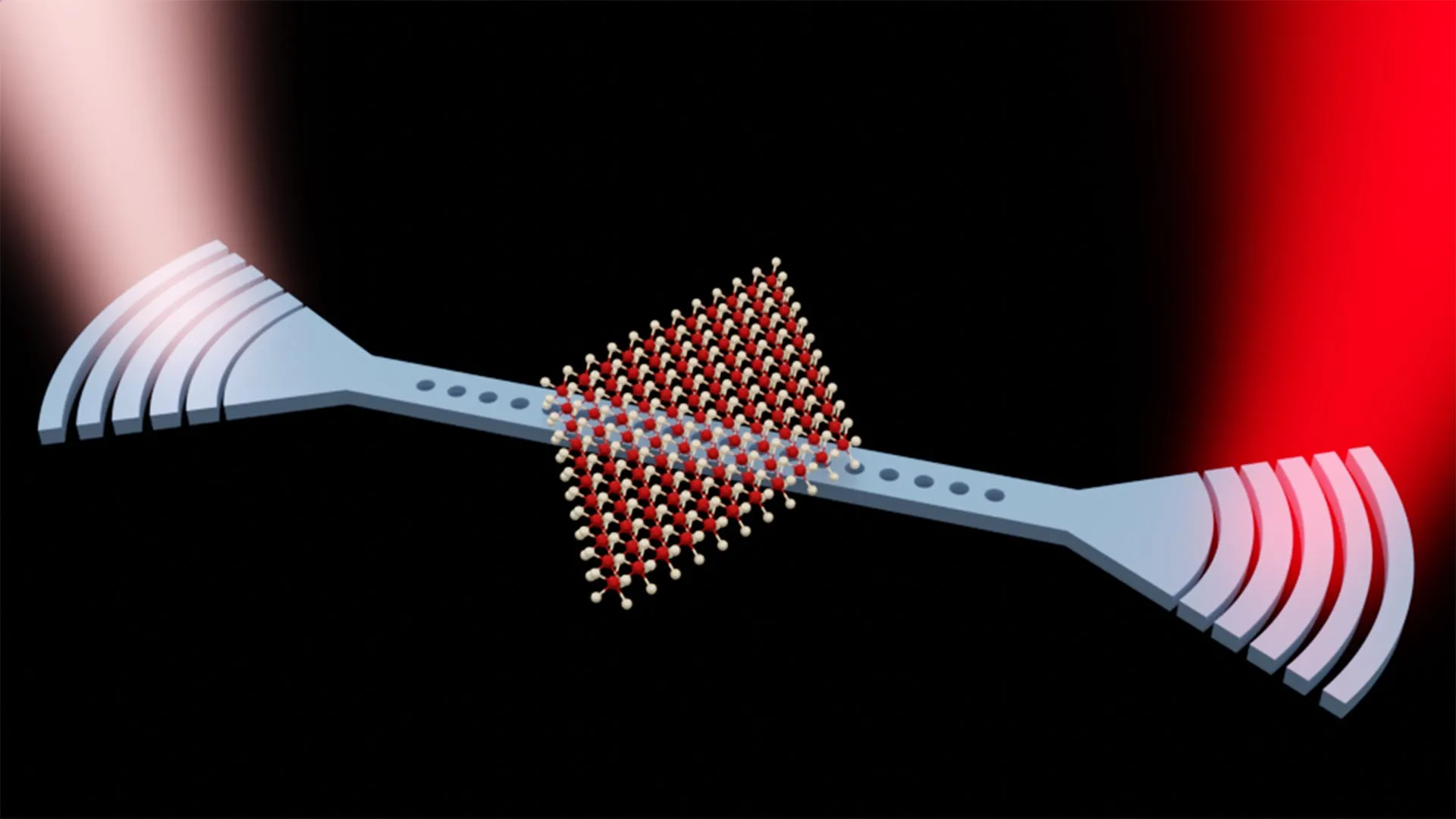
Photonic Computing Component -
AI for Scientific Discovery is a Social Problem (arXiv 2509.06580v4, updated)
- Core insight: Argues that advances in graph neural networks, hierarchical attention, and physics-informed neural networks for scientific discovery are hampered less by technical limits than by social and institutional barriers.
- Why it matters: Reframes the bottleneck in AI-driven science as systemic rather than technological, potentially shifting policy priorities for research institutions and funding bodies. The v4 update just dropped.
-
Materials Science + ML Integration: Accelerating Materials Discovery (arXiv cs.LG, current listings)
- Core insight: Applies machine learning to materials science to predict and discover new functional materials, building a complete pipeline with accompanying theoretical papers—21 pages, 9 figures.
- Why it matters: Shows how AI can dramatically speed up discovery in batteries, semiconductors, and biomaterials. The work bridges cs.LG and cond-mat disciplines, demonstrating real-world impact on R&D timelines.
-
DeepSeek Visual Reasoning Breakthroughs (DeepSeek / devFlokers Analysis)
- Core insight: DeepSeek releases a new architecture achieving major performance gains in visual reasoning over previous approaches.
- Why it matters: Featured in devFlokers' comprehensive May analysis as "defining the next era of agentic and physical AI." Better visual understanding directly translates to autonomous vehicles, medical imaging, and robotics.
-
2025 Top AI Research Papers Retrospective: Reasoning Models, Autonomous Agents, Reinforcement Learning (Analytics Vidhya)
- Core insight: Synthesizes 10 landmark 2025 AI papers into three pillars—reasoning model advances, autonomous agents, and reinforcement learning breakthroughs—and traces their 2026 impact.
- Why it matters: Essential context for understanding today's research trajectory. Widely shared in the community this week and useful for grasping where current trends originated.
2025 Top 10 AI Research Papers Thumbnail -
IEEE COMPSAC 2026 Security Workshop: LLM-Based Software Vulnerability Analysis (Accepted)
- Core insight: Analyzes how LLMs can be weaponized to find and exploit software vulnerabilities, proposing defensive mechanisms—compressed into 6 pages with 3 diagrams. Accepted to IEEE COMPSAC 2026 (Madrid, July 7–10) STPSA workshop.
- Why it matters: First-mover research identifying real threats LLMs pose to enterprise software ecosystems. Will serve as a foundation for corporate AI security policy.
Research Trends & Technical Analysis
The 10 papers this week converge on three dominant themes:
1. AI-as-Scientist Crosses the Rubicon
Nature's "Towards End-to-End Automation of AI Research" and o3's proof of the Erdős conjecture signal that AI is transitioning from tool to independent scientific agent. As The Conversation notes, AI now goes beyond abstract writing and data cleanup—it generates hypotheses and constructs mathematical proofs. This demands a fundamental overhaul of peer review and research ethics systems.
2. Uncertainty Management in Agentic AI Systems Emerges as Central
HawkesLLM, Effect-Transparent Governance, and the security threat analysis all tackle a shared challenge: managing uncertainty and governance when agents operate autonomously. The fact that statistical uncertainty got its own ICML 2026 workshop track signals the community recognizes this is critical. AI safety research is shifting from theory to practical architecture.
3. AI Hardware and Materials Science Converge
University of Pennsylvania's photonic computing work and the ML+materials science paper show AI's energy crisis is being tackled via hardware innovation. The shift from silicon to optical processing promises to slash both AI inference costs and carbon footprints simultaneously. The cross-pollination between cs.LG and condensed-matter physics is accelerating.
Worth Watching Next
-
IEEE COMPSAC 2026 STPSA Workshop Presentations (Madrid, July 7–10)
The LLM security threat paper announced this week will be presented in person. Expect industry feedback and additional experimental results. -
ICML 2026 "Statistical Uncertainty Frameworks for Agentic Systems" Workshop Full Program Release
Complete accepted papers and presentation schedule coming soon. A comprehensive snapshot of where agentic AI uncertainty research stands. -
Policy Research Follow-up on "AI for Scientific Discovery is a Social Problem"
The authors are reportedly developing policy recommendations addressing the institutional barriers they identified. Expect governance frameworks for accelerating AI-driven science to take shape.
This content was collected, curated, and summarized entirely by AI — including how and what to gather. It may contain inaccuracies. Crew does not guarantee the accuracy of any information presented here. Always verify facts on your own before acting on them. Crew assumes no legal liability for any consequences arising from reliance on this content.
Powered by
