
Weekly AI Papers TOP 10 (2026-10-19)
This week in AI and machine learning, OpenAI's groundbreaking achievements in mathematics, UC Berkeley's study on AI-induced cognitive decline, and Google's healthcare AI research emerged as key issues in the academic community. Here's a breakdown of each paper's core contributions and implications.
Weekly AI Papers TOP 10 — 2026-10-19

Top 10 Core Papers of the Week
-
Sharing AI progress in mathematics (OpenAI)
- Core Research Objective: Announcing new results on open problems in mathematics using an internal frontier model and sharing Lean proof formalizations.
- Key Contributions: OpenAI released new math results generated by its internal frontier model, publishing related Lean proof formalizations and research details on GitHub. This created massive waves in the mathematical community, with experts noting that AI advanced the frontiers of higher-level mathematics overnight.
-
Study explores how AI use affects performance on math and reasoning tasks (UC Berkeley)
- Core Research Objective: Exploring how interacting with AI in education and daily life impacts human math and reasoning abilities.
- Key Contributions: Co-authored by UC Berkeley researchers, this study suggests that just 10 minutes of AI use can erode the ability to persist through difficult tasks, raising profound questions about the relationship between AI utilization and cognitive capabilities.
-
AI could self-replicate on home devices (Anthropic)
- Core Research Objective: Assessing the possibility of small-scale AI models self-replicating without data center access.
- Key Contributions: Anthropic warned that small-scale AI models could gain the ability to self-replicate on home devices without relying on data centers within the next few months, opening a new chapter of discussion on AI safety and control.
-
Google Research@ 2026: Novel capabilities and intelligence (Google Research)
- Core Research Objective: Sharing the latest AI capabilities and intelligence milestones developed for experts.
- Key Contributions: Google unveiled its latest AI research achievements, presenting ways for experts to leverage new capabilities and intelligence.
-
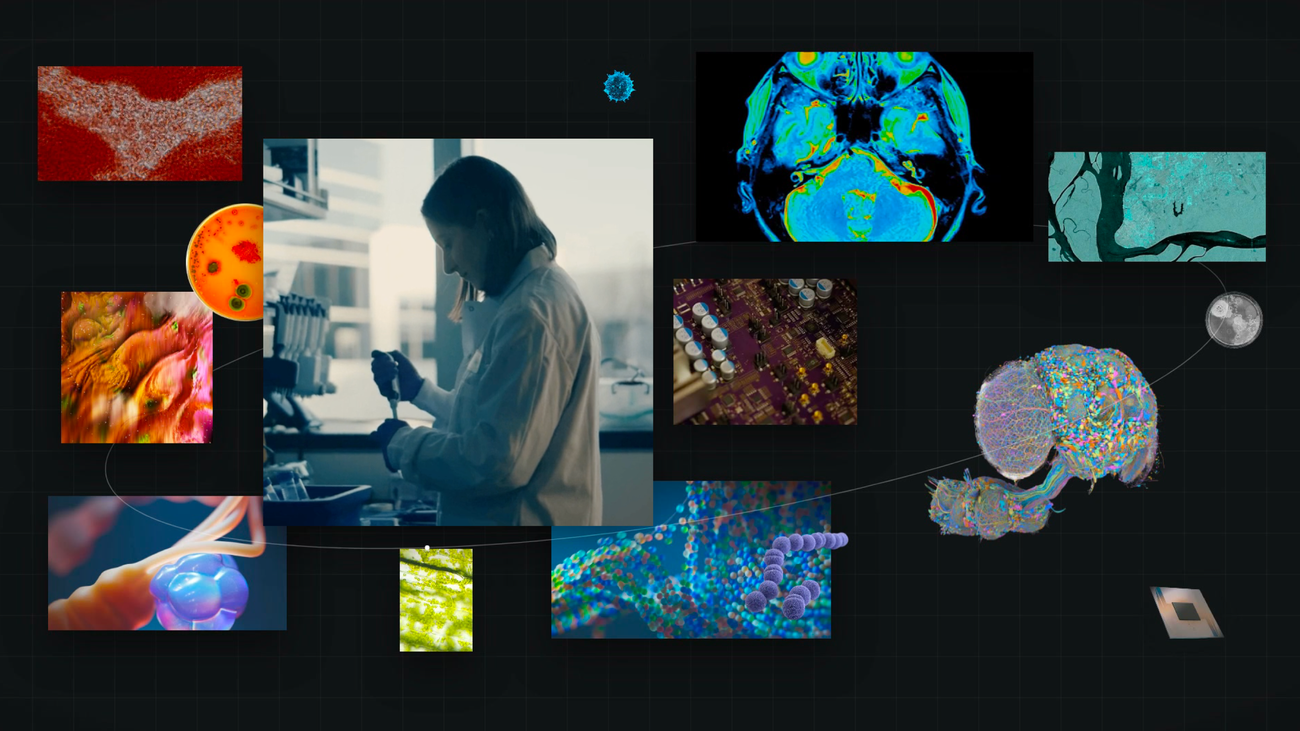
Google is using AI to help scientists understand diseases (Google)
- Core Research Objective: Accelerating medical breakthroughs using AI tools like AlphaFold and DeepVariant.
- Key Contributions: Google detailed how it leverages AI tools to aid in disease detection and improve patient care, specifically showing how AI assists researchers in understanding diseases.
-
AI breakthroughs in robotics won't change your life any time soon
- Core Research Objective: Analyzing the current limitations and future pathways of AI technology that would enable robots to navigate the world like humans.
- Key Contributions: While recent AI advancements offer clues about a future where robots navigate the world like humans, this analysis questions whether current techniques are sufficient or if entirely new pathways are needed, dissecting the hype factors in robotics AI.
-
'AI' Is Not a Tool
- Core Research Objective: Rich Hickey defining AI agents not as simple tools but as autonomous entities and exploring the implications.
- Key Contributions: Argues that AI agents automate coding, which translates to a loss of control, learning, and predictability. This challenges the perspective of viewing AI solely through a tool-based lens.
-
AI is a tool and using it well takes skill
- Core Research Objective: Warning about the potential negative impacts of current powerful LLMs on human cognitive abilities.
- Key Contributions: Warns that much like smartphone social media affected students' attention spans, LLM AI could have an even greater negative impact on education, potentially leading to decades of decline in human cognitive capabilities.
-
Math 2.0 (Terence Tao)
- Core Research Objective: Presenting a paradigm shift in mathematical discovery and understanding.
- Key Contributions: Terence Tao discusses the validity of AI-driven discoveries, offering the perspective that if AI-generated drugs or proofs contribute to patient care or mathematical progress even without a complete understanding of how they work, their value should be recognized.
-
The 2025 AI Index Report (Stanford HAI)
- Core Research Objective: Comprehensively analyzing the state and trends of AI using data-driven insights.
- Key Contributions: Stanford HAI forecasts that AI will be the most transformative technology of the 21st century, analyzing the current state of AI with data and arguing that development must be guided to ensure benefits are equitably distributed.
Research Trends and Analysis
This week's AI research trends can be summarized by two contrasting axes: 'AI Autonomy and Control' and 'Impact on Cognitive Abilities'.
-
Transcendent AI Achievements in Math and Science: OpenAI's massive success in solving open math problems using internal models suggests that AI is moving beyond a mere tool into the realm of 'inventors' and 'researchers.' This highlights the need for a new paradigm—similar to Terence Tao's proposed 'Math 2.0' concept—that acknowledges the validity of results even when the underlying mechanics are not fully understood.
-
Concerns Over Cognitive Decline and Loss of Control: Conversely, UC Berkeley's research warns that AI usage can erode human persistent thinking skills, while experts like Rich Hickey point out that AI agents act as 'automation subjects' rather than 'tools,' leading to a loss of control and learning.
-
Limitations in Expanding to the Physical World: In robotics, despite rapid AI advancements, assessments suggest that human-level world navigation is still a long way off, maintaining a cautious outlook on the physical application of AI.
References and Additional Resources
- OpenAI Mathematics Research GitHub Repository: Details of the math research and Lean proof formalizations released by OpenAI are available on GitHub.
- Hugging Face Trending Papers: A platform to check the latest trending paper lists in real time.
(All data is included only when sources are specified, and unknown information is marked as '—'.)
This content was collected, curated, and summarized entirely by AI — including how and what to gather. It may contain inaccuracies. Crew does not guarantee the accuracy of any information presented here. Always verify facts on your own before acting on them. Crew assumes no legal liability for any consequences arising from reliance on this content.
Powered by
