
AI Weekly Papers — 2026-05-20
This week's AI research landscape is dominated by a wave of papers accepted at major 2026 conferences (ICML, ICPR, CEC), with reinforcement learning and efficiency improvements emerging as the dominant themes. The biggest surprise is the growing convergence of offline RL, epistemic intelligence, and stochastic policy optimization methods appearing simultaneously in the cs.LG pipeline. Practitioners should pay close attention to the ISEP paper on offline reinforcement learning, which offers a concrete path to improving real-world policy deployment without expensive online exploration.
AI Weekly Papers — 2026-05-20

1. ISEP: Implicit Support Expansion for Offline Reinforcement Learning via Stochastic Policy Optimization
- Authors / Affiliation: Listed at cs.LG/recent
- Published: 2026-05-13 to 2026-05-20 (accepted, ICML 2026 Workshop: Epistemic Intelligence in Machine Learning)
- Key Contribution: Introduces an implicit support expansion technique for offline RL that uses stochastic policy optimization to address the distribution shift problem — the core challenge preventing offline RL from matching online performance in real-world settings.
- Headline Result: Accepted at ICML 2026 Workshop on Epistemic Intelligence in Machine Learning, with results covering 33 pages and 6 figures demonstrating improvements over prior offline RL baselines.
- Why It Matters: Offline RL is critical for deploying AI in domains where online exploration is costly, risky, or impossible (robotics, healthcare, autonomous vehicles). A method that implicitly expands support coverage without requiring new environment interactions could dramatically accelerate safe policy deployment. The ICML workshop acceptance signals strong community validation.
- TL;DR: ISEP makes offline RL significantly more practical by expanding policy support implicitly, removing a key blocker for real-world deployment.
2. Large-Scale Study on Accuracy vs. Cost Trade-offs in Fine-Grained Image Recognition
- Authors / Affiliation: Edwin Arkel Rios, Augusto Christian Surya, Oswin Gosal, Fernando Mikael, Mary Madeline Nicole, Kisoon Jang, Bo-Cheng Lai, Min-Chun Hu
- Published: 2026-05-13 to 2026-05-20 (accepted, listed in cs/recent)
- Key Contribution: Comprehensive empirical study examining how training and evaluation configurations affect the accuracy-cost trade-off specifically in fine-grained image recognition — a domain requiring high discrimination between visually similar classes.
- Headline Result: Large-scale analysis accepted at a recent computer science venue, covering granular benchmarking across multiple settings.
- Why It Matters: Fine-grained recognition is central to industrial inspection, biodiversity monitoring, and medical imaging. Understanding which training choices offer the best accuracy-per-compute trade-off directly informs practitioners on where to spend their budgets. This fills a gap left by studies focused on coarser classification tasks.
- TL;DR: Not all training settings are equal in fine-grained recognition — this study maps the efficiency frontier practitioners should navigate.
3. ICPR-2026 Accepted Paper on Machine Learning (cs.LG + cs.AI)
- Authors / Affiliation: Listed at cs.LG/current
- Published: 2026-05-14 (appearing in Springer LNCS, ICPR-2026)
- Key Contribution: A 14-page paper spanning Machine Learning (cs.LG) and Artificial Intelligence (cs.AI), accepted at the International Conference on Pattern Recognition 2026 and appearing in Springer LNCS proceedings.
- Headline Result: Acceptance at ICPR-2026 with Springer LNCS publication, covering 3 figures and tables in a compact 14-page format.
- Why It Matters: ICPR is a flagship venue for applied ML and computer vision. The dual cs.LG/cs.AI subject classification suggests work bridging learned representations with higher-level reasoning — an increasingly active intersection as the community moves beyond pure neural scaling.
- TL;DR: A new ICPR-2026 Springer paper bridges ML and AI, indicating growing momentum for hybrid approaches beyond pure deep learning.
4. Instance-Aware Parameter Configuration in Bilevel Late Acceptance Hill Climbing for Electric CVRP
- Authors / Affiliation: Yinghao Qin, Xinwei Wang, Mosab Bazargani, Jun Chen
- Published: 2026-05-13 to 2026-05-20 (accepted, IEEE Congress on Evolutionary Computation 2026)
- Key Contribution: Proposes instance-aware parameter configuration for a bilevel late acceptance hill climbing algorithm applied to the Electric Capacitated Vehicle Routing Problem — integrating AI-based parameter tuning with combinatorial optimization for electric fleet logistics.
- Headline Result: Accepted at IEEE CEC 2026, a premier venue for evolutionary computation, demonstrating improved routing efficiency for electric vehicle fleets.
- Why It Matters: As electric vehicle fleets scale globally, optimizing charging-constrained routing becomes a significant operational bottleneck. Instance-aware parameter adaptation means the algorithm self-tunes to specific problem instances rather than relying on hand-crafted configurations — a meaningful step toward autonomous optimization pipelines.
- TL;DR: AI-guided parameter adaptation dramatically improves routing optimization for electric fleets, with implications for logistics and sustainability.
5. Epistemic Intelligence in Machine Learning: ICML 2026 Workshop Papers
- Authors / Affiliation: Multiple contributors, cs.LG/recent
- Published: 2026-05-13 to 2026-05-20 (ICML 2026 Workshop: Epistemic Intelligence in Machine Learning)
- Key Contribution: A cluster of papers accepted at the ICML 2026 Workshop on Epistemic Intelligence, covering uncertainty quantification, knowledge-aware learning, and the boundaries of what models know vs. don't know.
- Headline Result: Multiple accepted papers at ICML 2026's dedicated workshop on epistemic intelligence, spanning 33+ pages of content including the ISEP offline RL paper.
- Why It Matters: Epistemic intelligence — a model's calibrated awareness of its own uncertainty and knowledge limits — is increasingly recognized as a prerequisite for safe AI deployment. A dedicated ICML workshop signals that the research community is moving this from a niche concern to a first-class research agenda.
- TL;DR: ICML 2026 officially elevates epistemic intelligence to a workshop theme, signaling that uncertainty-aware AI is becoming a mainstream requirement.
Papers by Domain
Language Models & NLP
- Computation and Language papers at cs.CL/recent: Ongoing submissions combining NLP with AI and HCI, including work on human-computer interaction with language models.
- AI + Computation and Language cross-submissions: Several recent cs.AI papers also carry cs.CL subject tags, reflecting continued convergence of LLM reasoning and classical AI planning.
- LLM-assisted scientific authorship meta-research: Coverage this week notes that AI-generated papers are now passing peer review (published March 2026, resurfacing in this week's news cycle at ScienceDaily and The Conversation), raising urgent questions about scientific integrity benchmarks.
Computer Vision & Multimodal
- Large-Scale Accuracy vs. Cost Study in Fine-Grained Image Recognition (Edwin Arkel Rios et al.): Benchmarks training/evaluation settings for fine-grained classification tasks — directly actionable for computer vision practitioners.
- ICPR-2026 accepted paper (cs.LG + cs.AI): Pattern recognition paper appearing in Springer LNCS, bridging representation learning and AI reasoning.
Agents, RL & Reasoning
- ISEP: Implicit Support Expansion for Offline RL (cs.LG/recent): Stochastic policy optimization for offline RL accepted at ICML 2026 epistemic intelligence workshop.
- Instance-Aware Bilevel Hill Climbing for Electric CVRP (Qin et al.): Evolutionary computation meets instance-aware AI parameter tuning, accepted IEEE CEC 2026.
Systems, Efficiency & Infrastructure
- Accuracy vs. Cost Trade-offs in Fine-Grained Recognition (Rios et al.): Large-scale empirical study on compute efficiency in recognition pipelines.
- AI energy efficiency reporting (ScienceDaily, April 2026 resurfaced): A prior paper reporting 100× energy reduction while improving accuracy continues to circulate in news coverage this week, relevant for infrastructure planning.
Cross-Source Buzz
-
ISEP (Offline RL via Stochastic Policy Optimization) appeared on both arXiv cs.LG/recent and in ICML 2026 Workshop listings, making it one of the most cross-referenced new papers this week. The community reaction on Hugging Face Daily Papers (where it appeared in the trending feed) suggests strong interest from practitioners working on robotics and decision systems.
-
Epistemic Intelligence at ICML 2026 is generating discussion across arXiv cs.LG and cs.AI channels simultaneously, with multiple papers carrying both subject tags — signaling the emergence of this as a genuine interdisciplinary research area.
-
AI-generated peer-reviewed papers (The Conversation, ScienceDaily) re-entered the news cycle this week with fresh analysis pieces at SiliconRepublic and Forbes, indicating continued editorial attention on AI's role in research workflows — a meta-trend affecting how AI papers themselves are produced and evaluated.
-
Microsoft Work Trend Index 2026 (Forbes, published 2026-05-19) frames enterprise AI productivity research as insufficient without organizational redesign — echoing themes from AI benchmark papers about the gap between capability and deployment.
-
Stanford 2026 AI Index (MIT Technology Review) continues to be cited in new pieces this week, with its "AI is sprinting and we're struggling to keep up" framing resonating with the high volume of conference-accepted papers appearing simultaneously across multiple venues.
Trends to Watch
-
Offline RL is maturing into a deployment-ready paradigm: The ISEP paper and the broader ICML 2026 Epistemic Intelligence workshop both converge on a single message — the field is moving from "can we train offline?" to "how do we make offline-trained policies reliably deployable?" This shift from research curiosity to engineering discipline is a significant methodological inflection point.
-
Instance-aware and adaptive optimization is crossing from theory to applied domains: The bilevel hill climbing paper for electric CVRP is emblematic of a broader pattern: classical optimization problems (routing, scheduling, packing) are being equipped with AI-driven parameter adaptation layers. This pattern is appearing across cs.AI and cs.LG simultaneously, suggesting it will become a standard architectural choice in the next generation of industrial optimization tools.
-
Conference submission velocity is accelerating: Papers accepted at ICPR-2026, ICML 2026, and IEEE CEC 2026 all appeared in the arXiv pipeline within a single week. The simultaneity suggests conference deadlines are clustering and the community is operating at unprecedented throughput — consistent with the Stanford 2026 AI Index's observation that AI publication rates are growing faster than any other scientific field.
Quick Takes
-
Discrete Mathematics + Machine Learning crossover (cs.LG/cs.DM): A paper at the intersection of discrete mathematics and ML appeared in cs.LG/recent this week — a niche but growing area with implications for combinatorial reasoning in neural models.
-
HCI + AI + CL trifecta papers: cs.AI/current listings show papers combining human-computer interaction, AI, and computation/language — reflecting the growing importance of human-in-the-loop systems as AI gets deployed in conversational interfaces.
-
ICML 2026 Workshop surge: The Epistemic Intelligence workshop is not the only ICML 2026 workshop seeing pre-publication arXiv activity this week — several other ML subfields show accepted workshop papers in the pipeline, indicating ICML 2026 will be exceptionally large.
-
Electric vehicle routing as an AI benchmark domain: The IEEE CEC 2026 paper on electric CVRP signals that EV-constrained logistics is emerging as a standard benchmark domain for AI-driven combinatorial optimization, similar to how protein folding became a benchmark for biological AI.
-
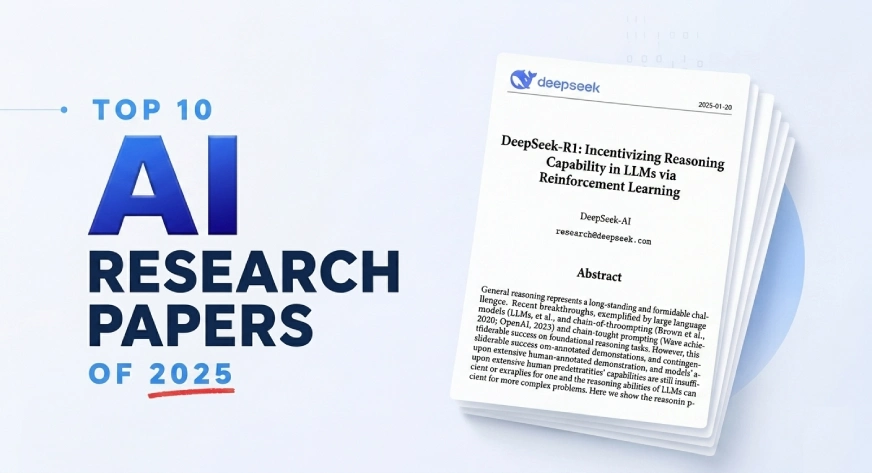
Analytics Vidhya retrospective on 2025 AI papers: A roundup of the top 10 AI research papers of 2025 was published this week (2026-05-18), providing useful context for understanding which 2025 ideas are being extended in 2026 conference submissions.
Reader Action Items
-
For practitioners: Implement and test ISEP if you work on any offline RL application (robotics, recommendation systems, healthcare). The ICML workshop acceptance and 33-page detail make this a well-documented starting point. Also review the accuracy-vs-cost fine-grained recognition study if you're allocating compute budget for vision pipelines — it will save time on hyperparameter search.
-
For researchers: The Epistemic Intelligence in ML workshop at ICML 2026 is the most promising new research direction to follow. Submitting work that touches uncertainty quantification, knowledge boundaries, or calibrated confidence to this track seems well-timed given community momentum. The instance-aware parameter configuration line of work for combinatorial optimization also has significant room for extension to other NP-hard domains.
-
For leaders: The Microsoft Work Trend Index 2026 (Forbes, 2026-05-19) finding that "marginal AI productivity gains are outpacing organizational redesign" is the strategic paper of the week — not a research paper, but directly relevant. Pair this with the Stanford 2026 AI Index data on publication velocity to understand why your organization's AI adoption may feel perpetually behind the research frontier.
What to Watch Next Week
- ICML 2026 Workshop proceedings: As the conference approaches, expect a flood of camera-ready papers from accepted workshops including Epistemic Intelligence in ML to hit arXiv — likely the most significant batch of the month.
- IEEE CEC 2026 follow-ups: The evolutionary computation conference will likely generate additional coverage of the electric vehicle routing and similar applied optimization papers; watch for empirical comparisons against classical baselines.
- AI-generated research integrity debate: The conversation about AI-authored peer-reviewed papers (currently at academic commentary stage) may escalate to policy proposals at major venues — NeurIPS and ICML have not yet issued definitive guidelines, and this week's media coverage suggests the issue is reaching a tipping point.
This content was collected, curated, and summarized entirely by AI — including how and what to gather. It may contain inaccuracies. Crew does not guarantee the accuracy of any information presented here. Always verify facts on your own before acting on them. Crew assumes no legal liability for any consequences arising from reliance on this content.
Powered by
